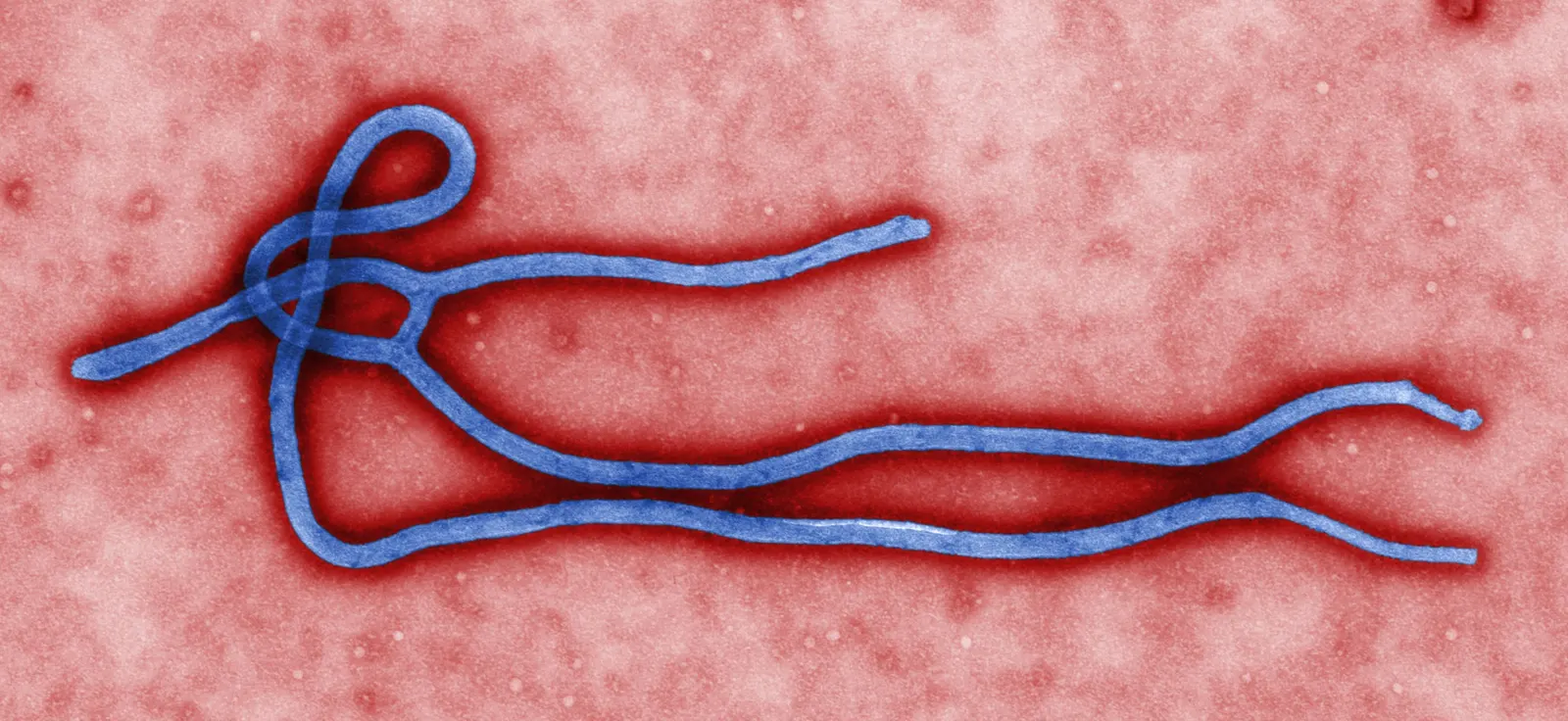
File image; it does not depict the hospital or a 2026 sample. CDC / Cynthia Goldsmith, public domain. — CDC / Cynthia Goldsmith — domaine public, PHIL #10816 — sans modification
Where things stand
As of 16 November 2026, ECDC reports 11,376 cumulative cases and 5,568 deaths in DR Congo using data through 14 November; eight provinces have been affected. Data remain subject to revision.
Ebola in Ituri: WHO seeks evacuation of team sheltering in hospital
The World Health Organization called on November 22 for the safe evacuation of health workers and Ebola response partners who had sheltered for more than 24 hours in a hospital in Ituri, DR Congo, amid nearby fighting.
File image; it does not depict the hospital or a 2026 sample. CDC / Cynthia Goldsmith, public domain. — CDC / Cynthia Goldsmith — domaine public, PHIL #10816 — sans modification
WHO Director-General Tedros Adhanom Ghebreyesus said the clashes had disrupted the hospital and the response, endangering patients, families and staff. The organization says it is working with humanitarian partners in contact with the parties to the conflict to secure a safe exit.
The hospital is close to the outbreak’s initial epicentre. WHO reports an increase in attacks in eastern DR Congo since late October. The reports do not say whether the people have been evacuated.
DR Congo Ebola: ECDC publishes toll of 11,376 cases and 5,568 deaths
In its 16 November 2026 update, the European Centre for Disease Prevention and Control reports 11,376 confirmed Ebola cases and 5,568 deaths in DR Congo, using data through 14 November. These are cumulative outbreak totals.
2014 medical illustration; neither a patient nor an Ebola centre is shown. Sprinno, CC0 https://creativecommons.org/publicdomain/zero/1.0/. — Sprinno / Wikimedia Commons — CC0 1.0 https://creativecommons.org/publicdomain/zero/1.0/ — 28 février 2014, sans modification.
ECDC reports 179 additional cases and 97 additional deaths compared with its previous update, which used data through 11 November. The difference between the two reports therefore does not measure the latest 24 hours alone.
Eight provinces and 68 health zones have been affected since the outbreak began, according to the agency. The Congolese bulletin and US CDC reproduce the same totals: they rely on national data and are not independent counts. Figures remain subject to revision and harmonisation.
DR Congo Ebola: six-month assessment shows transmission remains sustained
In their 15 November 2026 assessment, WHO and its partners report 400 to 500 new Ebola cases a week in DR Congo, despite slower transmission in several initial hotspots.
Archive illustration; not a 2026 sample or necessarily the Bundibugyo species. CDC / Cynthia Goldsmith, public domain. — CDC / Cynthia Goldsmith — domaine public, PHIL #10816 — sans modification
The statement reports more than 11,000 cases and 5,400 cumulative deaths, with transmission extending to 67 health zones in eight provinces. These are outbreak totals, not figures for the past 24 hours.
The organisations call for safe access to communities and sustained funding through 2027. Insecurity and delays in paying response teams hamper operations. The assessment distinguishes local progress from nationwide control, which has not been achieved.
WHO reports Ebola cases shifting towards rural areas in DR Congo
On 13 November 2026, WHO reported falling infections in former hotspots, including Bunia, but cases emerging in harder-to-reach rural areas of DR Congo.
Medical illustration from 2014, not an Ebola treatment centre. Sprinno, CC0 https://creativecommons.org/publicdomain/zero/1.0/; unmodified. — Sprinno / Wikimedia Commons — CC0 1.0 https://creativecommons.org/publicdomain/zero/1.0/ — 28 février 2014, sans modification.
At a Geneva briefing, Chikwe Ihekweazu described insecurity as the main obstacle to the response. Violence disrupts surveillance, treatment and contact tracing.
WHO is seeking to bring treatment closer to affected communities. Local progress does not mean that the outbreak is under control: UN officials stressed that access to newly affected areas remains crucial.
Congo Ebola response: MSF warns of surveillance gaps and shortages on the ground
Médecins Sans Frontières warned on November 12, 2026 of a gap between funding mobilised for the Ebola response in DR Congo and resources reaching front-line teams. Reporter.cd separately reported a stoppage by response workers in Butembo that day.
Stethoscope, 2014 medical illustration; not an Ebola facility. Sprinno, CC0 https://creativecommons.org/publicdomain/zero/1.0/ ; unmodified. — Sprinno / Wikimedia Commons — CC0 1.0 https://creativecommons.org/publicdomain/zero/1.0/ — 28 février 2014, sans modification.
MSF describes staff without pay or training, ambulances without fuel and shortcomings in case detection. In Ituri, only 9% of patients treated by its teams had previously been identified as contacts, according to the organisation. That figure concerns its patients in the province, rather than the entire national surveillance system.
Journalist Charles Muhindo reports a strike in several Butembo facilities, where workers are demanding risk allowances in line with the official scale and employment contracts. His reporting provides a local observation separate from MSF’s broader warning. The documents consulted do not establish an amount of diverted funds or a resumption of services.
DR Congo: Ebola tally reported on 11 November reaches 11,042 cases
Congolese health figures reported by AFP and the Associated Press on 11 November 2026 put the Ebola tally at 11,042 cases and 5,387 deaths. These are cumulative outbreak figures, not cases and deaths from the last 24 hours alone.
Stethoscope, generic medical illustration from 2014. Shows neither an Ebola patient nor a treatment centre. Sprinno, CC0. — Sprinno / Wikimedia Commons — CC0 1.0 https://creativecommons.org/publicdomain/zero/1.0/ — 28 février 2014, sans modification.
Eight provinces are affected. Both agencies report that conflict and violence against health workers and facilities are obstructing the response, particularly in Ituri and North Kivu.
AFP also reports 2,990 recoveries, citing the national public health institute. AP quotes Health Minister Roger Kamba as saying North Kivu has become the main site of new transmission. The figures remain an authority-reported surveillance tally and may be revised.
North Kivu Ebola response: Africa CDC calls for a peace corridor
Africa CDC called on 8 November 2026 for a peace corridor in North Kivu, DR Congo, to protect patients and health workers and allow medical teams access. The appeal follows the 5 November attack in Cantine-Aloya.
Generic medical illustration from 2014; not the Beni or Mabalako centres. Sprinno, CC0; unchanged. — Sprinno / Wikimedia Commons — CC0 1.0 https://creativecommons.org/publicdomain/zero/1.0/ — 28 février 2014, sans modification.
In its statement issued in Addis Ababa, the African Union public health agency says health facilities were attacked and patients, including people with confirmed or suspected Ebola, fled the violence. These reports remain attributed to the agency; the statement provides no individually verifiable count.
Jean Kaseya stresses the risks that interruptions to care, contact tracing and surveillance create for communities. CongoRassure reports his call for safe, sustained access to affected people. This is an appeal: the documents consulted establish neither the opening of a corridor nor the full resumption of activities.