Egypt · United Kingdom · Israel · Iraq · Islamic Republic of Iran · Kuwait · Lebanon · Sri Lanka · Oman · Panama · Pakistan · Qatar · Russian Federation · Saudi Arabia · United States of America
File
Iran since 1979: revolution, crises and wars with Israel and the United States
This dossier traces the Islamic Republic of Iran from Ruhollah Khomeini’s return in February 1979: the monarchy’s overthrow, the hostage crisis, the Iran-Iraq War, Ali Khamenei’s succession, sanctions, domestic protests and nuclear negotiations. It also follows regional confrontation through Tehran’s allies, rapprochement with Saudi Arabia and the transition to direct Iran-Israel attacks in 2024.
The twelve-day war of June 2025 is distinguished from the conflict opened on 28 February 2026 by US and Israeli strikes. The chronology examines Ali Khamenei’s killing and Mojtaba Khamenei’s succession, civilian victims, regional fronts, energy infrastructure, Hormuz, blockades and attempts at agreement. The Qatari consultations that originally defined this dossier remain integrated into the expanded history.
Sourced entries distinguish established facts, announcements, attributed responsibility and unverified outcomes. The reconstruction selects principal milestones rather than recording every military operation. No final, consistent human toll across all theatres is established here. Dates without a known time are ordered by calendar day.
Last updated : 70 key moments
Tehran, 3 December 2019. Illustrative archive photograph for the dossier; it does not show the 2025 or 2026 strikes. — GTVM92 — CC BY-SA 4.0 https://creativecommons.org/licenses/by-sa/4.0/ — 3 décembre 2019, sans modification.
Where things stand
As of 3 November 2026, US officials separately cited by CNN and AP report limited strikes on Qeshm on 2 November, which they describe as defensive. Damage and casualties remain unestablished. Qatari mediation continues without an established final accepted agreement or binding timetable for reopening Hormuz.
Reported information
Egypt consults Qatar and Iraq on regional de-escalation
Egyptian Foreign Minister Badr Abdelatty held separate telephone talks with his Qatari and Iraqi counterparts on 3 November 2026 to support diplomacy amid regional tensions. Published accounts attribute the information to Egypt’s foreign ministry spokesperson.
Iraqi flag. Geographic illustration, public domain; does not depict the reported events. — Wikimedia Commons contributors — public domain (PD-ineligible); PNG rendering of the Iraqi flag.
Talks with Qatar’s Prime Minister and Foreign Minister Mohammed bin Abdulrahman Al Thani concerned coordination to allow time for negotiations and avoid further security deterioration, according to the Egyptian account.
The exchange with Fuad Hussein also covered preparations for the fourth Supreme Joint Committee and economic cooperation between Cairo and Baghdad. The consultations do not constitute a ceasefire agreement or evidence of an outcome in regional negotiations.
Qatari mediators return to Tehran for further talks with Iran
Qatari mediators arrived in Tehran on the evening of 2 November 2026 to resume discussions on a possible Iran–United States agreement, according to informed interlocutors cited separately by Reuters and The Times of Israel.
Tehran, December 2019. Geographic archive image; the Qatari delegation is not shown. — GTVM92 — CC BY-SA 4.0 https://creativecommons.org/licenses/by-sa/4.0/ — 3 décembre 2019, sans modification.
The talks concern a proposal linking a rapid reopening of the Strait of Hormuz to US sanctions relief, followed by nuclear negotiations, according to the diplomat interviewed by The Times of Israel. Reuters also reports the visit and continued work on a version of the draft.
Abbas Araghchi described intensive indirect consultations in an IRNA interview carried by AFP. The mediators’ return continues the exchanges after the Doha round; the sources consulted establish neither an accepted final agreement nor a binding timetable for reopening the strait.
Draft proposal circulates after Doha talks, official tells Reuters
A draft proposal aimed at ending the war with Iran is circulating for feedback, an official briefed on the discussions told Reuters on 2 November 2026. A follow-up meeting is possible, the source said.
Archive geographical illustration; it does not depict the reported event. — Wikimedia Commons, domaine public (géométrie simple). Drapeau du Qatar ; rendu PNG de l’original SVG.
The same official said Iranian negotiators left Doha on 1 November, without attributing their departure to difficulties in the discussions with Qatari mediators.
The account describes a continuing diplomatic process, rather than acceptance of an agreement. The remarks establish neither the draft’s full contents, a confirmed meeting date nor an agreed timetable for reopening the Strait of Hormuz.
US officials report limited strikes on Iran’s Qeshm Island
The US military carried out limited strikes on Iran’s Qeshm Island on 2 November 2026, according to US officials separately interviewed by CNN and Associated Press. Those officials describe a defensive operation; damage and casualties are not established in the material reviewed.
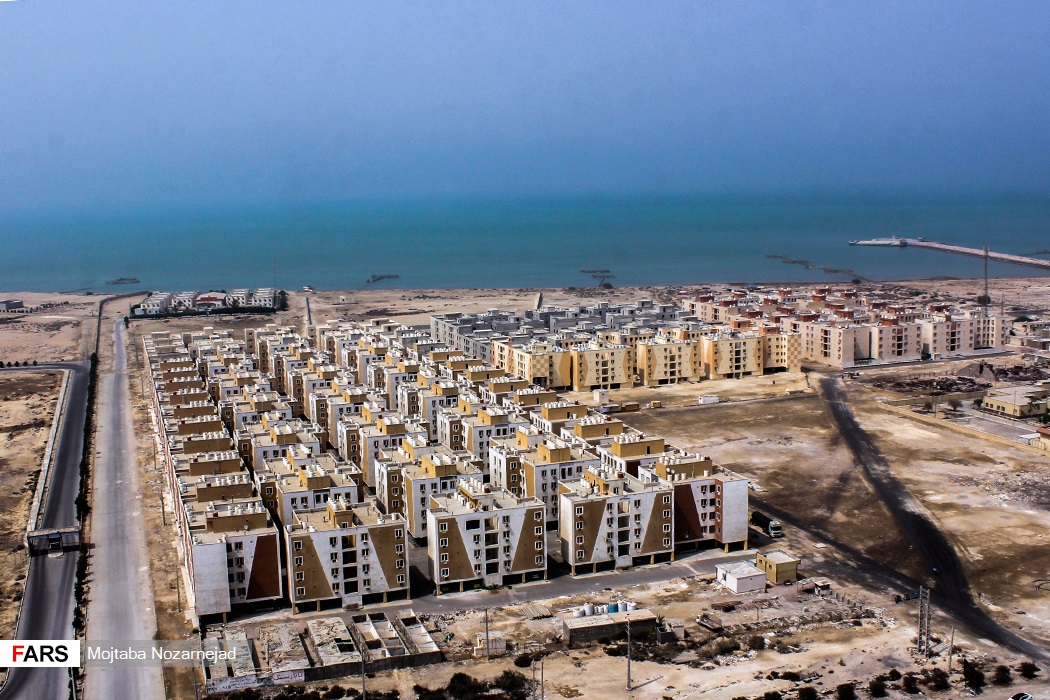
Qeshm, 30 March 2019. Archive view; it does not depict the strikes. Mojtaba Nozarnejad / Fars Media Corporation, CC BY 4.0. — Mojtaba Nozarnejad / Fars Media Corporation / Wikimedia Commons — CC BY 4.0 https://creativecommons.org/licenses/by/4.0/ — 30 mars 2019, sans modification.
CNN cites three officials saying the action was intended to protect US assets in the region. One says it followed Iranian fire at a US aircraft. The official interviewed by Associated Press refers to Iranians using surface-to-air missiles against US assets.
Iranian state media reported explosions on Qeshm in the Strait of Hormuz. Those reports do not establish the precise targets or the military outcome of the strikes. The description of a defensive response remains that of the US officials rather than an independent finding about the circumstances.
Iran announces 'terrorist' designation for Britain's naval and air forces
Iran's Foreign Ministry announced on 1 November 2026 that it was designating the Royal Navy and Royal Air Force as 'terrorist organisations' and foreign intelligence service MI6 as a 'hostile group'. These are the Iranian authorities' designations.
Tehran, December 2019. Archive photograph; it does not depict a 2026 decision or military operation. — GTVM92 — CC BY-SA 4.0 https://creativecommons.org/licenses/by-sa/4.0/ — 3 décembre 2019, sans modification.
The ministry presents its decision as a reciprocal measure following British actions against the Revolutionary Guard. It also accuses London of supporting US and Israeli operations; that allegation remains attributed to Tehran.
The announcement distinguishes MI6's designation from that applied to the two armed services. The sources consulted describe the Iranian decision without establishing its practical effects on diplomatic relations or military operations. It adds to regional tensions but does not announce fresh hostilities.
Doha talks consider two-day Hormuz reopening proposal, with no agreement
Iranian negotiators continued consultations with Qatari mediators in Doha on 1 November 2026. Abbas Araghchi described a proposal to reopen the Strait of Hormuz within two days of a possible agreement, while stressing that no final conclusion had been reached.
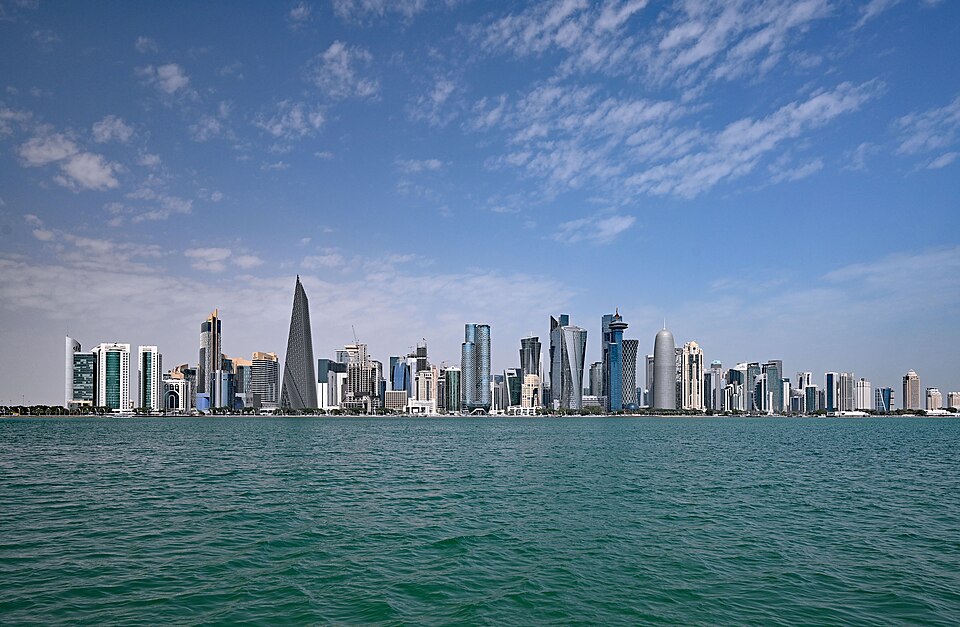
West Bay in Doha, February 2026. Archive view; does not show the talks. P. Hughes, CC BY 4.0, resized. — P. Hughes / Wikimedia Commons — CC BY 4.0 https://creativecommons.org/licenses/by/4.0/ — 4 février 2026, taille réduite.
Reuters places the exchanges on the third day of a mediation sequence that began in Tehran before moving to Doha. The Iranian minister presents the shorter proposed period as a development in the plan discussed with Qatar; it is neither US acceptance nor a reopening of the strait.
Araghchi also says no direct meeting with a US delegation is planned during the visit. The outcome depends, he says, on Washington’s response to Iranian conditions. The sources report continuing mediation but establish neither a final text accepted by both parties nor an agreed implementation timetable.