United Kingdom · Israel · Iraq · Islamic Republic of Iran · Kuwait · Lebanon · Sri Lanka · Oman · Panama · Pakistan · Qatar · Russian Federation · Saudi Arabia · United States of America
File
Iran since 1979: revolution, crises and wars with Israel and the United States
This dossier traces the Islamic Republic of Iran from Ruhollah Khomeini’s return in February 1979: the monarchy’s overthrow, the hostage crisis, the Iran-Iraq War, Ali Khamenei’s succession, sanctions, domestic protests and nuclear negotiations. It also follows regional confrontation through Tehran’s allies, rapprochement with Saudi Arabia and the transition to direct Iran-Israel attacks in 2024.
The twelve-day war of June 2025 is distinguished from the conflict opened on 28 February 2026 by US and Israeli strikes. The chronology examines Ali Khamenei’s killing and Mojtaba Khamenei’s succession, civilian victims, regional fronts, energy infrastructure, Hormuz, blockades and attempts at agreement. The Qatari consultations that originally defined this dossier remain integrated into the expanded history.
Sourced entries distinguish established facts, announcements, attributed responsibility and unverified outcomes. The reconstruction selects principal milestones rather than recording every military operation. No final, consistent human toll across all theatres is established here. Dates without a known time are ordered by calendar day.
Last updated : 66 key moments
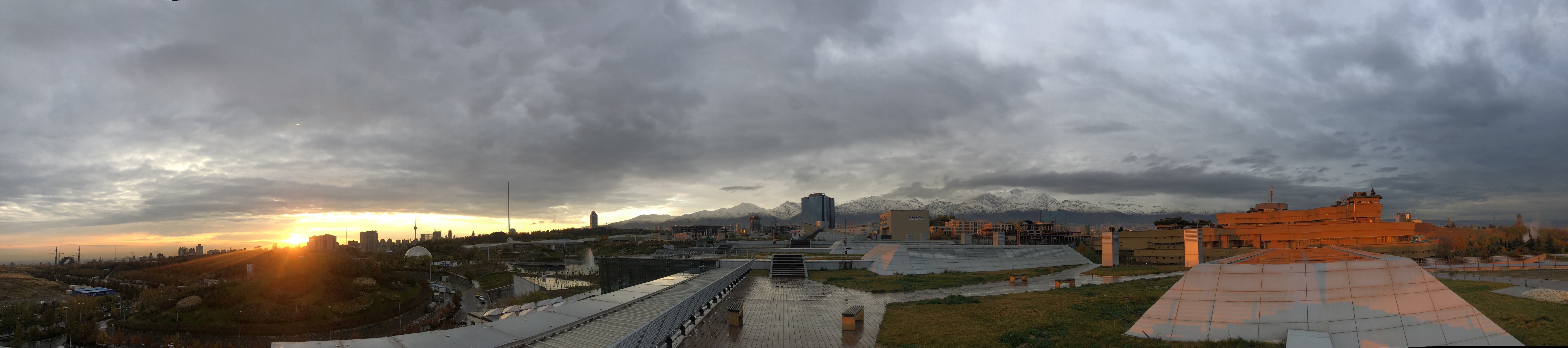
Tehran, 3 December 2019. Illustrative archive photograph for the dossier; it does not show the 2025 or 2026 strikes. — GTVM92 — CC BY-SA 4.0 https://creativecommons.org/licenses/by-sa/4.0/ — 3 décembre 2019, sans modification.
Where things stand
As of 1 November 2026, the available sources establish no Hormuz reopening agreement from the Doha consultations. Tehran also announced terrorist designations for the Royal Navy and RAF and a hostile-group designation for MI6; the decision's practical effects are not established.
Confirmed
Washington and Tehran announce a framework to halt the war
On 15 June 2026, the United States and Iran announced a preliminary agreement intended to halt the war and restore shipping through the Strait of Hormuz.
The framework provided a sixty-day negotiating period on unresolved issues, including the nuclear programme. Mediation involved Pakistan and Qatar; commitments concerning Lebanon remained important.
Initial statements about completion of the text preceded its formalised signing and implementation. This announcement must therefore be distinguished from the 17 June milestone and from subsequent shipping conditions.
On 28 May 2026, US and Iranian negotiators reached a tentative proposal to extend the ceasefire, according to sources cited by the Associated Press and Reuters.
The outline envisaged sixty more days of talks, measures concerning Hormuz and some economic relief. The most difficult nuclear questions would be addressed later.
As of 29 May, Donald Trump had not given final approval and Iranian sources said the text was unfinished. This was a proposed compromise, distinct from the framework announced and signed in June; it must not be counted as peace already concluded.
On 21 April 2026, Donald Trump announced an extension of the Iran ceasefire without a fixed deadline at Pakistan’s request.
He said the planned attack would be held to allow Iranian leaders time to submit a common proposal. The expected US delegation’s trip to Islamabad did not take place that day.
Washington nevertheless maintained the blockade of Iranian ports. Trump’s announcement was unilateral and must not be presented as a new comprehensive agreement accepted and implemented by Iran and Israel.
On 13 April 2026, the United States began a blockade of Iranian ports after weekend talks in Islamabad failed.
The operation sought to restrict flows connected to Iran’s ports. It added to Iranian obstruction of shipping through the Strait of Hormuz; the two measures had different authors and geographical scopes.
Tehran threatened retaliation against neighbouring ports while Pakistani mediators continued their efforts. The blockade became an instrument of negotiation and economic pressure without producing a nuclear agreement or normal shipping at that point.
Two-week truce is announced, but fighting threatens its implementation
On the night of 7–8 April 2026, the United States and Iran accepted a two-week truce brokered with Pakistan’s help.
Donald Trump linked the agreement to passage through the Strait of Hormuz. Islamabad prepared talks between US and Iranian delegations. The announcement followed US threats to strike civilian infrastructure.
By 8 April, Israeli attacks in Lebanon and disagreement over the truce’s scope threatened implementation. The Associated Press reported that Iran closed the passage again in response. The diplomatic announcement therefore did not amount to a complete and lasting halt to hostilities.
US recovers second aviator from F-15 shot down in Iran
On 5 April 2026, the United States announced the recovery of the second crew member of an F-15E shot down in Iran on 3 April.
The pilot had been rescued earlier; the weapons systems officer had remained isolated in mountainous terrain. Donald Trump described him as wounded but alive.
US accounts described a special forces operation supported by extensive air assets. Iranian claims about aircraft destroyed and tactical details were not all independently verified. The rescue alone did not establish absolute control of Iranian airspace.
South Pars and Ras Laffan are hit as war reaches Gulf gas infrastructure
On 18 March 2026, installations at Iran’s South Pars field were hit; Iran retaliated against Gulf energy infrastructure, including Ras Laffan in Qatar.
Doha attributed the initial attack to Israel. QatarEnergy announced extensive damage at Ras Laffan after Iranian missile strikes. Authorities reported emergency teams working to contain fires.
The shift from military targets to gas infrastructure directly exposed regional supply capacity. Full damage and shutdown assessments required later evaluation; operators’ announcements must not be converted into an independent estimate.
On 8 March 2026, the Assembly of Experts announced the selection of Mojtaba Khamenei to succeed his father Ali Khamenei as supreme leader.
Tehran, 3 December 2019. Illustrative archive photograph; it does not show the events of 2026. — GTVM92 — CC BY-SA 4.0 https://creativecommons.org/licenses/by-sa/4.0/ — 3 décembre 2019, sans modification.
The announcement was broadcast early on 9 March in Tehran, while international dispatches were dated 8 March. The new leader had never held senior elected public office and was described as close to the Revolutionary Guards.
The succession preserved the Islamic Republic’s institutions during the war. It established neither military stabilisation nor acceptance of the choice by Iran’s adversaries.
US submarine sinks Iran’s Dena warship off Sri Lanka
On 4 March 2026, a torpedo fired by a US submarine sank the Iranian warship IRIS Dena off Sri Lanka.
Sri Lankan forces launched a rescue operation. The Associated Press reported 32 survivors and 87 bodies recovered, citing the Sri Lankan navy; these figures describe the toll communicated at that time.
The vessel was returning from a naval exercise hosted by India. The attack extended the confrontation into the Indian Ocean, far from Iranian territory and the Strait of Hormuz. It concerned a warship and must be distinguished from attacks on merchant shipping.
Hezbollah joins the war and Israel strikes Lebanon
On 2 March 2026, Hezbollah opened fire on Israel following Ali Khamenei’s death; Israel responded with strikes in Lebanon.
The Iranian-backed Lebanese movement presented its action as retaliation for the supreme leader’s killing. The expansion opened a distinct front, affecting Lebanese civilians and negotiations for a regional truce.
The same day, the United States announced the loss of three F-15Es mistakenly shot down by Kuwaiti air defences during Iranian attacks; all six crew members were recovered. The two episodes illustrate the war’s geographical expansion.
US and Israel open war against Iran; Ali Khamenei is killed
On 28 February 2026, the United States and Israel launched a strike campaign against Iran. Supreme Leader Ali Khamenei was killed in the opening attacks.
Iranian military and security officials were also among the targets. Iranian confirmation of Khamenei’s death followed the initial US and Israeli announcements; it must not be confused with the time of the attack.
The leader’s death opened a succession at the top of the regime without itself establishing its collapse. Iranian retaliation and regional expansion are documented separately to distinguish the different actors’ actions.