United Kingdom · Israel · Iraq · Islamic Republic of Iran · Kuwait · Lebanon · Sri Lanka · Oman · Panama · Pakistan · Qatar · Russian Federation · Saudi Arabia · United States of America
File
Iran since 1979: revolution, crises and wars with Israel and the United States
This dossier traces the Islamic Republic of Iran from Ruhollah Khomeini’s return in February 1979: the monarchy’s overthrow, the hostage crisis, the Iran-Iraq War, Ali Khamenei’s succession, sanctions, domestic protests and nuclear negotiations. It also follows regional confrontation through Tehran’s allies, rapprochement with Saudi Arabia and the transition to direct Iran-Israel attacks in 2024.
The twelve-day war of June 2025 is distinguished from the conflict opened on 28 February 2026 by US and Israeli strikes. The chronology examines Ali Khamenei’s killing and Mojtaba Khamenei’s succession, civilian victims, regional fronts, energy infrastructure, Hormuz, blockades and attempts at agreement. The Qatari consultations that originally defined this dossier remain integrated into the expanded history.
Sourced entries distinguish established facts, announcements, attributed responsibility and unverified outcomes. The reconstruction selects principal milestones rather than recording every military operation. No final, consistent human toll across all theatres is established here. Dates without a known time are ordered by calendar day.
Last updated : 66 key moments
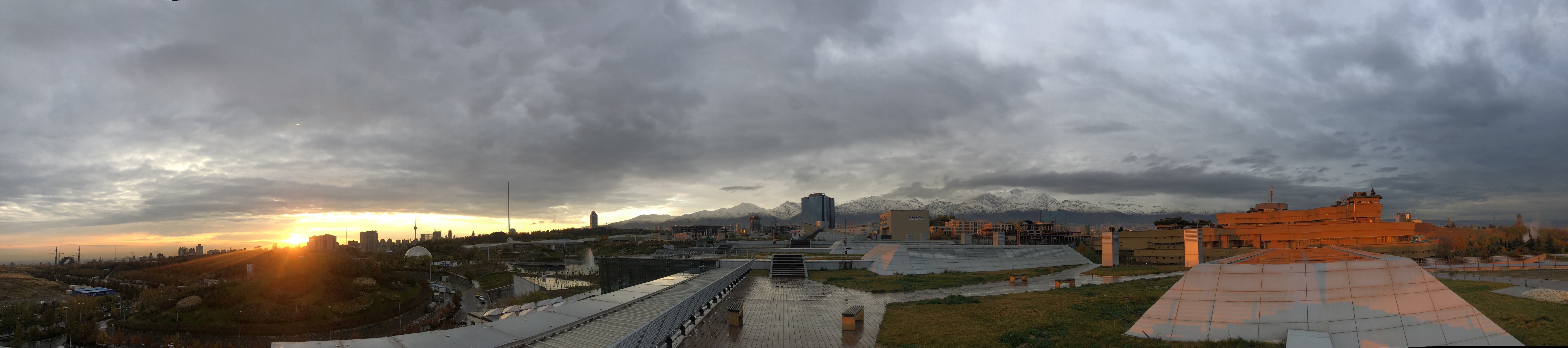
Tehran, 3 December 2019. Illustrative archive photograph for the dossier; it does not show the 2025 or 2026 strikes. — GTVM92 — CC BY-SA 4.0 https://creativecommons.org/licenses/by-sa/4.0/ — 3 décembre 2019, sans modification.
Where things stand
As of 1 November 2026, the available sources establish no Hormuz reopening agreement from the Doha consultations. Tehran also announced terrorist designations for the Royal Navy and RAF and a hostile-group designation for MI6; the decision's practical effects are not established.
Confirmed
Ceasefire ends the twelve-day war
On 24 June 2025, a ceasefire announced by Donald Trump ended the principal phase of fighting between Israel and Iran.
The previous day, Iran had targeted a base in Qatar used by US forces in response to the American bombing of its nuclear sites. The sequence therefore directly involved Qatari territory.
The ceasefire resolved neither the nuclear dispute nor inspection difficulties. The IAEA reported that the attacks interrupted its verification activities in Iran and that inspectors were withdrawn at the end of the month for their safety.
On the night of 21–22 June 2025, the United States struck three Iranian nuclear sites: Fordow, Natanz and Isfahan.
Operation Midnight Hammer involved B-2 bombers and cruise missiles. It marked direct US military intervention in the campaign Israel had begun on 13 June.
Donald Trump claimed destruction of the targeted capabilities, but a full damage assessment and the fate of nuclear material required verification. The observed strikes alone did not establish elimination of the entire programme.
On 13 June 2025, Israel launched strikes on Iran’s military and nuclear structures, opening a twelve-day war.
Natanz was among the installations hit. The IAEA subsequently documented attacks on several nuclear sites and the interruption of its verification activities for safety reasons.
Iran retaliated against Israel. This campaign was distinct from the war opened in February 2026: it was an earlier phase of sustained attacks on Iranian installations, not part of the same military timetable.
On 8 December 2024, rebel forces took Damascus and Bashar al-Assad left Syria, ending his rule.
Iran and Russia had supported the Syrian government during the war that began in 2011. Hezbollah had also deployed fighters to sustain that ally.
The fall came while Hezbollah had been weakened by fighting with Israel. It changed Iran’s regional environment ahead of the 2025 and 2026 wars, without meaning that all Iranian networks or military capabilities disappeared at once.
Israel strikes Iran after the 1 October missile barrage
On 26 October 2024, Israel struck Iranian military sites in retaliation for Tehran’s missile attack on 1 October.
The operation targeted air defences and missile-related capabilities, among other objectives. Iran reported limited damage while Israel said it had achieved its objectives; these damage assessments came from the belligerents.
The October cycle extended April’s direct exchanges. The CRS describes a broader regional context involving Iran’s allied groups, whose actions must nevertheless be distinguished from attacks carried out directly by the Iranian state.
On the night of 13–14 April 2024, Iran launched drones and missiles at Israel, its first direct attack of this scale from its own territory.
Tehran presented the operation as retaliation for the 1 April strike on an Iranian consular building in Damascus, attributed to Israel. Most projectiles were intercepted with help from Israel’s partners.
After years of indirect confrontation and covert operations, the episode openly exposed both countries’ territories to reciprocal attacks. It preceded another cycle of direct strikes in October.
Iran and Saudi Arabia announce restoration of relations
On 10 March 2023, Iran and Saudi Arabia announced a Chinese-mediated agreement in Beijing to restore diplomatic relations.
The two countries planned to reopen their embassies within two months and affirmed sovereignty and non-interference. The announcement followed talks between their security officials.
The rapprochement concerned two rival powers involved in several regional crises. It did not automatically settle conflicts in Yemen, Lebanon or Syria, or Iran’s confrontation with the United States and Israel.
Mahsa Amini, 22, died on 16 September 2022 after her arrest by morality police in Tehran, prompting protests that spread across the country.
Her arrest on 13 September concerned compulsory veiling. Authorities cited a medical cause while her family and witnesses challenged their account; UN experts called for an independent investigation.
The mobilisation concerned women’s rights and the regime’s political domination. Findings from investigations published later must be distinguished from what was established when she died, preserving how knowledge developed.
On 8 January 2020, Iran launched ballistic missiles at Iraqi bases hosting American personnel in retaliation for Qassem Soleimani’s killing.
The Quds Force commander had been killed by a US strike near Baghdad airport on 3 January. Iranian missiles targeted Ain al-Asad and a facility near Erbil, among other objectives.
The sequence constituted a direct confrontation on Iraqi territory. It must be distinguished from operations by Iranian-allied groups: in this instance Tehran itself claimed and carried out the military action.
On 15 November 2019, the announcement of a steep fuel price increase triggered a wave of protests in Iran.
From 16 November, authorities imposed a near-total shutdown of global internet access. Amnesty International documented hundreds of deaths and unlawful lethal force; its initial count of 304 victims was increased to 323 in 2021.
Those figures come from the organisation’s investigation rather than an agreed official toll. The communications shutdown obstructed documentation of violence and illustrates the connection between economic crisis, protest and repression.
Trump withdraws the United States from the nuclear deal
On 8 May 2018, Donald Trump announced the US withdrawal from the JCPOA and the restoration of American sanctions on Iran.
The US president considered the agreement insufficient to protect his country’s interests. Other participants did not withdraw at the same time, so the American decision must not be described as a collective termination.
The rupture undermined Tehran’s expected economic benefits. The chronology must distinguish the US withdrawal in 2018 from Iran’s subsequent reductions in its nuclear commitments.