Iran since 1979: revolution, crises and wars with Israel and the United States
Newest to oldest
Reported information
Iran says two tankers and a tugboat caught fire in Hormuz
Iran's Revolutionary Guard claimed on 5 November 2026 that two oil tankers and a tugboat caught fire in separate incidents in the Strait of Hormuz. The account carried by Reuters does not constitute independent confirmation of the fires.
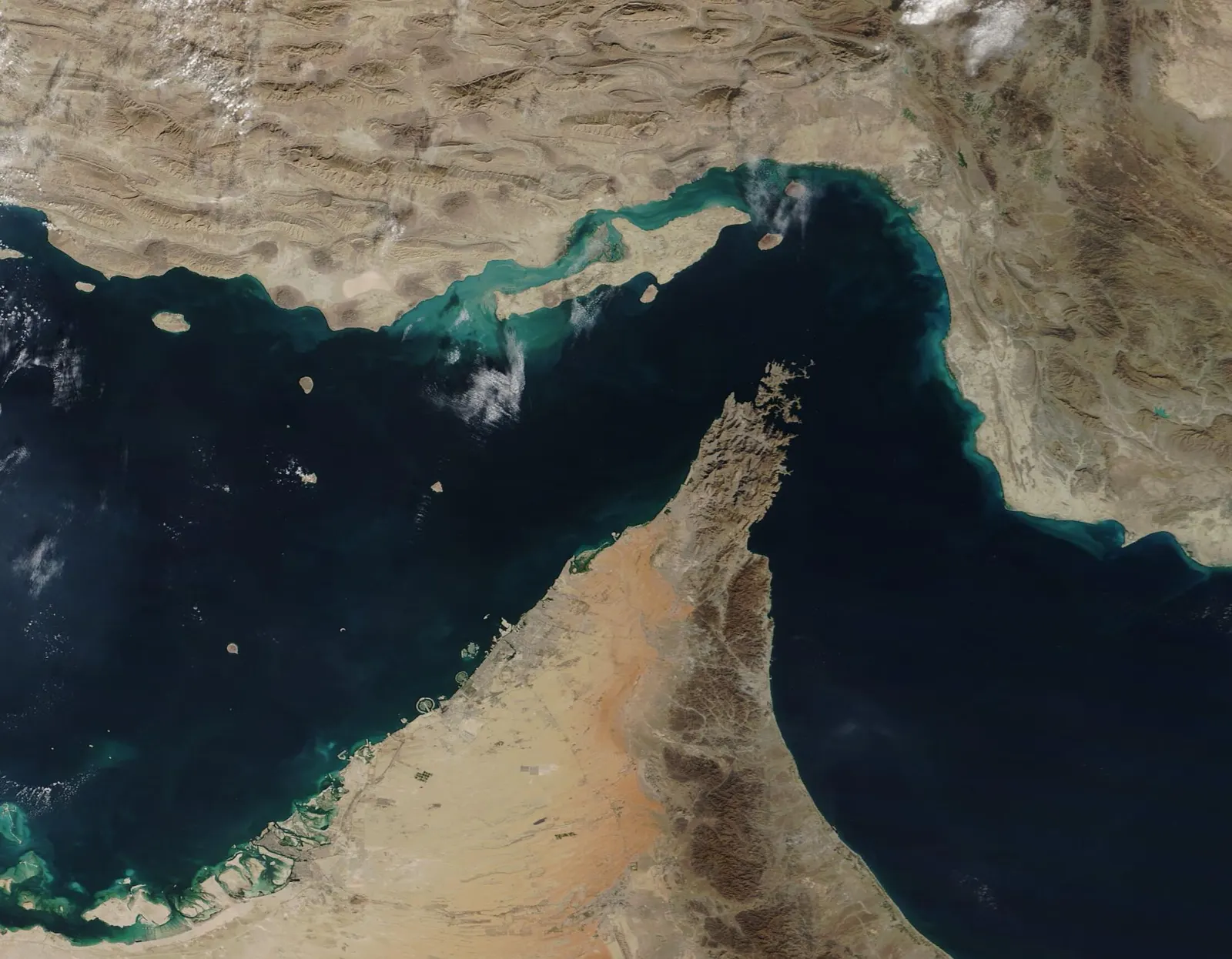
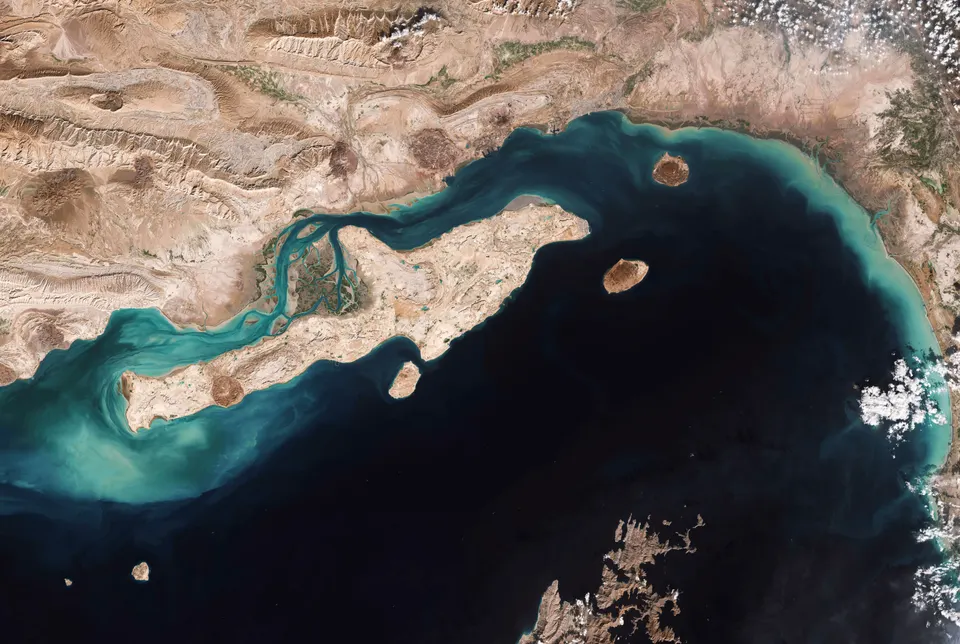
Strait of Hormuz seen by Terra, December 2020. Archive; does not show the alleged incidents. NASA GSFC, public domain. — MODIS Land Rapid Response Team / NASA GSFC — Public domain. Acquired 2 December 2020; unmodified.
According to the Iranian account, one tanker struck a mine in a passage south of the strait. Another caught fire while leaving a route in the eastern section; a tugboat approaching to assist also burned.
Iranian authorities describe the routes as unauthorised, a characterisation that remains theirs. The consulted reports do not name the vessels or establish casualties or independent verification of each incident. These assertions must therefore be distinguished from materially confirmed attacks.
Khamenei warns renewed US strikes would widen the war
Iran’s Supreme Leader Mojtaba Khamenei warned on 4 November 2026 that another US attack would lead to a wider war. In a written statement separately reported by Reuters and AFP, he also rejected the idea that a change of congressional majority would alter US policy towards Iran.
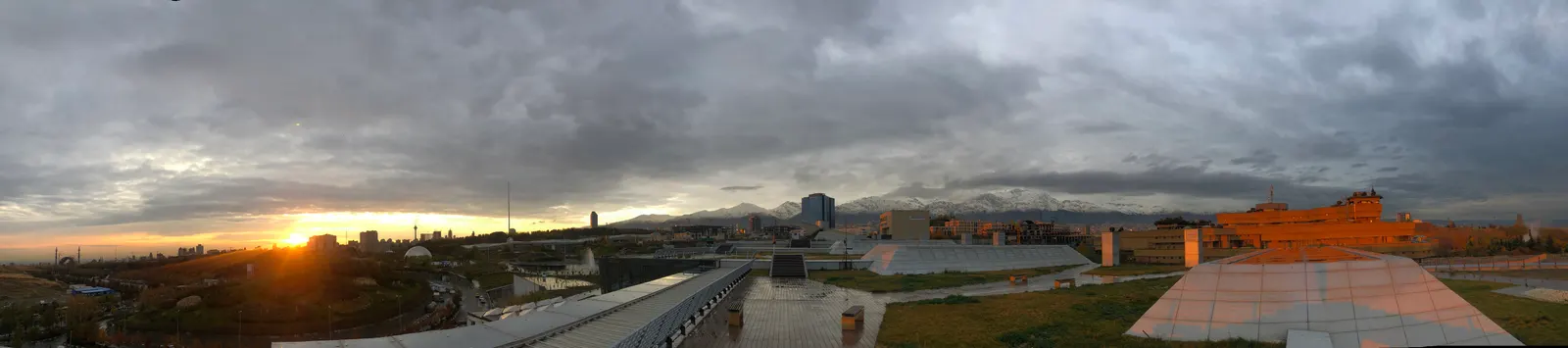
Tehran in December 2019. Archive illustration; not the statement. GTVM92, CC BY-SA 4.0. — GTVM92 — CC BY-SA 4.0 https://creativecommons.org/licenses/by-sa/4.0/ — 3 décembre 2019, sans modification.
The message followed the US midterm elections. Khamenei portrayed American hostility as unaffected by shifts between Democrats and Republicans and rejected concessions to Washington.
These are the Iranian leader’s position and warning. The statement neither announces a diplomatic agreement nor establishes that a new military operation has begun.
Washington sanctions Indian network accused of supporting Iranian oil shipping
The US Treasury announced sanctions on 4 November 2026 against an India-based network it accuses of supplying false flags and certificates to vessels transporting Iranian oil.
Tehran, December 2019. Archive illustration; not the sanctioned companies. GTVM92, CC BY-SA 4.0. — GTVM92 — CC BY-SA 4.0 https://creativecommons.org/licenses/by-sa/4.0/ — 3 décembre 2019, sans modification.
The measures target Suniel Kumar Sharma and Jaspreet Preeti Shahid, among others, as well as companies linked to their network. The maritime-fraud allegations are Washington’s.
Treasury also designated Turkish company Fugo Ground Services for alleged support to Iran’s aviation sector, Reuters reported. The new measures are part of Operation Economic Outcast. The consulted sources do not present responses from the targeted people and companies.
Egypt consults Qatar and Iraq on regional de-escalation
Egyptian Foreign Minister Badr Abdelatty held separate telephone talks with his Qatari and Iraqi counterparts on 3 November 2026 to support diplomacy amid regional tensions. Published accounts attribute the information to Egypt’s foreign ministry spokesperson.
Iraqi flag. Geographic illustration, public domain; does not depict the reported events. — Wikimedia Commons contributors — public domain (PD-ineligible); PNG rendering of the Iraqi flag.
Talks with Qatar’s Prime Minister and Foreign Minister Mohammed bin Abdulrahman Al Thani concerned coordination to allow time for negotiations and avoid further security deterioration, according to the Egyptian account.
The exchange with Fuad Hussein also covered preparations for the fourth Supreme Joint Committee and economic cooperation between Cairo and Baghdad. The consultations do not constitute a ceasefire agreement or evidence of an outcome in regional negotiations.
Qatari mediators return to Tehran for further talks with Iran
Qatari mediators arrived in Tehran on the evening of 2 November 2026 to resume discussions on a possible Iran–United States agreement, according to informed interlocutors cited separately by Reuters and The Times of Israel.
Tehran, December 2019. Geographic archive image; the Qatari delegation is not shown. — GTVM92 — CC BY-SA 4.0 https://creativecommons.org/licenses/by-sa/4.0/ — 3 décembre 2019, sans modification.
The talks concern a proposal linking a rapid reopening of the Strait of Hormuz to US sanctions relief, followed by nuclear negotiations, according to the diplomat interviewed by The Times of Israel. Reuters also reports the visit and continued work on a version of the draft.
Abbas Araghchi described intensive indirect consultations in an IRNA interview carried by AFP. The mediators’ return continues the exchanges after the Doha round; the sources consulted establish neither an accepted final agreement nor a binding timetable for reopening the strait.
Draft proposal circulates after Doha talks, official tells Reuters
A draft proposal aimed at ending the war with Iran is circulating for feedback, an official briefed on the discussions told Reuters on 2 November 2026. A follow-up meeting is possible, the source said.
Archive geographical illustration; it does not depict the reported event. — Wikimedia Commons, domaine public (géométrie simple). Drapeau du Qatar ; rendu PNG de l’original SVG.
The same official said Iranian negotiators left Doha on 1 November, without attributing their departure to difficulties in the discussions with Qatari mediators.
The account describes a continuing diplomatic process, rather than acceptance of an agreement. The remarks establish neither the draft’s full contents, a confirmed meeting date nor an agreed timetable for reopening the Strait of Hormuz.
US officials report limited strikes on Iran’s Qeshm Island
The US military carried out limited strikes on Iran’s Qeshm Island on 2 November 2026, according to US officials separately interviewed by CNN and Associated Press. Those officials describe a defensive operation; damage and casualties are not established in the material reviewed.
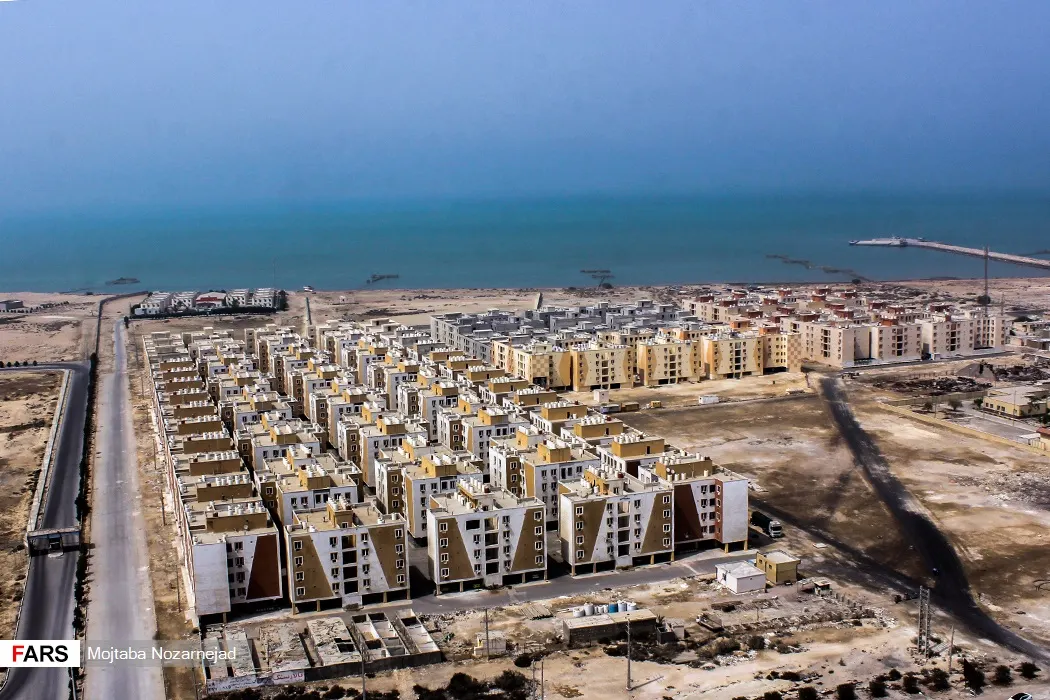
Qeshm, 30 March 2019. Archive view; it does not depict the strikes. Mojtaba Nozarnejad / Fars Media Corporation, CC BY 4.0. — Mojtaba Nozarnejad / Fars Media Corporation / Wikimedia Commons — CC BY 4.0 https://creativecommons.org/licenses/by/4.0/ — 30 mars 2019, sans modification.
CNN cites three officials saying the action was intended to protect US assets in the region. One says it followed Iranian fire at a US aircraft. The official interviewed by Associated Press refers to Iranians using surface-to-air missiles against US assets.
Iranian state media reported explosions on Qeshm in the Strait of Hormuz. Those reports do not establish the precise targets or the military outcome of the strikes. The description of a defensive response remains that of the US officials rather than an independent finding about the circumstances.
Iran announces 'terrorist' designation for Britain's naval and air forces
Iran's Foreign Ministry announced on 1 November 2026 that it was designating the Royal Navy and Royal Air Force as 'terrorist organisations' and foreign intelligence service MI6 as a 'hostile group'. These are the Iranian authorities' designations.
Tehran, December 2019. Archive photograph; it does not depict a 2026 decision or military operation. — GTVM92 — CC BY-SA 4.0 https://creativecommons.org/licenses/by-sa/4.0/ — 3 décembre 2019, sans modification.
The ministry presents its decision as a reciprocal measure following British actions against the Revolutionary Guard. It also accuses London of supporting US and Israeli operations; that allegation remains attributed to Tehran.
The announcement distinguishes MI6's designation from that applied to the two armed services. The sources consulted describe the Iranian decision without establishing its practical effects on diplomatic relations or military operations. It adds to regional tensions but does not announce fresh hostilities.
Doha talks consider two-day Hormuz reopening proposal, with no agreement
Iranian negotiators continued consultations with Qatari mediators in Doha on 1 November 2026. Abbas Araghchi described a proposal to reopen the Strait of Hormuz within two days of a possible agreement, while stressing that no final conclusion had been reached.
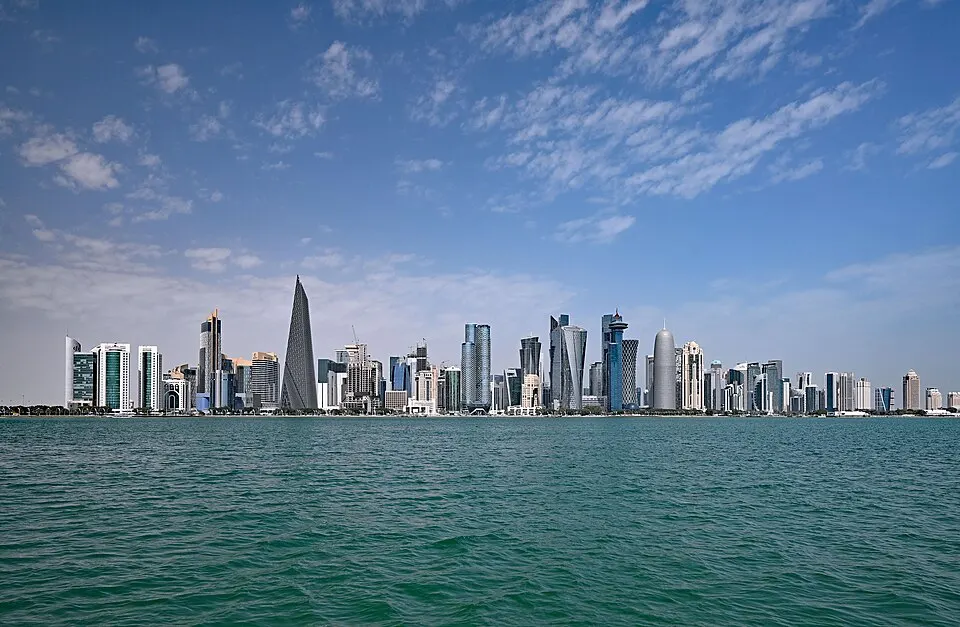
West Bay in Doha, February 2026. Archive view; does not show the talks. P. Hughes, CC BY 4.0, resized. — P. Hughes / Wikimedia Commons — CC BY 4.0 https://creativecommons.org/licenses/by/4.0/ — 4 février 2026, taille réduite.
Reuters places the exchanges on the third day of a mediation sequence that began in Tehran before moving to Doha. The Iranian minister presents the shorter proposed period as a development in the plan discussed with Qatar; it is neither US acceptance nor a reopening of the strait.
Araghchi also says no direct meeting with a US delegation is planned during the visit. The outcome depends, he says, on Washington’s response to Iranian conditions. The sources report continuing mediation but establish neither a final text accepted by both parties nor an agreed implementation timetable.
Mojtaba Khamenei orders readiness for response without geographic limits
Mojtaba Khamenei ordered Iran's armed forces on 31 October 2026 to prepare an immediate response without geographic limits to new attacks, according to a statement reported by several outlets. This is a directive and warning, rather than evidence of an operation carried out.
Tehran in December 2019. Archive image; it shows neither the leader nor a military operation. — GTVM92 — CC BY-SA 4.0 https://creativecommons.org/licenses/by-sa/4.0/ — 3 décembre 2019, sans modification.
Reuters and AFP, cited by Arab News, place the message on the leader's official Telegram account. Arabic-language Euronews reports the military-readiness instructions; L'Orient-Le Jour also reports the warning to Washington.
The message addresses the United States and Israel in the event of renewed attacks and presents military readiness as deterrence. The sources consulted establish neither the launch of such a response nor a target actually struck following the order. The statement comes alongside Qatari mediation efforts, without establishing that those efforts have stopped.
Iran: Rezaei says he has not replied to Vance's letter
Mohsen Rezaei, secretary of Iran's Supreme National Security Council, says he has read a letter from US Vice President JD Vance but has not replied. Accounts published on November 1, 2026 attribute to him a positive assessment of a change in US tone, without any agreement announced.
West Bay, Doha, February 2026. Geographic archive illustration; it does not show the event described. — P. Hughes / Wikimedia Commons — CC BY 4.0 https://creativecommons.org/licenses/by/4.0/ — 4 février 2026, taille réduite.
According to Al Jazeera, Rezaei maintains that opening the Strait of Hormuz depends on meeting Iran's conditions. Iranian radio also reports that the letter remains unanswered.
The scope of the correspondence remains disputed: Al Jazeera reports that Donald Trump publicly limited Vance's role to assistance involving medical supplies. These statements do not establish an agreement on negotiations or reopening the strait.
Kfar Tebnit explosion: Israeli army describes controlled demolition
An explosion was reported in Kfar Tebnit, southern Lebanon, on 31 October 2026. While media reports describe a strike, the Israeli army says its soldiers carried out a controlled demolition; the precise nature remains disputed in the reports consulted.
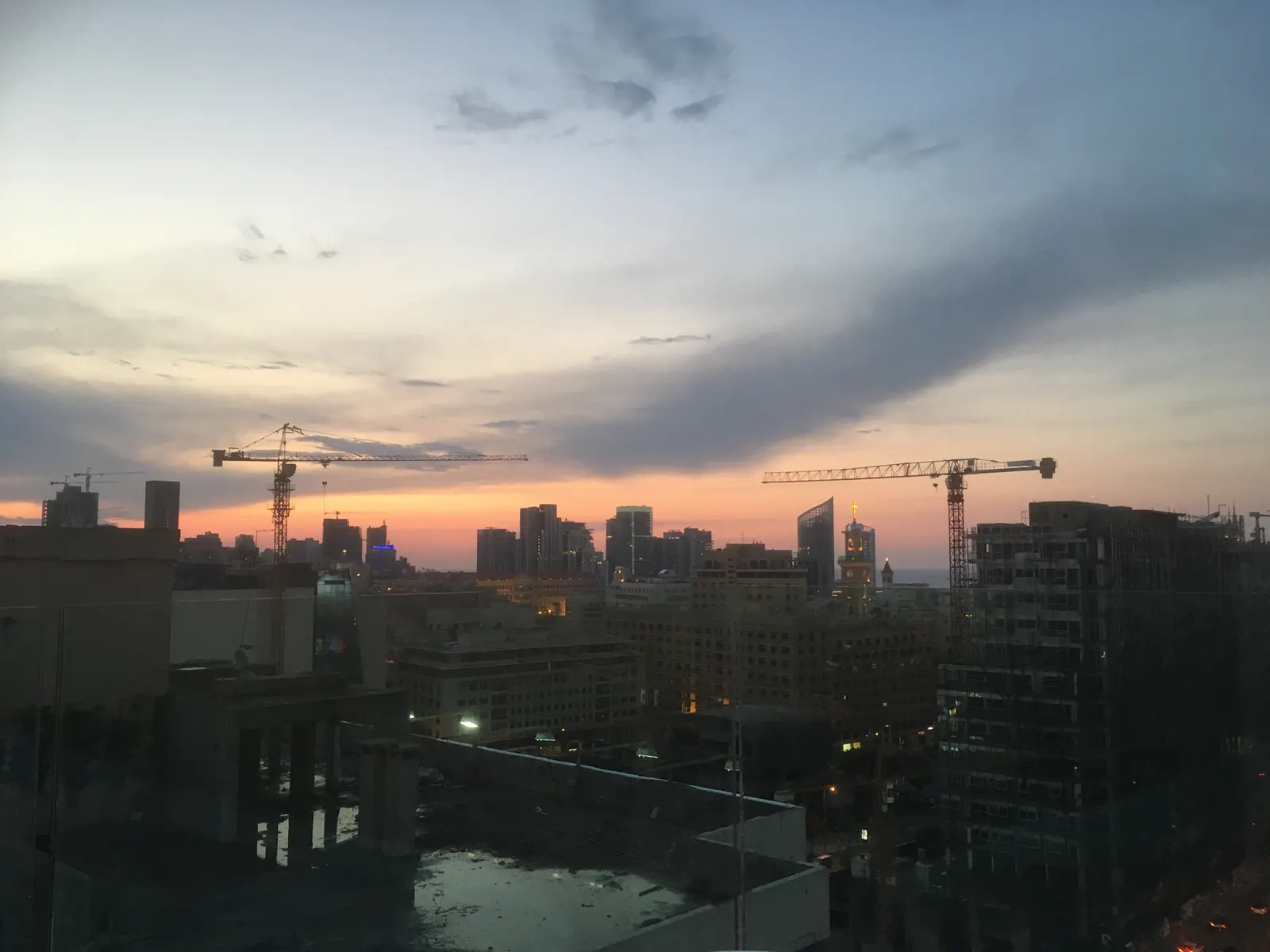
Beirut, April 2019. Archive view of Lebanon; it shows neither Kfar Tebnit nor the explosion. — Laura C Ellis / Wikimedia Commons — CC BY-SA 4.0 https://creativecommons.org/licenses/by-sa/4.0/ — 18 avril 2019 ; sans modification.
The Times of Israel relays the Israeli military's explanation: destruction of infrastructure described as a routine operation, without further details. Arabic-language Al-Jazeera and L'Orient-Le Jour report Israeli military activity in the south, carrying an AFP-credited image of smoke at Kfar Tebnit.
This material supports reporting the incident and the attributed accounts, but does not resolve its mechanism. The selected documents establish no precise casualty toll for this explosion. That distinction prevents a media description from being presented as an independent finding.
Iranian negotiators hold Doha talks with Qatari mediators, Reuters reports
Iranian negotiators held talks in Doha with Qatari mediators on 31 October 2026, Reuters reports, citing a source briefed on the discussions. The exchanges follow the previous day's Tehran talks and do not amount to an announced agreement.
Doha, February 2026. Archive image; this view does not show the negotiations. — P. Hughes / Wikimedia Commons — CC BY 4.0 https://creativecommons.org/licenses/by/4.0/ — 4 février 2026, taille réduite.
Reuters' source said the contacts were coordinated with Washington. Axios also described Qatari efforts to enable renewed direct US-Iran dialogue, citing diplomatic sources. Both outlets rely on unnamed interlocutors; their personal independence cannot be established.
Disagreement concerns the sequence of confidence-building steps and conditions for renewed talks. A possible US visit to Doha, described by officials quoted by Al-Arabiya via Ajel, remains conditional on progress. No timetable accepted by the parties or operational outcome is established.
Qatari mediators return to Tehran, Reuters reports
Qatari mediators returned to Tehran on 30 October 2026 to pursue an agreement between the United States and Iran, Reuters reported, citing an official briefed on the talks.
Tehran in December 2019. Archive photograph; it does not show the 2026 delegation. — GTVM92 — CC BY-SA 4.0 https://creativecommons.org/licenses/by-sa/4.0/ — 3 décembre 2019, sans modification.
According to that source, mediation is coordinated with Washington. Reuters describes a disagreement over sequencing: the United States wants nuclear issues addressed at the outset, while Tehran first demands an end to the blockade of its ports and the lifting of oil sanctions.
An Anadolu dispatch citing Iranian media also reports the arrival of a Qatari delegation. The visit does not constitute an announcement of an agreement accepted by both sides.
Oman says it evacuated 25 crew from burning ship off Musandam
Oman’s navy evacuated 25 crew members from the Panama-flagged RITI after an attack followed by a fire near Musandam on 30 October 2026, according to Oman’s Maritime Security Centre. AFP and Arabic-language outlets relayed the announcement.
Satellite view of Hormuz published in 2021, using 2020 data. Illustration; it shows neither the RITI nor the rescue. — ESA / Wikimedia Commons — CC BY-SA 3.0 IGO https://creativecommons.org/licenses/by-sa/3.0/igo/ ; Contains modified Copernicus Sentinel data 2020 ; suppression de nuages préexistante, taille réduite.
The centre placed the ship 1.6 nautical miles off the Musandam coast and said the crew received medical care, without detailing their condition. The number evacuated and the reported circumstances remain attributed to Omani authorities.
The available evidence does not identify the attacker or the method used. This evacuation should not be conflated with a separate report of explosives attached to another tanker’s hull near Khasab; it also does not confirm Iranian claims about mines in the strait.