United Kingdom · Israel · Iraq · Islamic Republic of Iran · Kuwait · Lebanon · Sri Lanka · Oman · Panama · Pakistan · Qatar · Russian Federation · Saudi Arabia · United States of America
File
Iran since 1979: revolution, crises and wars with Israel and the United States
This dossier traces the Islamic Republic of Iran from Ruhollah Khomeini’s return in February 1979: the monarchy’s overthrow, the hostage crisis, the Iran-Iraq War, Ali Khamenei’s succession, sanctions, domestic protests and nuclear negotiations. It also follows regional confrontation through Tehran’s allies, rapprochement with Saudi Arabia and the transition to direct Iran-Israel attacks in 2024.
The twelve-day war of June 2025 is distinguished from the conflict opened on 28 February 2026 by US and Israeli strikes. The chronology examines Ali Khamenei’s killing and Mojtaba Khamenei’s succession, civilian victims, regional fronts, energy infrastructure, Hormuz, blockades and attempts at agreement. The Qatari consultations that originally defined this dossier remain integrated into the expanded history.
Sourced entries distinguish established facts, announcements, attributed responsibility and unverified outcomes. The reconstruction selects principal milestones rather than recording every military operation. No final, consistent human toll across all theatres is established here. Dates without a known time are ordered by calendar day.
Last updated : 66 key moments
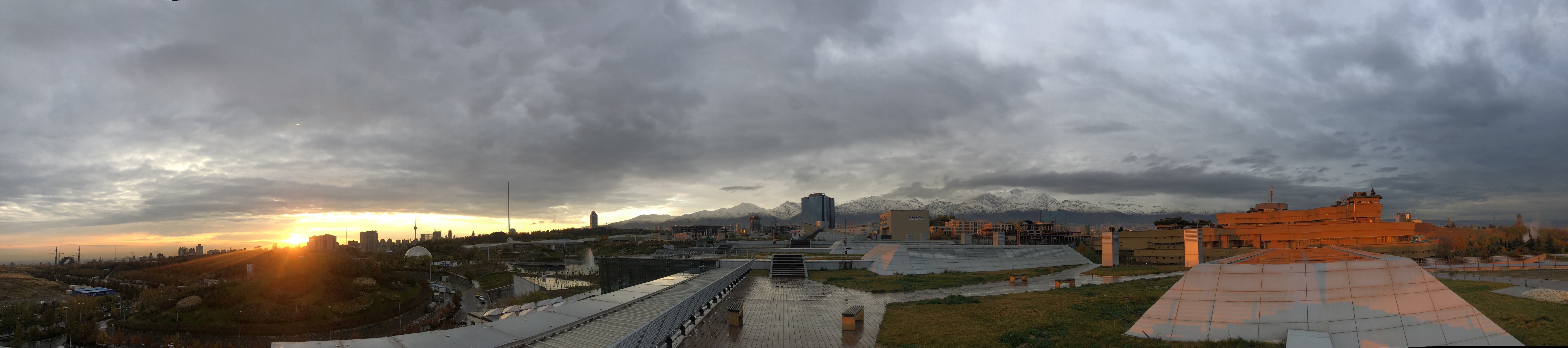
Tehran, 3 December 2019. Illustrative archive photograph for the dossier; it does not show the 2025 or 2026 strikes. — GTVM92 — CC BY-SA 4.0 https://creativecommons.org/licenses/by-sa/4.0/ — 3 décembre 2019, sans modification.
Where things stand
As of 1 November 2026, the available sources establish no Hormuz reopening agreement from the Doha consultations. Tehran also announced terrorist designations for the Royal Navy and RAF and a hostile-group designation for MI6; the decision's practical effects are not established.
Confirmed
Clinton broadens trade and financial embargo on Iran
On 6 May 1995, Bill Clinton signed Executive Order 12959, sharply expanding US restrictions on trade and investment with Iran.
The order prohibited a broad range of transactions by US persons, subject to exceptions and implementation deadlines. It supplemented measures adopted in March targeting investment in Iran’s petroleum sector.
Washington cited Iranian support for terrorism and proliferation risks among its reasons; these were the administration’s stated grounds. Economic restrictions thereby became a central, enduring instrument of the confrontation.
On 4 June 1989, the Assembly of Experts selected Ali Khamenei to succeed Ruhollah Khomeini, who had died the previous day.
Khamenei had been serving as president. The choice came as the institutions organised the succession to the regime’s founder and constitutional changes were being prepared.
The transition preserved the supreme leader’s central place in Iranian power. It opened a new period of political leadership after the revolution and the war with Iraq; it did not amount to a change of regime.
On 20 August 1988, a UN-mediated ceasefire took effect between Iran and Iraq after almost eight years of war.
The arrangement formed part of the implementation of Security Council Resolution 598. UN observers were deployed to verify the cessation of hostilities and the withdrawal of forces to internationally recognised boundaries.
The halt in fighting opened direct talks without immediately resolving all outstanding issues between the countries. This milestone distinguishes the end of the principal military phase from a lasting settlement of the war’s consequences.
On 3 July 1988, the US cruiser USS Vincennes shot down the civilian Iran Air Flight 655 over the Gulf, killing all 290 people aboard.
US forces mistook the Airbus for a hostile military aircraft, according to the American account. The incident occurred during a period of naval clashes between Iran and the United States.
The destruction of a civilian aircraft must be distinguished from combat between warships. It remains a major episode in the bilateral confrontation and in the human cost of the militarisation of Gulf shipping routes.
On 18 April 1988, the US Navy attacked Iranian targets in the Gulf in Operation Praying Mantis.
Washington presented the operation as retaliation for the mining of the frigate USS Samuel B. Roberts four days earlier. Platforms used by Iran were destroyed and several Iranian vessels were sunk or damaged.
The episode took place during the Iran-Iraq War and the confrontation over protecting merchant shipping. It was a precedent for direct military conflict between the United States and Iran, long before the air operations of 2025 and 2026.
On 26 November 1986, the US attorney general ordered an FBI investigation into Iran-Contra following disclosures of secret Reagan administration operations.
US officials had sold weapons to Iran despite the declared embargo policy. Some proceeds were diverted to Nicaragua’s Contra rebels while Congress had restricted their funding.
The sales sought, among other aims, help securing the release of Americans held in Lebanon. The affair shows that covert transactions coexisted with public hostility between Washington and Tehran. Lawrence Walsh was appointed independent counsel in December.
Beirut bombings kill 241 US and 58 French military personnel
On 23 October 1983, two bombings struck the American and French contingents of the multinational force in Beirut, killing 241 US and 58 French military personnel.
The attacks occurred during Lebanon’s civil war. US authorities and several historical accounts attribute them to Iranian-backed networks that formed Hezbollah; responsibility must be presented with that attribution.
Iran was developing its support for Lebanese armed groups following Israel’s 1982 intervention. This indirect, regional dimension became a major feature of its confrontation with Western powers and Israel.
On 22 September 1980, Iraqi forces invaded Iran, opening a war that lasted until the August 1988 ceasefire.
The conflict pitted Saddam Hussein’s Iraq against an Islamic Republic still consolidating its power. Ground fighting continued without a swift settlement; the United Nations attempted mediation from September 1980.
The war would also spread to shipping in the Gulf and involve outside powers’ interests. This interstate war must be distinguished from Iran’s later confrontations with the United States and Israel, although Gulf security connects the different periods.
On 4 November 1979, students loyal to Khomeini occupied the US embassy in Tehran and took its staff hostage.
The attackers demanded the return of the shah, admitted to the United States for medical treatment. Khomeini backed the occupation; Bazargan’s government resigned in the following days.
The crisis brought sanctions and asset freezes, followed by the severing of diplomatic relations on 7 April 1980. It established a lasting confrontation between Washington and Iran’s new rulers. The final 52 hostages would be released on 20 January 1981 after 444 days in captivity.
The revolution overthrows the last monarchical government
On 11 February 1979, the army’s declaration of neutrality brought down Shapour Bakhtiar’s government and secured the Iranian revolution’s victory.
Ruhollah Khomeini had returned from exile on 1 February and appointed Mehdi Bazargan to lead a rival provisional government. The shah’s departure in January had therefore not settled the struggle for power.
The Islamic Republic was proclaimed on 1 April following a referendum. These separate stages explain the transformation of a US-allied monarchy into a new political order led by the revolutionaries.