United Kingdom · Israel · Iraq · Islamic Republic of Iran · Kuwait · Lebanon · Sri Lanka · Oman · Panama · Pakistan · Qatar · Russian Federation · Saudi Arabia · United States of America
File
Iran since 1979: revolution, crises and wars with Israel and the United States
This dossier traces the Islamic Republic of Iran from Ruhollah Khomeini’s return in February 1979: the monarchy’s overthrow, the hostage crisis, the Iran-Iraq War, Ali Khamenei’s succession, sanctions, domestic protests and nuclear negotiations. It also follows regional confrontation through Tehran’s allies, rapprochement with Saudi Arabia and the transition to direct Iran-Israel attacks in 2024.
The twelve-day war of June 2025 is distinguished from the conflict opened on 28 February 2026 by US and Israeli strikes. The chronology examines Ali Khamenei’s killing and Mojtaba Khamenei’s succession, civilian victims, regional fronts, energy infrastructure, Hormuz, blockades and attempts at agreement. The Qatari consultations that originally defined this dossier remain integrated into the expanded history.
Sourced entries distinguish established facts, announcements, attributed responsibility and unverified outcomes. The reconstruction selects principal milestones rather than recording every military operation. No final, consistent human toll across all theatres is established here. Dates without a known time are ordered by calendar day.
Last updated : 66 key moments
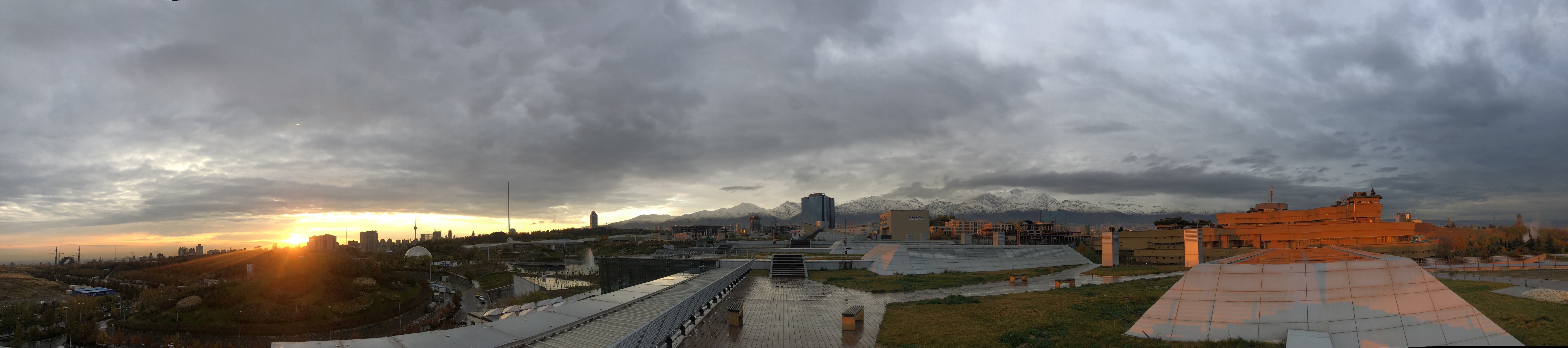
Tehran, 3 December 2019. Illustrative archive photograph for the dossier; it does not show the 2025 or 2026 strikes. — GTVM92 — CC BY-SA 4.0 https://creativecommons.org/licenses/by-sa/4.0/ — 3 décembre 2019, sans modification.
Where things stand
As of 1 November 2026, the available sources establish no Hormuz reopening agreement from the Doha consultations. Tehran also announced terrorist designations for the Royal Navy and RAF and a hostile-group designation for MI6; the decision's practical effects are not established.
Confirmed
Fuel price increase triggers nationwide protests
On 15 November 2019, the announcement of a steep fuel price increase triggered a wave of protests in Iran.
From 16 November, authorities imposed a near-total shutdown of global internet access. Amnesty International documented hundreds of deaths and unlawful lethal force; its initial count of 304 victims was increased to 323 in 2021.
Those figures come from the organisation’s investigation rather than an agreed official toll. The communications shutdown obstructed documentation of violence and illustrates the connection between economic crisis, protest and repression.
Trump withdraws the United States from the nuclear deal
On 8 May 2018, Donald Trump announced the US withdrawal from the JCPOA and the restoration of American sanctions on Iran.
The US president considered the agreement insufficient to protect his country’s interests. Other participants did not withdraw at the same time, so the American decision must not be described as a collective termination.
The rupture undermined Tehran’s expected economic benefits. The chronology must distinguish the US withdrawal in 2018 from Iran’s subsequent reductions in its nuclear commitments.
On 16 January 2016, the JCPOA reached Implementation Day after the IAEA verified Iran’s principal initial nuclear measures.
The United States and European Union lifted or suspended the nuclear sanctions specified in the agreement. This milestone concerned the fulfilment of technical conditions, distinct from the July 2015 political agreement.
Other US restrictions remained based on grounds separate from the nuclear issue. The agreed relief therefore did not remove every sanction or every dispute between Iran and Western countries.
Iran and six powers conclude the Vienna nuclear agreement
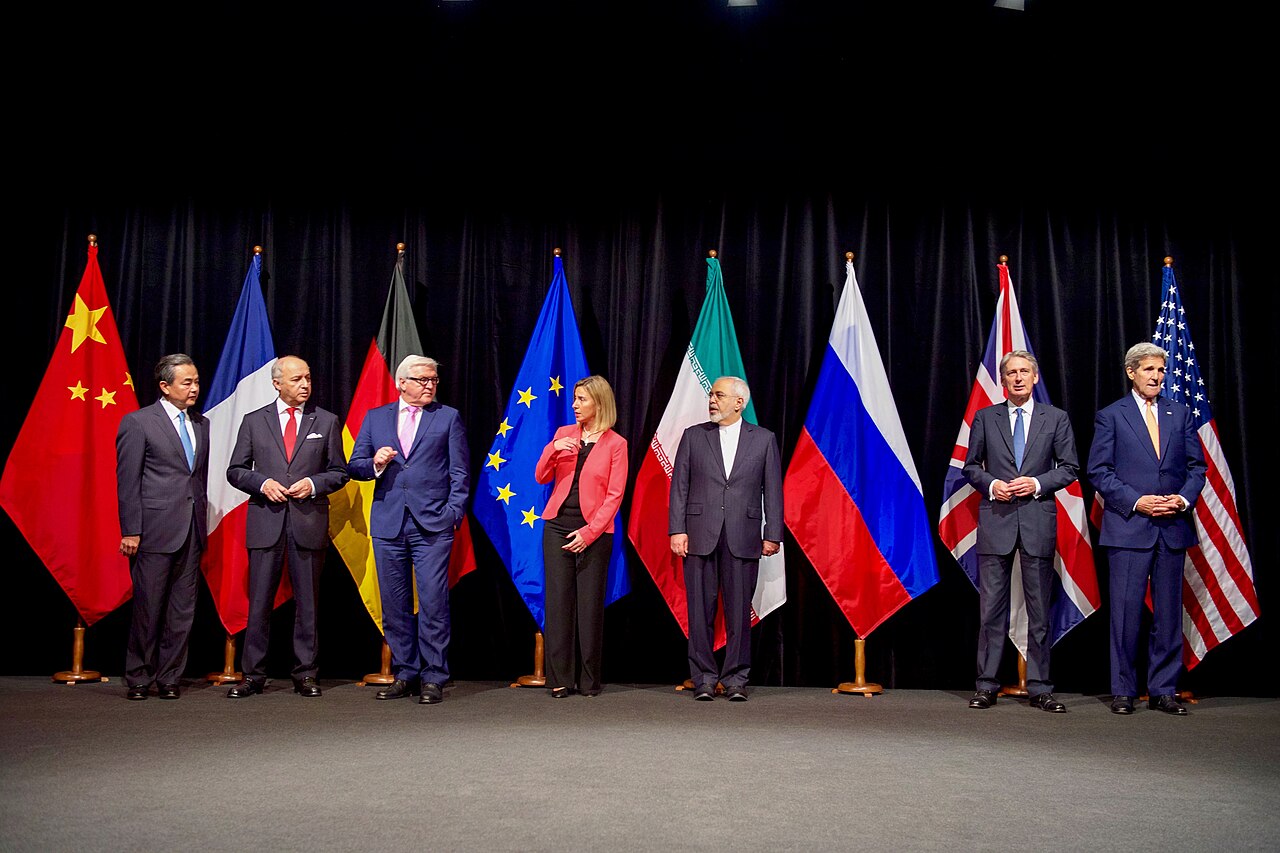
On 14 July 2015, Iran and the United States, China, Russia, France, the United Kingdom and Germany concluded the JCPOA in Vienna, with the European Union.
Group photograph in Vienna after the nuclear agreement announcement, 14 July 2015. US Department of State, public domain. — U.S. Department of State / Wikimedia Commons — domaine public (PD-USGov) ; 14 juillet 2015 ; réduction de taille, sans autre modification.
The agreement provided for nuclear programme limits and international verification in return for relief from nuclear-related sanctions. It built on the diplomatic process and the November 2013 interim agreement.
The Security Council endorsed it through Resolution 2231 on 20 July. Its conclusion did not mean full normalisation between Washington and Tehran: it concerned the nuclear file and the commitments attached to it.
Disputed presidential result sparks the Green Movement
On 13 June 2009, protests broke out after the announcement of Mahmoud Ahmadinejad’s reelection, which his opponents disputed.
Supporters of Mir Hossein Mousavi alleged fraud. Demonstrations continued despite bans on gatherings and restrictions on communications and media.
Human Rights Watch later documented arbitrary arrests, mistreatment and force against protesters. The officially declared result must be distinguished from the challenges to it and the documented abuses; this entry does not endorse the vote as free and uncontested.
On 23 December 2006, the Security Council adopted Resolution 1737 imposing sanctions over Iran’s sensitive nuclear activities.
The text demanded suspension of the specified enrichment and reprocessing activities. It restricted supplies of sensitive materials and technology and froze assets of listed individuals and entities.
A committee was established to oversee implementation. This multilateral regime differed from earlier US sanctions: it linked Security Council decisions to the IAEA’s verification demands.
Natanz and Arak disclosures open the nuclear crisis
In August 2002, disclosures of previously undeclared nuclear installations, including Natanz, placed Iran’s programme at the centre of an international crisis.
Information made public by an Iranian opposition organisation concerned enrichment at Natanz and heavy-water-related activities at Arak. It brought increased scrutiny from the International Atomic Energy Agency.
The dispute concerned declarations, safeguards and the programme’s purpose. Enrichment capacity alone does not establish possession of a nuclear weapon.
Mohammad Khatami wins presidency on a reform platform
On 23 May 1997, Mohammad Khatami won Iran’s presidential election, opening a period of expectations for reform.
The cleric campaigned for greater cultural and political freedoms. His victory revealed the importance of a young population’s aspirations without removing the supreme leader’s role or unelected institutions.
The period helps explain alternating openings and crackdowns within the Islamic Republic. A presidential election changed the executive; it did not transfer all state authority to the president.
Clinton broadens trade and financial embargo on Iran
On 6 May 1995, Bill Clinton signed Executive Order 12959, sharply expanding US restrictions on trade and investment with Iran.
The order prohibited a broad range of transactions by US persons, subject to exceptions and implementation deadlines. It supplemented measures adopted in March targeting investment in Iran’s petroleum sector.
Washington cited Iranian support for terrorism and proliferation risks among its reasons; these were the administration’s stated grounds. Economic restrictions thereby became a central, enduring instrument of the confrontation.
On 4 June 1989, the Assembly of Experts selected Ali Khamenei to succeed Ruhollah Khomeini, who had died the previous day.
Khamenei had been serving as president. The choice came as the institutions organised the succession to the regime’s founder and constitutional changes were being prepared.
The transition preserved the supreme leader’s central place in Iranian power. It opened a new period of political leadership after the revolution and the war with Iraq; it did not amount to a change of regime.
On 20 August 1988, a UN-mediated ceasefire took effect between Iran and Iraq after almost eight years of war.
The arrangement formed part of the implementation of Security Council Resolution 598. UN observers were deployed to verify the cessation of hostilities and the withdrawal of forces to internationally recognised boundaries.
The halt in fighting opened direct talks without immediately resolving all outstanding issues between the countries. This milestone distinguishes the end of the principal military phase from a lasting settlement of the war’s consequences.