Cote d'Ivoire · People's Republic of China · France · Morocco · Russian Federation · Rwanda · United States of America · Holy See (Vatican City State)
File
Mohammed VI: activities, speeches and Royal Office statements
This dossier traces Mohammed VI’s public activities since his accession on 23 July 1999: speeches, decisions and audiences, visits within Morocco and abroad, institutional and social reforms, major projects and Royal Office statements. It distinguishes announced directions, decisions and documented delivery.
Full speeches and messages: the Communication Ministry’s six official collections provide access to archives from July 1999 to June 2024: 1999–2001 · 2002–2005 · 2006–2009 · 2010–2014 · 2015–2019 · 2019–June 2024. Maroc.ma’s archive extends access to recent speeches, including 2026. Each selected speech entry links to an official document or identified transcript. Full texts are available at the linked sources; they are not reproduced in full on Moojaz. The 2026 edition of the official collection adds further documents. Landmark readings include the 31 January 2017 Addis Ababa address and the 31 October 2025 address, both linked in French.
Last updated : 40 key moments
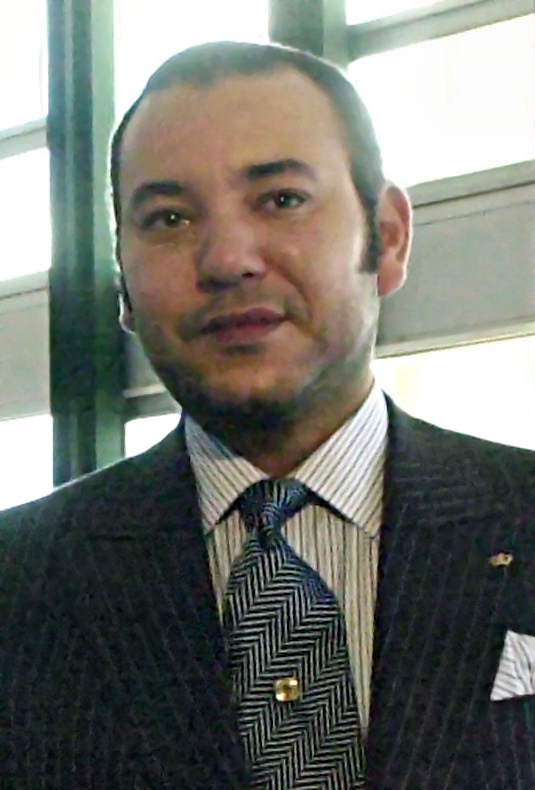
Mohammed VI, November 26, 2004. Illustrative archive. U. Dettmar/ABr; retouched by Quibik, CC BY 3.0 BR https://creativecommons.org/licenses/by/3.0/br/. — U. Dettmar/ABr ; retouche Quibik / Wikimedia Commons — CC BY 3.0 BR https://creativecommons.org/licenses/by/3.0/br/ — archives du 26 novembre 2004.
Where things stand
As of 31 October 2026, the chronology covers milestones since 1999 and links occurrences already published in other dossiers. Its latest entries concern the 28 October working session on Nador West Med and Tanger Med and the royal pardon announced on 30 October. Reconstruction remains selective: daily activities, every visit and each speech have not yet been individually indexed. Official collections and links widen documentary access without establishing an exhaustive timeline.
Reported information
Morocco submits its autonomy initiative to the Security Council
On 11 April 2007, Morocco submits to the UN an initiative to negotiate an autonomy statute for the Sahara region under Moroccan sovereignty.
The proposal envisages regional executive, legislative and judicial institutions, with powers over local affairs, development and financial resources. The state would retain defence, foreign affairs and attributes of sovereignty. The regional head of government would be elected by the regional parliament and invested by the King.
The negotiated statute would be submitted to a referendum and incorporated into the constitutional framework. This is different from a vote between independence and integration. Polisario advances an alternative based on self-determination including independence. Resolution 1754 opens negotiations without preconditions; Manhasset meetings in 2007–2008 produce no final agreement.
Mohammed VI reshapes CORCAS and seeks proposals on autonomy
On 25 March 2006 in Laâyoune, Mohammed VI appointed members of the reshaped Royal Advisory Council for Saharan Affairs and requested proposals on autonomy for the Moroccan Sahara.
The royal speech provided for tribal notables, elected representatives and civil society members, including women and young people. It assigned the council roles in proposing initiatives, mobilisation and development in the southern provinces.
The consultation concerned autonomy within Moroccan sovereignty. It prepared Morocco’s approach; it was neither a negotiated agreement with Polisario nor a status adopted by the UN. Al Jazeera reported the restructuring and Polisario’s rejection.
Mohammed VI launches the National Human Development Initiative
In his address to the nation on 18 May 2005, Mohammed VI announces the National Human Development Initiative. The programme targets poverty, social exclusion and vulnerability.
Mohammed VI, 26 November 2004. Illustrative archive portrait; this photograph does not depict the activity reported. U. Dettmar/ABr; edited by Quibik, CC BY 3.0 BR https://creativecommons.org/licenses/by/3.0/br/. — U. Dettmar/ABr ; retouche Quibik / Wikimedia Commons — CC BY 3.0 BR https://creativecommons.org/licenses/by/3.0/br/ — archives du 26 novembre 2004.
The speech calls for sustained funding and a participatory approach involving local actors. World Bank research distinguishes the royal launch in May from programme rollout. Announced objectives are separate from evaluation of results.
[Official full speech in French](https://indh-tangerassilah.ma/discours-royal-institutionnel-du-18-mai-2005/).
Mohammed VI inaugurates the Equity and Reconciliation Commission
On 7 January 2004, Mohammed VI inaugurates the Equity and Reconciliation Commission to examine past enforced disappearances and arbitrary detention and recommend reparations.
Mohammed VI, 26 November 2004. Illustrative archive portrait; this photograph does not depict the activity reported. U. Dettmar/ABr; edited by Quibik, CC BY 3.0 BR https://creativecommons.org/licenses/by/3.0/br/. — U. Dettmar/ABr ; retouche Quibik / Wikimedia Commons — CC BY 3.0 BR https://creativecommons.org/licenses/by/3.0/br/ — archives du 26 novembre 2004.
The CNDH documents this transitional-justice mandate. Human Rights Watch corroborates the inauguration while examining structural and political limits on the commission’s work. Establishment of the IER does not mean that every question of accountability is resolved.
[Full inauguration speech, in French via Le Matin](https://lematin.ma/journal/2004/S-M--le-Roi-reaffirme-la-volonte-du-Maroc-de-clore-definitivement-le-dossier-des-droits-de-l-Homme/36084/amp).
Mohammed VI presents family-law reform to Parliament
On 10 October 2003, Mohammed VI outlines reform of the Moudawana before Parliament. The speech presents family protection and women’s and children’s rights as part of a legislative project.
Mohammed VI, 26 November 2004. Illustrative archive portrait; this photograph does not depict the activity reported. U. Dettmar/ABr; edited by Quibik, CC BY 3.0 BR https://creativecommons.org/licenses/by/3.0/br/. — U. Dettmar/ABr ; retouche Quibik / Wikimedia Commons — CC BY 3.0 BR https://creativecommons.org/licenses/by/3.0/br/ — archives du 26 novembre 2004.
The announcement prepares the new family code adopted in 2004. The royal presentation, parliamentary adoption and implementation are separate stages; the speech itself does not bring the code into force.
[Full speech: official 2002–2005 collection](https://mjcc.gov.ma/wp-content/uploads/2024/07/Volume-2-2002-2005.pdf).
At Ajdir, Mohammed VI seals the decree establishing IRCAM
On 17 October 2001 at Ajdir in Khénifra province, Mohammed VI seals the decree establishing and organizing the Royal Institute of Amazigh Culture, according to IRCAM’s chronology.
Mohammed VI, 26 November 2004. Illustrative archive portrait; this photograph does not depict the activity reported. U. Dettmar/ABr; edited by Quibik, CC BY 3.0 BR https://creativecommons.org/licenses/by/3.0/br/. — U. Dettmar/ABr ; retouche Quibik / Wikimedia Commons — CC BY 3.0 BR https://creativecommons.org/licenses/by/3.0/br/ — archives du 26 novembre 2004.
The speech connects promotion of Amazigh culture with the diversity of national identity. Establishing the institute is an institutional step; the Amazigh language’s constitutional status belongs to the 2011 reform.
[Full speech published by IRCAM](https://event.ircam.ma/institut/cd2017/).
On 20 June 2000, Bill Clinton welcomes Mohammed VI to the White House during his first state visit to the United States as king. US records date the visit to 19–22 June.
Mohammed VI, 26 November 2004. Illustrative archive portrait; this photograph does not depict the activity reported. U. Dettmar/ABr; edited by Quibik, CC BY 3.0 BR https://creativecommons.org/licenses/by/3.0/br/. — U. Dettmar/ABr ; retouche Quibik / Wikimedia Commons — CC BY 3.0 BR https://creativecommons.org/licenses/by/3.0/br/ — archives du 26 novembre 2004.
The king’s remarks address economic cooperation, Africa and Middle East peace. He also speaks at a luncheon hosted by Madeleine Albright; the archives preserve separate transcripts of the two addresses.
[Full White House remarks](https://clintonwhitehouse6.archives.gov/2000/06/2000-06-20-remarks-by-the-president-and-king-mohammed-vi-of-morocco-a.html).
On 12 October 1999, Mohammed VI addresses territorial officials and citizens’ representatives. His speech presents an approach to authority focused on public service and proximity to citizens.
Mohammed VI, 26 November 2004. Illustrative archive portrait; this photograph does not depict the activity reported. U. Dettmar/ABr; edited by Quibik, CC BY 3.0 BR https://creativecommons.org/licenses/by/3.0/br/. — U. Dettmar/ABr ; retouche Quibik / Wikimedia Commons — CC BY 3.0 BR https://creativecommons.org/licenses/by/3.0/br/ — archives du 26 novembre 2004.
The policy direction concerns relations between the administration and citizens and the responsibilities of officials. It is an early landmark of the reign, rather than evidence in itself of changed administrative practice.
[Full speech: official 1999–2001 collection](https://mjcc.gov.ma/wp-content/uploads/2024/07/Volume-1-1999-2001.pdf).
Enthronement: Mohammed VI delivers his first Throne Speech
On 30 July 1999 in Rabat, Mohammed VI delivers his first Throne Speech at his enthronement. Education and social issues are among the priorities he sets out.
Mohammed VI, 26 November 2004. Illustrative archive portrait; this photograph does not depict the activity reported. U. Dettmar/ABr; edited by Quibik, CC BY 3.0 BR https://creativecommons.org/licenses/by/3.0/br/. — U. Dettmar/ABr ; retouche Quibik / Wikimedia Commons — CC BY 3.0 BR https://creativecommons.org/licenses/by/3.0/br/ — archives du 26 novembre 2004.
The address begins the series of annual Throne speeches. It sets policy directions; implementation and outcomes require separate coverage.
[Official full text: 1999–2001 collection](https://mjcc.gov.ma/wp-content/uploads/2024/07/Volume-1-1999-2001.pdf).
Mohammed VI becomes king of Morocco on 23 July 1999 following his father Hassan II’s death. The official biography and contemporary reporting by Le Monde establish the beginning of his reign.
Mohammed VI, 26 November 2004. Illustrative archive portrait; this photograph does not depict the activity reported. U. Dettmar/ABr; edited by Quibik, CC BY 3.0 BR https://creativecommons.org/licenses/by/3.0/br/. — U. Dettmar/ABr ; retouche Quibik / Wikimedia Commons — CC BY 3.0 BR https://creativecommons.org/licenses/by/3.0/br/ — archives du 26 novembre 2004.
The succession precedes the enthronement ceremony on 30 July by one week. The chronology distinguishes accession from the later ceremony, whose date becomes the annual Throne Day celebration.