United Arab Emirates · Belgium · Belarus · Canada · Czech Republic · Germany · Spain · France · United Kingdom · Italy · Norway · Poland · Russian Federation · Slovakia · Ukraine · United States of America
File
Russia–Ukraine: origins, war since 2014 and timeline
Published Updated
This dossier traces the Russia–Ukraine war from the seizure of Crimea and the start of fighting in the Donbas in 2014, through the full-scale invasion of 24 February 2022 and its military, diplomatic, economic and humanitarian consequences. It distinguishes recognised sovereignty, claimed annexations and actual military control.
Earlier milestones explain relations between the two states since Ukrainian independence in 1991: the 1994 Budapest security assurances, the 1997 friendship treaty, the 2003 Tuzla crisis, gas disputes and the 2010 Kharkiv agreements. The suspension of preparations for the European Union agreement in November 2013 opens the Euromaidan crisis. These antecedents are distinguished from the war that began in 2014; each entry links to its sources.
The timeline follows Ilovaisk, Donetsk airport, Debaltseve, the Minsk agreements, disengagement attempts, fighting and the humanitarian crisis in Avdiivka in 2017, the trade blockade, detainee exchanges and the Kerch maritime crisis. It then documents the war’s expansion, Ukrainian territorial recaptures, Bakhmut, international justice, grain, energy, external assistance and negotiations. Retrospective investigations are identified and claims remain attributed.
This selection of turning points includes canonical occurrences from the archived energy dossier. It expands previously sparse years without providing an exhaustive daily record: local fighting, successive sanctions, all weapons deliveries and population displacement are not detailed. Cumulative military losses and complete territorial control remain coverage limitations.
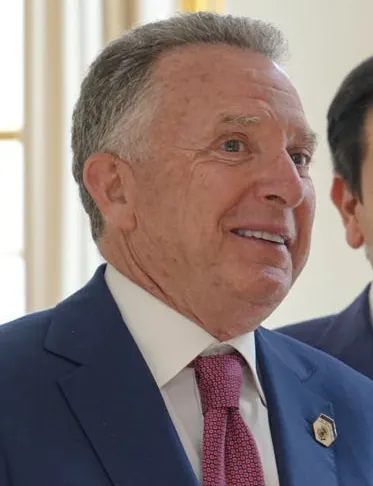
Archive, Paris, 17 April 2025; does not show the Moscow meeting. Freddie Everett / US Department of State / Wikimedia Commons, public domain; Commons crop. — Freddie Everett / U.S. Department of State / Wikimedia Commons — domaine public ; Paris, 17 avril 2025 ; recadrage Wikimedia Commons.
Where things stand
As of 12 November 2026, overnight attacks are reported in Ukraine after the Abu Dhabi talks. US envoys have arrived in Moscow; Russian media report a meeting with Vladimir Putin. No ceasefire has been established and military figures remain attributed claims.
Ukraine reports overnight missile and drone attack, with explosions in Kyiv
Russia launched another aerial attack on Ukraine overnight on 11–12 November 2026, according to Ukraine’s Air Force. Kyiv Independent journalists said they heard explosions in Kyiv at about 1 a.m. local time following a ballistic-missile warning.
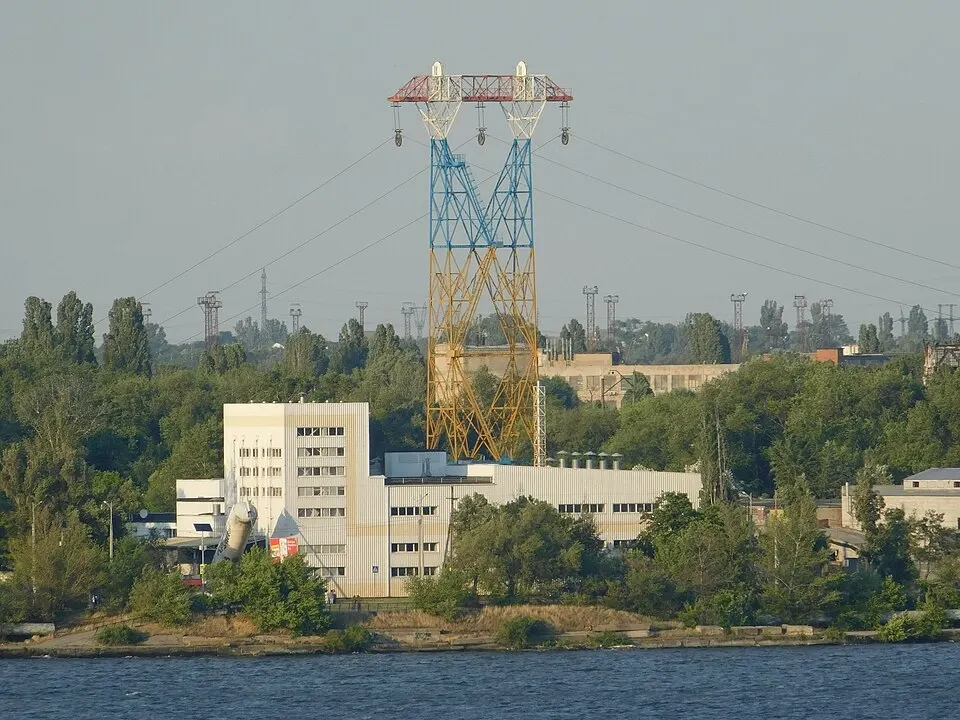
Dnipro, archive from 9 July 2019; not the attack or Kyiv. VKras / Wikimedia Commons, CC BY-SA 4.0 https://creativecommons.org/licenses/by-sa/4.0/; resized. — VKras / Wikimedia Commons — CC BY-SA 4.0 https://creativecommons.org/licenses/by-sa/4.0/ ; 9 juillet 2019 ; redimensionnée.
The Ukrainian assessment reported by Fakty ICTV and RBC-Ukraine lists 123 drones and several missile types. As of 8 a.m. Kyiv time, air defences said they had shot down or suppressed 94 drones. These figures come from a party to the conflict and are not independently verified in this brief.
The Kyiv Independent also reports a fire in a residential building in Solomianskyi district, citing the mayor. The full damage and casualty toll remain to be established. The attack follows the conclusion of the Abu Dhabi discussions by several hours; those talks did not produce a ceasefire.
Ukraine: Witkoff and Kushner in Moscow for talks with Putin
Steve Witkoff and Jared Kushner arrived in Moscow on 12 November 2026 to continue discussions on the war in Ukraine. Russian media, cited by RBC-Ukraine and Anadolu, report the start of a meeting with Vladimir Putin.
Archive, Paris, 17 April 2025; does not show the Moscow meeting. Freddie Everett / US Department of State / Wikimedia Commons, public domain; Commons crop. — Freddie Everett / U.S. Department of State / Wikimedia Commons — domaine public ; Paris, 17 avril 2025 ; recadrage Wikimedia Commons.
An AFP journalist observed their convoy arriving at the Kremlin. According to Russian accounts relayed by RBC-Ukraine, Russian officials Vladimir Medinsky, Kirill Dmitriev and Yuri Ushakov are also taking part in the meeting.
The visit follows the Abu Dhabi talks on 10 and 11 November. The envoys are then expected to convey the outcome of their discussions to Volodymyr Zelensky in Dublin, according to the reported schedule. The information reviewed establishes neither a ceasefire agreement nor a final outcome of the Moscow meeting.
Abu Dhabi: Kyiv and Moscow announce prisoner exchange agreement in principle
Ukrainian and Russian delegations announced an agreement in principle on a large prisoner exchange on 11 November 2026 after two days of US-mediated talks in Abu Dhabi. The announcement is neither a completed exchange nor a ceasefire.
Abu Dhabi file photo, 14 May 2011; does not show the talks or identify their room. krebsmaus07 / Wikimedia Commons — CC BY 2.0 https://creativecommons.org/licenses/by/2.0/; resized. — krebsmaus07 / Wikimedia Commons — CC BY 2.0 https://creativecommons.org/licenses/by/2.0/ ; 14 mai 2011 ; taille réduite.
Ukraine’s Rustem Umerov and Russia’s Vladimir Medinsky confirmed the plan. Medinsky stressed that the agreement was in principle, Associated Press reports. US mediator Jared Kushner said numbers still needed to be finalised the following day.
Reporting from the UAE, Euronews says discussions produced no breakthrough on a ceasefire or territorial disputes. Practical conditions, timing and the final scale of the prisoner transfer therefore remain to be specified.
The announcement moves the previous day’s humanitarian discussions towards a preliminary commitment by the delegations. Its implementation will require separate verification.
Ukraine: Fico and Babiš challenge link between aid and EU budget talks
Slovak Prime Minister Robert Fico and Czech Prime Minister Andrej Babiš challenged Germany’s demand to link new Ukraine aid to negotiations on the next EU budget in Bratislava on 10 November 2026. Fico described it as “blackmail”.
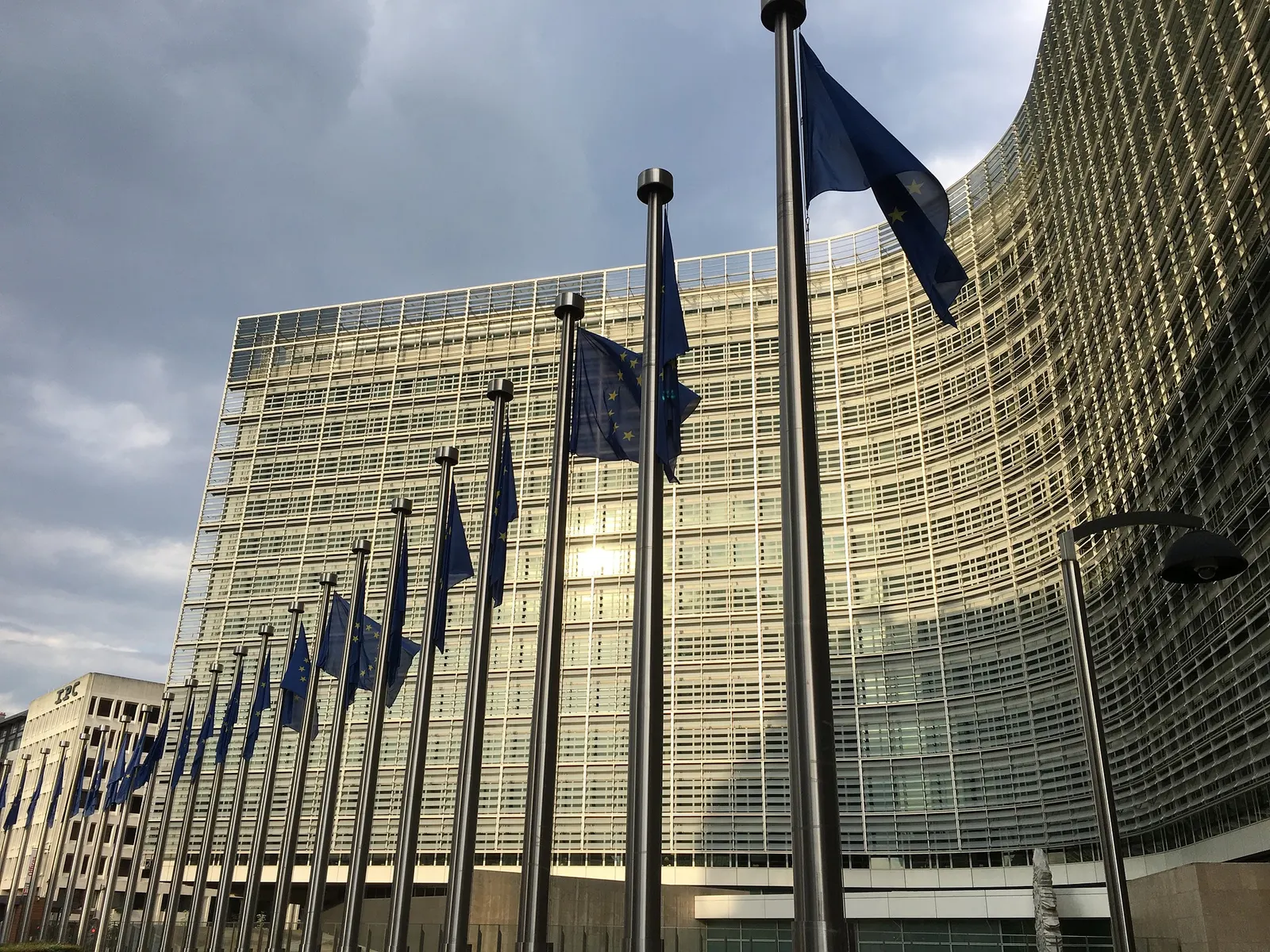
Archive from 2016; not the Bratislava meeting. almathias, CC0 https://creativecommons.org/publicdomain/zero/1.0/ ; unchanged. — almathias / Pixabay / Wikimedia Commons — CC0 1.0 https://creativecommons.org/publicdomain/zero/1.0/ — 7 mai 2016, sans modification.
According to Reuters, Friedrich Merz asks in a letter to Antonio Costa that all member states contribute to Ukraine's financing before further financial discussions. The letter refers to a €70 billion Ukrainian funding need for 2027, with €45 billion expected from the EU.
Fico notes that Slovakia also holds a veto. Babiš argues that blocking the budget would also block money for Ukraine. Their remarks are also reported by the Czech news agency ČTK.
The dispute concerns the terms of negotiations. The consulted sources establish neither agreement on this new financing nor an actual exercise of a veto.
Abu Dhabi: Zelensky says major prisoner exchange is under discussion
A large prisoner exchange is under consideration at US-mediated Russia–Ukraine talks in Abu Dhabi, Volodymyr Zelensky said on 10 November 2026. The first day ended after about four hours of discussions, according to reports.
Archive, 14 May 2011; not the negotiations. krebsmaus07 / Wikimedia Commons — CC BY 2.0 https://creativecommons.org/licenses/by/2.0/ ; 14 mai 2011 ; taille réduite. — krebsmaus07 / Wikimedia Commons — CC BY 2.0 https://creativecommons.org/licenses/by/2.0/ ; 14 mai 2011 ; taille réduite.
Ukraine’s president outlined two possible formats: 1,000 prisoners for 1,000, or 1,500 for 1,500. These are options under discussion, rather than a completed release or an agreed timetable.
Zelensky describes the talks as constructive. Ukrainian and French accounts also mention humanitarian issues, security guarantees and de-escalation. Another negotiating session is scheduled for 11 November. The evidence consulted does not establish a ceasefire agreement or territorial settlement resulting from the first session.
In Abu Dhabi, European, Ukrainian and US partners back security guarantees for Kyiv
Representatives of the EU, France, Germany, Italy, the United Kingdom, Ukraine, the United States and NATO held consultations in Abu Dhabi on 10 November 2026. Their statement supports credible security guarantees for Ukraine in any future settlement.
Institutional archive illustration, 2016; not the meeting. almathias, CC0 https://creativecommons.org/publicdomain/zero/1.0/ ; unchanged. — almathias / Pixabay / Wikimedia Commons — CC0 1.0 https://creativecommons.org/publicdomain/zero/1.0/ — 7 mai 2016, sans modification.
The text published by the European Council stresses Ukraine's sovereignty, territorial integrity and independent decision-making. Participants also reaffirm the central role of a strong NATO in Euro-Atlantic collective defence.
The consultations precede trilateral discussions with Russia. Partners say they will continue coordinating and seek broader multilateral discussions involving European partners.
The statement sets out shared principles. It announces neither a peace agreement, a ceasefire, nor new military obligations already accepted by future guarantors or Moscow.