Belarus · Canada · Germany · Norway · Russian Federation · Ukraine · United States of America
File
Russia–Ukraine: origins, war since 2014 and timeline
This dossier traces the Russia–Ukraine war from the seizure of Crimea and the start of fighting in the Donbas in 2014, through the full-scale invasion of 24 February 2022 and its military, diplomatic, economic and humanitarian consequences. It distinguishes recognised sovereignty, claimed annexations and actual military control.
Earlier milestones explain relations between the two states since Ukrainian independence in 1991: the 1994 Budapest security assurances, the 1997 friendship treaty, the 2003 Tuzla crisis, gas disputes and the 2010 Kharkiv agreements. The suspension of preparations for the European Union agreement in November 2013 opens the Euromaidan crisis. These antecedents are distinguished from the war that began in 2014; each entry links to its sources.
The timeline follows Ilovaisk, Donetsk airport, Debaltseve, the Minsk agreements, disengagement attempts, fighting and the humanitarian crisis in Avdiivka in 2017, the trade blockade, detainee exchanges and the Kerch maritime crisis. It then documents the war’s expansion, Ukrainian territorial recaptures, Bakhmut, international justice, grain, energy, external assistance and negotiations. Retrospective investigations are identified and claims remain attributed.
This selection of turning points includes canonical occurrences from the archived energy dossier. It expands previously sparse years without providing an exhaustive daily record: local fighting, successive sanctions, all weapons deliveries and population displacement are not detailed. Cumulative military losses and complete territorial control remain coverage limitations.
Last updated : 80 key moments
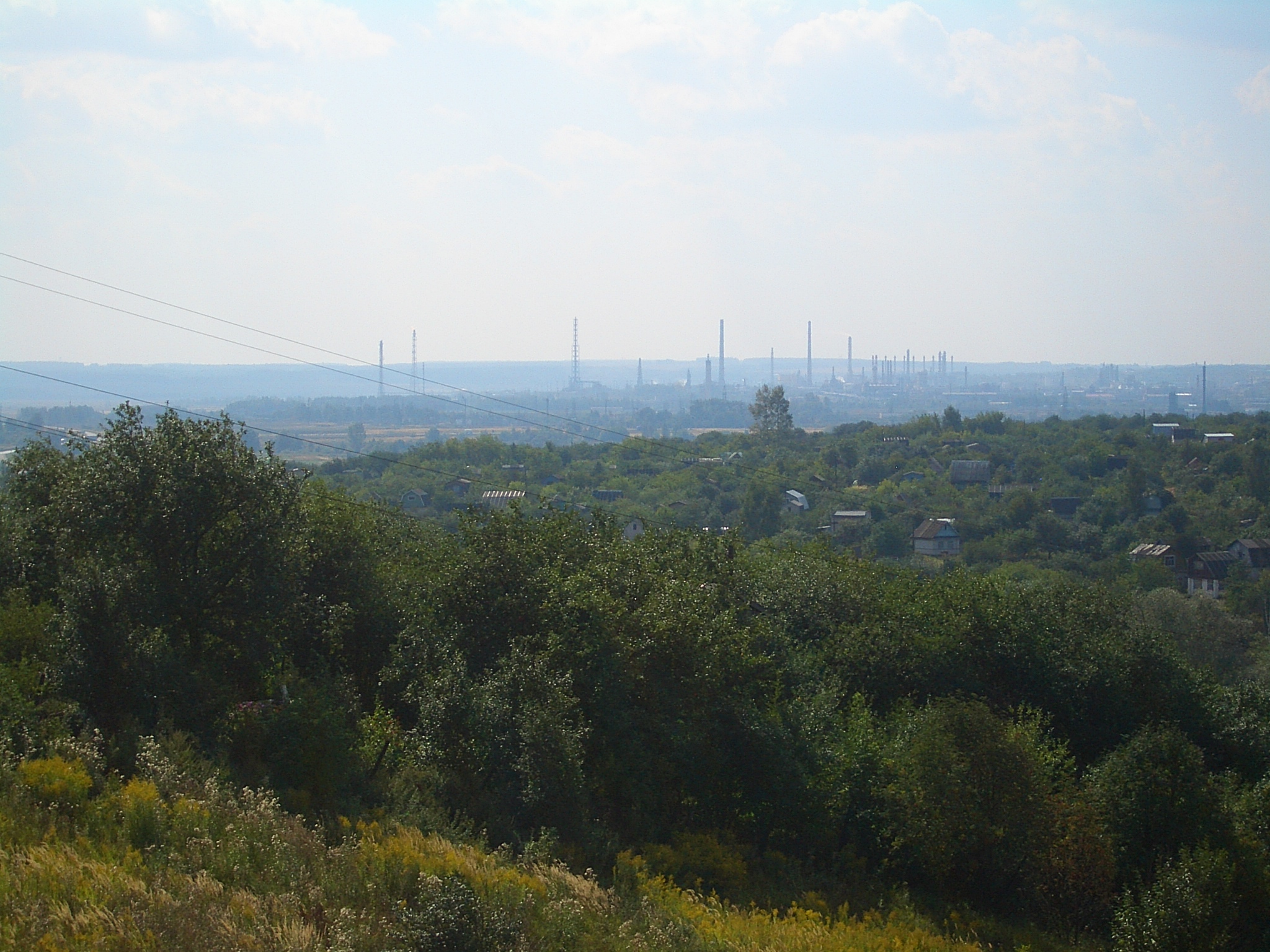
Kstovo industrial area, 29 August 2007. Archive image; it does not show the attack. Vmenkov, CC BY-SA 3.0 https://creativecommons.org/licenses/by-sa/3.0/, unchanged. — Vmenkov / Wikimedia Commons — CC BY-SA 3.0 https://creativecommons.org/licenses/by-sa/3.0/ — 29 août 2007, sans modification.
Where things stand
On 31 October 2026, residents evacuated from Russian-occupied Oleshky reached Kyiv-controlled territory after travelling through Russia and Belarus. The exact number arriving has not been published. The truce remains local. Washington has authorised a potential sale of 500 Patriot interceptors, with no evidence of delivery; the proposed €45 billion in EU loans for 2027 remains subject to adoption.
Confirmed
Ukraine’s army launches an incursion into Russia’s Kursk region
On 6 August 2024, Ukrainian forces cross the border and launch an incursion into Russia’s Kursk region, according to Reuters and Le Monde reports published in the following days.
The fighting takes the ground war onto Russian territory beyond isolated raids. Initial accounts describe clashes around Sudzha and responses by Russian authorities.
The date marks the operation’s beginning. Claimed areas and subsequent territorial control require separate verification; they cannot be inferred from the incursion itself.
Russia launches an offensive in northern Kharkiv region
On 10 May 2024, Russian forces launch a ground attack across the border in the north of Ukraine’s Kharkiv region, opening a new area of fighting.
Initial operations affect several border directions. Ukrainian authorities commit reinforcements and organise evacuations as the fighting develops.
Opening this front does not mean capturing the city of Kharkiv. Initial advances must be distinguished from territorial control established over the following days.
US House passes a $61 billion package supporting Ukraine
On 20 April 2024, the US House of Representatives passes a package of about $61 billion related to support for Ukraine after months of congressional deadlock.
Funding includes military assistance and replenishment of US stocks. The amount therefore does not represent an immediate transfer of the entire sum to Ukraine’s government.
The House vote is a legislative step: Senate passage and the president’s signature are still required. Actual deliveries are a subsequent stage.
On 17 February 2024, Ukraine’s command announces the withdrawal of its troops from Avdiivka in Donetsk region after months of Russian assaults.
Ukraine’s presidency presents the decision as a way to preserve soldiers’ lives and avoid encirclement. AP also reports the commander-in-chief’s announcement.
This entry documents the withdrawal decision and its stated reasons. It does not treat casualty estimates or the status of every nearby position as verified facts.
Russia ends participation in the Black Sea Grain Initiative
On 17 July 2023, Russia announces the end of its participation in the Black Sea Grain Initiative, according to the UN and Euronews.
The mechanism negotiated in July 2022 allowed food exports from Ukrainian ports despite the war. The UN Secretary-General regrets Russia’s decision.
The agreement’s end must be distinguished from a halt to all Ukrainian exports: other sea and land routes, and their volumes, require their own evidence.
Wagner rebellion reaches Rostov before a withdrawal deal
On 24 June 2023, Wagner fighters occupy the military headquarters in Rostov-on-Don and advance towards Moscow before Yevgeny Prigozhin announces a halt to their progress.
The Kremlin announces an arrangement mediated by Alexander Lukashenko, including Prigozhin’s departure for Belarus. The announcement describes proposed conditions at that point, not their full implementation.
The rebellion involves a force fighting in the invasion of Ukraine and the Russian command directing it. It does not amount to a ceasefire on the Ukrainian front.
On 10 June 2023, Volodymyr Zelenskyy publicly acknowledges that counteroffensive and defensive operations are taking place in Ukraine, Reuters reports.
He speaks at a press conference with Canadian Prime Minister Justin Trudeau. Vladimir Putin had already said the Ukrainian offensive had begun.
The date marks Ukraine’s public acknowledgment, not one verified launch time across the entire front. The announcement alone does not establish territorial gains or either side’s losses.
During the night of 5–6 June 2023, the Kakhovka dam is partly destroyed, causing downstream flooding and a falling reservoir level, according to IRSN and Le Monde.
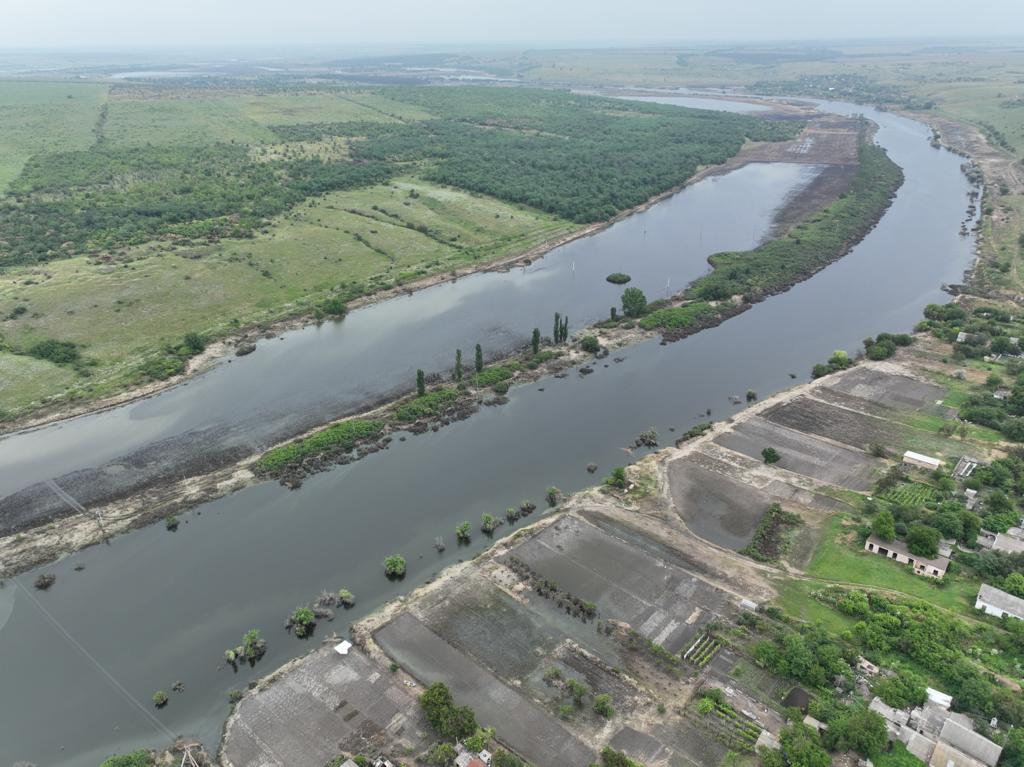
Kalynivske on 14 June 2023, after the Kakhovka dam’s destruction on 6 June. Kherson Regional State Administration, CC BY 4.0. The image does not show the dam breach. — Administration régionale de Kherson / Khoda.gov.ua / Wikimedia Commons, CC BY 4.0 — https://creativecommons.org/licenses/by/4.0/. Vue du 14 juin 2023 ; aucune modification.
IRSN’s 7 June note examines consequences for water supplies to the Zaporizhzhia nuclear plant. Le Monde describes flooding and initial evacuations.
The physical damage is distinct from responsibility for the destruction. This entry does not resolve the parties’ accusations using only the selected contemporary technical and journalistic sources.
Wagner and Moscow claim Bakhmut’s capture; Kyiv disputes it
On 20 May 2023, Yevgeny Prigozhin and then Russia’s Defence Ministry claim control of Bakhmut after months of fighting. Ukrainian officials dispute the city’s complete capture at the time.
Bakhmut on 12 May 2023, eight days before Russia’s claim to have captured the city. Archive image. — User.bpla / Wikimedia Commons, CC BY-SA 4.0 — https://creativecommons.org/licenses/by-sa/4.0/. Archives du 12 mai 2023, version réduite.
The announcements concern a largely destroyed city. Kyiv says fighting continues, while Ukrainian forces also operate on the flanks.
This entry preserves the information available when the claim was made. Announced control of the urban centre must be distinguished from the situation across the wider sector.
ICC issues arrest warrants for Putin and Lvova-Belova
On 17 March 2023, the International Criminal Court issues arrest warrants for Vladimir Putin and Maria Lvova-Belova over alleged war crimes involving the unlawful deportation and transfer of Ukrainian children.
The Court’s statement and Reuters document the decision. The proceedings concern alleged individual criminal responsibility.
An arrest warrant is neither a conviction nor an actual arrest. It must not be confused with a final judicial ruling on all crimes committed during the war.
Ukrainian forces retake Kherson after Russia’s withdrawal
On 11 November 2022, Ukrainian forces retake Kherson following Russia’s withdrawal, as reporting in the following days documents.
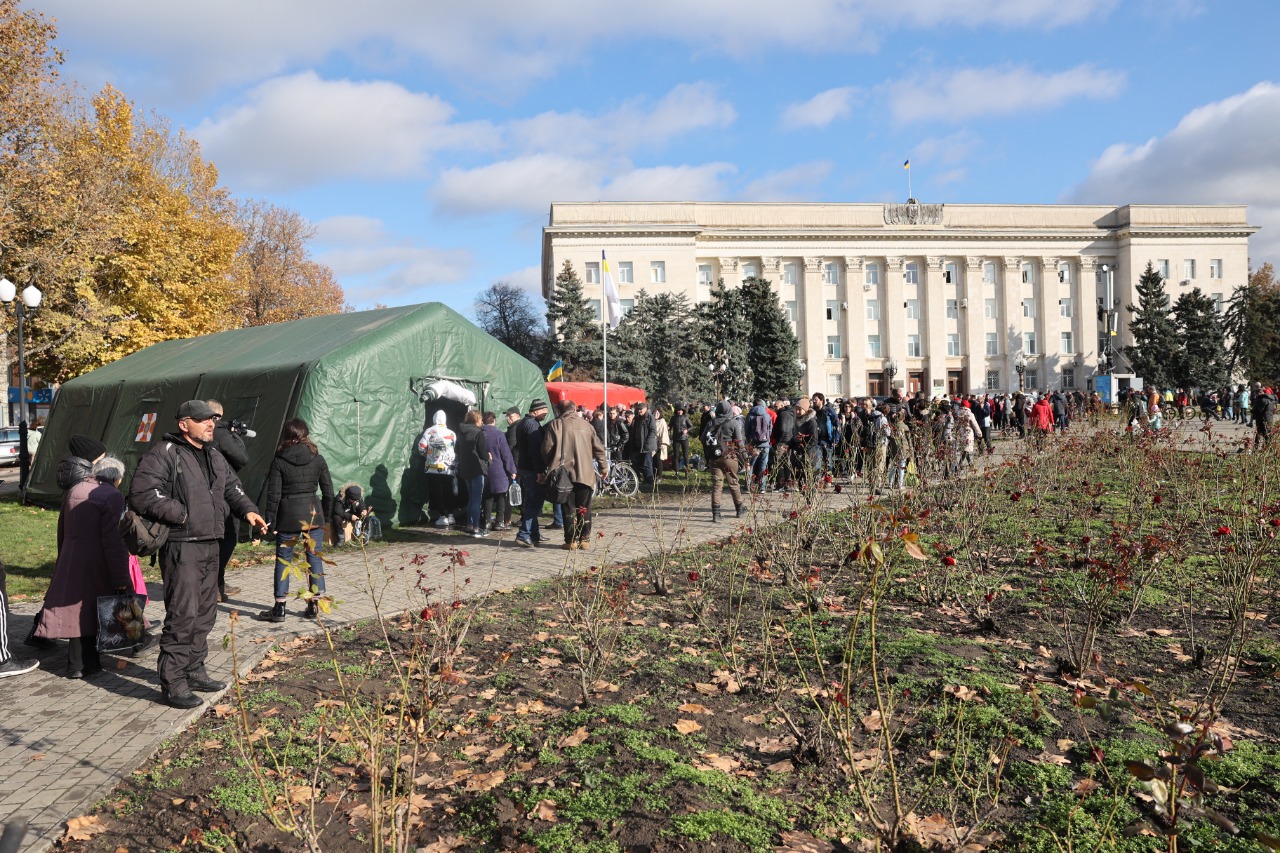
Kherson on 19 November 2022, eight days after the city’s recapture. Ukraine’s Culture Ministry, CC BY 4.0. The image does not show the troops’ arrival on 11 November. — Ministère ukrainien de la Culture / Mincult.gov.ua / Wikimedia Commons, CC BY 4.0 — https://creativecommons.org/licenses/by/4.0/. Archives du 19 novembre 2022 ; aucune modification.
Residents interviewed by Le Monde describe Russian troops leaving and Ukrainian flags returning. Euronews subsequently describes a city without water and electricity.
The recapture concerns the city and does not mean all of Kherson region has been retaken. Restoring essential services and protecting residents remain issues distinct from the troops’ arrival.