United Arab Emirates · Belgium · Belarus · Canada · Czech Republic · Germany · Spain · France · United Kingdom · Ireland · Italy · Norway · Poland · Russian Federation · Slovakia · Ukraine · United States of America
File
Russia–Ukraine: origins, war since 2014 and timeline
Published Updated
This dossier traces the Russia–Ukraine war from the seizure of Crimea and the start of fighting in the Donbas in 2014, through the full-scale invasion of 24 February 2022 and its military, diplomatic, economic and humanitarian consequences. It distinguishes recognised sovereignty, claimed annexations and actual military control.
Earlier milestones explain relations between the two states since Ukrainian independence in 1991: the 1994 Budapest security assurances, the 1997 friendship treaty, the 2003 Tuzla crisis, gas disputes and the 2010 Kharkiv agreements. The suspension of preparations for the European Union agreement in November 2013 opens the Euromaidan crisis. These antecedents are distinguished from the war that began in 2014; each entry links to its sources.
The timeline follows Ilovaisk, Donetsk airport, Debaltseve, the Minsk agreements, disengagement attempts, fighting and the humanitarian crisis in Avdiivka in 2017, the trade blockade, detainee exchanges and the Kerch maritime crisis. It then documents the war’s expansion, Ukrainian territorial recaptures, Bakhmut, international justice, grain, energy, external assistance and negotiations. Retrospective investigations are identified and claims remain attributed.
This selection of turning points includes canonical occurrences from the archived energy dossier. It expands previously sparse years without providing an exhaustive daily record: local fighting, successive sanctions, all weapons deliveries and population displacement are not detailed. Cumulative military losses and complete territorial control remain coverage limitations.
European flag, illustration. — Wikimedia Commons, contributeurs du fichier Flag of Europe.svg — domaine public pour le fichier ; emblème européen utilisé à titre informatif ; rendu PNG.
Where things stand
As of 16 November 2026, the EU adds 12 people and 101 entities to war-related economic sanctions and 30 people and two entities over interference and cyberattacks. Several ministers in Brussels call for a ceasefire before broader security discussions with Moscow. No peace agreement has been announced. The Council also approves nearly €8 billion under the Ukraine Facility, still awaited by Kyiv. The Commission separately announces a €1.71 billion defence disbursement.
Late on 16 November, Kyiv's mayor reported strikes on the Northern and Southern bridges and water and heating cuts. The same day, Ukrainian authorities announced the end of the Komyshuvakha search and a toll of 72 dead and four missing from the 2 November attack. These accounts remain attributed to the authorities.
The IMF reports progress towards $1.6 billion in financing, still conditional on an agreement and financing assurances.
On 17 November, a new Ukrainian strike targets the Crimean Bridge. Kyiv claims destruction, while Moscow-installed authorities announce suspended traffic. The extent of structural damage remains independently unverified.
Kyiv mayor reports strikes on two bridges and service outages
Russian strikes hit Kyiv's Northern and Southern bridges late on 16 November 2026, according to Mayor Vitali Klitschko's preliminary information. He also reported damage to critical infrastructure and water and heating cuts in some districts.
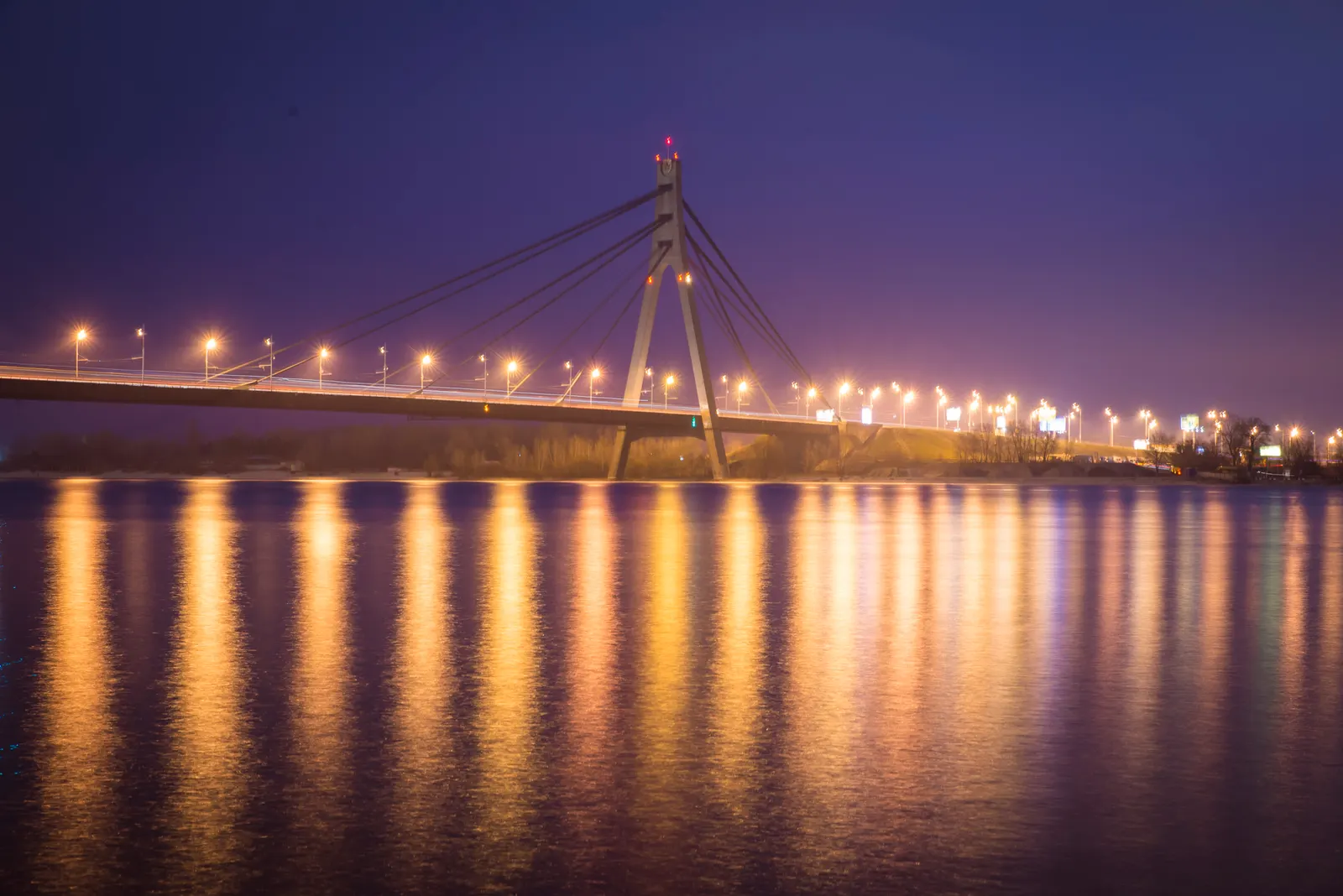
Archive image, 23 November 2016; not the reported damage. Konstantin Brizhnichenko, CC BY-SA 4.0 https://creativecommons.org/licenses/by-sa/4.0/ ; unmodified. — Konstantin Brizhnichenko / Wikimedia Commons — CC BY-SA 4.0 https://creativecommons.org/licenses/by-sa/4.0/ ; 23 novembre 2016 ; sans modification.
The announcement followed a Ukrainian Air Force warning of incoming missiles. AFP journalists heard loud explosions, but initial images circulating online were not verified in their report.
This establishes alerts, explosions heard and municipal statements. It does not yet provide a complete damage assessment, establish how long the outages will last or independently confirm the condition of each bridge.
EU ministers seek Ukraine ceasefire before wider security talks with Moscow
Several EU ministers said in Brussels on 16 November 2026 that discussing Europe’s security architecture with Moscow before a Ukraine ceasefire would be premature. Kaja Kallas called for Russian concessions.
Illustration; does not depict the 16 November meeting. Wikimedia Commons, public-domain file; PNG rendering. — Wikimedia Commons, contributeurs du fichier Flag of Europe.svg — domaine public pour le fichier ; emblème européen utilisé à titre informatif ; rendu PNG.
The EU foreign-policy chief argues that Moscow’s demands serve as a pretext to continue the war. Reuters and Italy’s Quotidiano Nazionale report her assessment.
Lithuania’s and Sweden’s foreign ministers urged stronger leverage in support of Kyiv. The remarks clarify European positions after a negotiating team was chosen in Dublin; they represent neither a ceasefire nor the actual opening of new talks.
EU sanctions SDA and NoName057(16) over interference and cyberattacks
The EU Council announced sanctions on 16 November 2026 against 30 people and two entities in response to hybrid operations attributed to Russia. Social Design Agency and hacker collective NoName057(16) are among the targets.
Illustration; does not depict the 16 November meeting. Wikimedia Commons, public-domain file; PNG rendering. — Wikimedia Commons, contributeurs du fichier Flag of Europe.svg — domaine public pour le fichier ; emblème européen utilisé à titre informatif ; rendu PNG.
The Council accuses SDA of information-manipulation campaigns directed by Russia’s presidential administration, including against France, Germany and European support for Ukraine. Twenty-four agency staff are listed.
NoName057(16) is designated under the separate cyberattacks regime. Measures include asset freezes and financing bans; individuals face travel restrictions. The descriptions of responsibility remain the Council’s stated grounds for the decisions.
EU adds 12 people and 101 entities to Russia sanctions
The EU Council adopted sanctions on 16 November 2026 against 12 people and 101 entities it links to financing Russia’s war against Ukraine. Nearly fifty Russian banks and financial institutions are covered.
Illustration; does not depict the 16 November meeting. Wikimedia Commons, public-domain file; PNG rendering. — Wikimedia Commons, contributeurs du fichier Flag of Europe.svg — domaine public pour le fichier ; emblème européen utilisé à titre informatif ; rendu PNG.
The measures also target e-commerce, oil interests and the so-called shadow fleet. The Council names Wildberries’ owner and a controlling Ozon shareholder; AFP identifies Tatiana Kim among those targeted.
Listings entail asset freezes and a ban on providing funds. Individuals also face an EU travel ban. These decisions do not amount to adoption of the broader 22nd sanctions package, which remains in preparation.
EU Council approves nearly €8 billion Ukraine Facility payment
The EU Council approved a payment of nearly €8 billion to Ukraine under the Ukraine Facility on 16 November 2026. Kyiv says it expects the transfer shortly: approval does not mean the funds have already arrived.
Illustration; does not show a bank transfer or equipment delivery. Wikimedia Commons, public-domain file; PNG rendering. — Wikimedia Commons, contributeurs du fichier Flag of Europe.svg — domaine public pour le fichier ; emblème européen utilisé à titre informatif ; rendu PNG.
Around €5 billion comes from resources under the EU’s Ukraine Support Loan for 2026. The Council calls this the largest tranche since the facility began.
The decision follows assessment of more than twenty reform steps, including in justice, anti-corruption and energy. Support is intended for public finances, recovery and modernisation. Ukraine’s government confirms approval and that it is awaiting the funds.
Komyshuvakha search ends; Ukrainian authorities report 72 dead
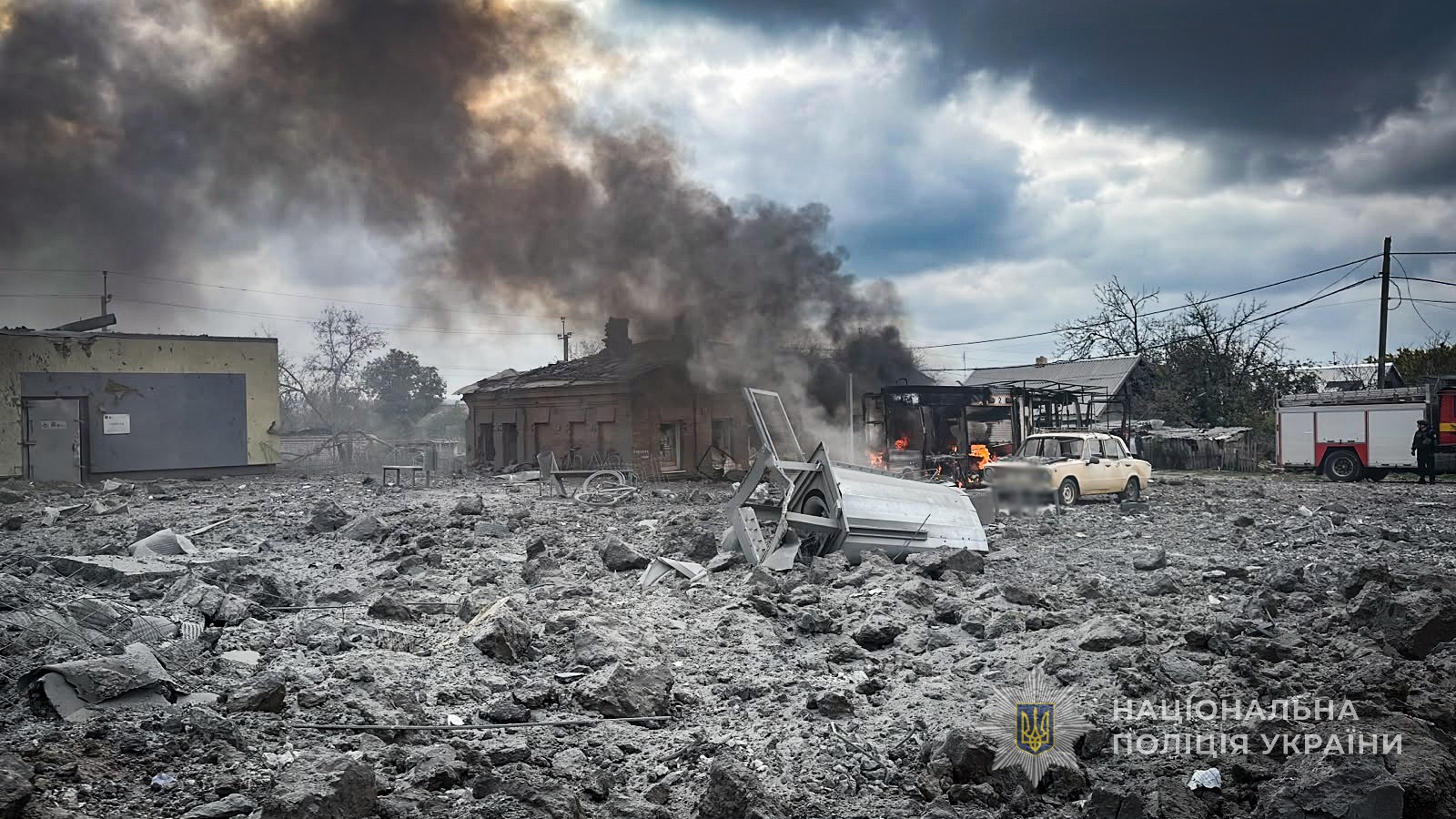
Ukrainian authorities announced on 16 November 2026 that searches had ended in Komyshuvakha, Zaporizhzhia Oblast, following the 2 November attack. They reported 72 dead and four people still missing.
Image from 2 November, not the end of the search. National Police of Ukraine / https://npu.gov.ua — CC BY 4.0 https://creativecommons.org/licenses/by/4.0/ ; unmodified. — Police nationale d’Ukraine / https://npu.gov.ua / Wikimedia Commons — CC BY 4.0 https://creativecommons.org/licenses/by/4.0/ ; 2 novembre 2026 ; sans modification.
The site included a school used to distribute humanitarian aid and a shelter. Operations lasted two weeks. Authorities said further shelling complicated the work.
The reported victims included school, medical and public-service staff, police officers and rescuers. Four people rescued early in the operation remained hospitalised. This is a toll released after the search, not a new attack on 16 November; the figures have not been independently verified on site in the sources used.
Commission announces €1.71 billion payment for Ukraine’s defence
The European Commission says it disbursed €1.71 billion to Ukraine on 16 November 2026 for drones, ammunition and air-defence systems. This is separate from the nearly €8 billion tranche approved under the Ukraine Facility.
Illustration; does not show a bank transfer or equipment delivery. Wikimedia Commons, public-domain file; PNG rendering. — Wikimedia Commons, contributeurs du fichier Flag of Europe.svg — domaine public pour le fichier ; emblème européen utilisé à titre informatif ; rendu PNG.
The announcement at the Brussels press briefing includes early-warning radars and missiles among the equipment to be procured. Teleborsa identifies it as the eighth payment under the defence component of the EU’s Ukraine Support Loan.
The reported disbursement finances purchases; it does not establish that all equipment has already been delivered. Funding and actual receipt of military equipment are separate stages.
Europe selects EU institutions and five-country team for Ukraine negotiations
Meeting in Dublin on 13 November 2026, European leaders chose a team combining European Union institutions with France, Germany, Italy, Poland and the United Kingdom for Ukraine negotiations, António Costa announced. The team's actual participation in new talks remains to be established.
European flag, illustration; not the meeting. Wikimedia Commons, public domain; PNG rendering. — Wikimedia Commons, contributeurs du fichier Flag of Europe.svg — domaine public pour le fichier ; emblème européen utilisé à titre informatif ; rendu PNG.
The format brings together EU institutions and five members of the coalition of the willing. Costa stressed that only Ukraine could decide matters concerning its territory and sovereignty. He placed security guarantees within that coalition's framework, in coordination with NATO.
The European decision does not amount to Moscow's acceptance. According to Belga, the Kremlin still said on Friday it was waiting to understand the Europeans' intentions before deciding on wider talks. The announcement produces neither a ceasefire nor a peace settlement.
Costa also said Ukraine's financing needs for 2027 and beyond would be examined at the European Council on 26–27 November, based on forthcoming Commission proposals. That is an announced next step, with no financial decision established in the sources consulted.
Ukraine reports overnight missile and drone attack, with explosions in Kyiv
Russia launched another aerial attack on Ukraine overnight on 11–12 November 2026, according to Ukraine’s Air Force. Kyiv Independent journalists said they heard explosions in Kyiv at about 1 a.m. local time following a ballistic-missile warning.
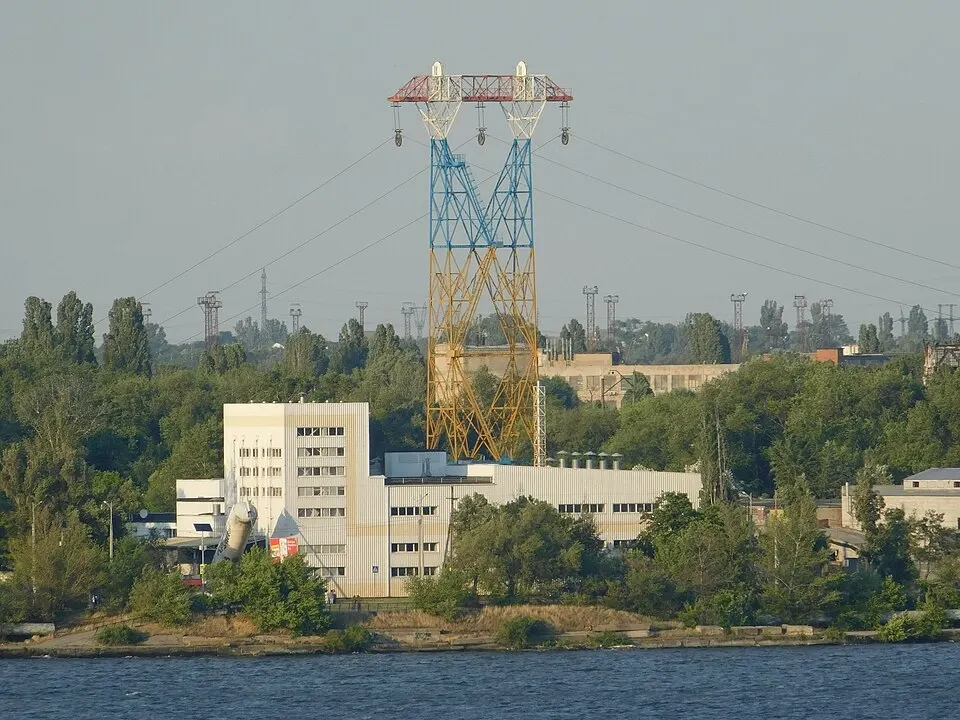
Dnipro, archive from 9 July 2019; not the attack or Kyiv. VKras / Wikimedia Commons, CC BY-SA 4.0 https://creativecommons.org/licenses/by-sa/4.0/; resized. — VKras / Wikimedia Commons — CC BY-SA 4.0 https://creativecommons.org/licenses/by-sa/4.0/ ; 9 juillet 2019 ; redimensionnée.
The Ukrainian assessment reported by Fakty ICTV and RBC-Ukraine lists 123 drones and several missile types. As of 8 a.m. Kyiv time, air defences said they had shot down or suppressed 94 drones. These figures come from a party to the conflict and are not independently verified in this brief.
The Kyiv Independent also reports a fire in a residential building in Solomianskyi district, citing the mayor. The full damage and casualty toll remain to be established. The attack follows the conclusion of the Abu Dhabi discussions by several hours; those talks did not produce a ceasefire.
Ukraine: Witkoff and Kushner in Moscow for talks with Putin
Steve Witkoff and Jared Kushner arrived in Moscow on 12 November 2026 to continue discussions on the war in Ukraine. Russian media, cited by RBC-Ukraine and Anadolu, report the start of a meeting with Vladimir Putin.
Archive, Paris, 17 April 2025; does not show the Moscow meeting. Freddie Everett / US Department of State / Wikimedia Commons, public domain; Commons crop. — Freddie Everett / U.S. Department of State / Wikimedia Commons — domaine public ; Paris, 17 avril 2025 ; recadrage Wikimedia Commons.
An AFP journalist observed their convoy arriving at the Kremlin. According to Russian accounts relayed by RBC-Ukraine, Russian officials Vladimir Medinsky, Kirill Dmitriev and Yuri Ushakov are also taking part in the meeting.
The visit follows the Abu Dhabi talks on 10 and 11 November. The envoys are then expected to convey the outcome of their discussions to Volodymyr Zelensky in Dublin, according to the reported schedule. The information reviewed establishes neither a ceasefire agreement nor a final outcome of the Moscow meeting.
Abu Dhabi: Kyiv and Moscow announce prisoner exchange agreement in principle
Ukrainian and Russian delegations announced an agreement in principle on a large prisoner exchange on 11 November 2026 after two days of US-mediated talks in Abu Dhabi. The announcement is neither a completed exchange nor a ceasefire.
Abu Dhabi file photo, 14 May 2011; does not show the talks or identify their room. krebsmaus07 / Wikimedia Commons — CC BY 2.0 https://creativecommons.org/licenses/by/2.0/; resized. — krebsmaus07 / Wikimedia Commons — CC BY 2.0 https://creativecommons.org/licenses/by/2.0/ ; 14 mai 2011 ; taille réduite.
Ukraine’s Rustem Umerov and Russia’s Vladimir Medinsky confirmed the plan. Medinsky stressed that the agreement was in principle, Associated Press reports. US mediator Jared Kushner said numbers still needed to be finalised the following day.
Reporting from the UAE, Euronews says discussions produced no breakthrough on a ceasefire or territorial disputes. Practical conditions, timing and the final scale of the prisoner transfer therefore remain to be specified.
The announcement moves the previous day’s humanitarian discussions towards a preliminary commitment by the delegations. Its implementation will require separate verification.