United Arab Emirates · Belgium · Belarus · Canada · Czech Republic · Germany · Spain · France · United Kingdom · Ireland · Italy · Norway · Poland · Russian Federation · Slovakia · Ukraine · United States of America
File
Russia–Ukraine: origins, war since 2014 and timeline
Published Updated
This dossier traces the Russia–Ukraine war from the seizure of Crimea and the start of fighting in the Donbas in 2014, through the full-scale invasion of 24 February 2022 and its military, diplomatic, economic and humanitarian consequences. It distinguishes recognised sovereignty, claimed annexations and actual military control.
Earlier milestones explain relations between the two states since Ukrainian independence in 1991: the 1994 Budapest security assurances, the 1997 friendship treaty, the 2003 Tuzla crisis, gas disputes and the 2010 Kharkiv agreements. The suspension of preparations for the European Union agreement in November 2013 opens the Euromaidan crisis. These antecedents are distinguished from the war that began in 2014; each entry links to its sources.
The timeline follows Ilovaisk, Donetsk airport, Debaltseve, the Minsk agreements, disengagement attempts, fighting and the humanitarian crisis in Avdiivka in 2017, the trade blockade, detainee exchanges and the Kerch maritime crisis. It then documents the war’s expansion, Ukrainian territorial recaptures, Bakhmut, international justice, grain, energy, external assistance and negotiations. Retrospective investigations are identified and claims remain attributed.
This selection of turning points includes canonical occurrences from the archived energy dossier. It expands previously sparse years without providing an exhaustive daily record: local fighting, successive sanctions, all weapons deliveries and population displacement are not detailed. Cumulative military losses and complete territorial control remain coverage limitations.
European flag, illustration. — Wikimedia Commons, contributeurs du fichier Flag of Europe.svg — domaine public pour le fichier ; emblème européen utilisé à titre informatif ; rendu PNG.
Where things stand
As of 16 November 2026, the EU adds 12 people and 101 entities to war-related economic sanctions and 30 people and two entities over interference and cyberattacks. Several ministers in Brussels call for a ceasefire before broader security discussions with Moscow. No peace agreement has been announced. The Council also approves nearly €8 billion under the Ukraine Facility, still awaited by Kyiv. The Commission separately announces a €1.71 billion defence disbursement.
Late on 16 November, Kyiv's mayor reported strikes on the Northern and Southern bridges and water and heating cuts. The same day, Ukrainian authorities announced the end of the Komyshuvakha search and a toll of 72 dead and four missing from the 2 November attack. These accounts remain attributed to the authorities.
The IMF reports progress towards $1.6 billion in financing, still conditional on an agreement and financing assurances.
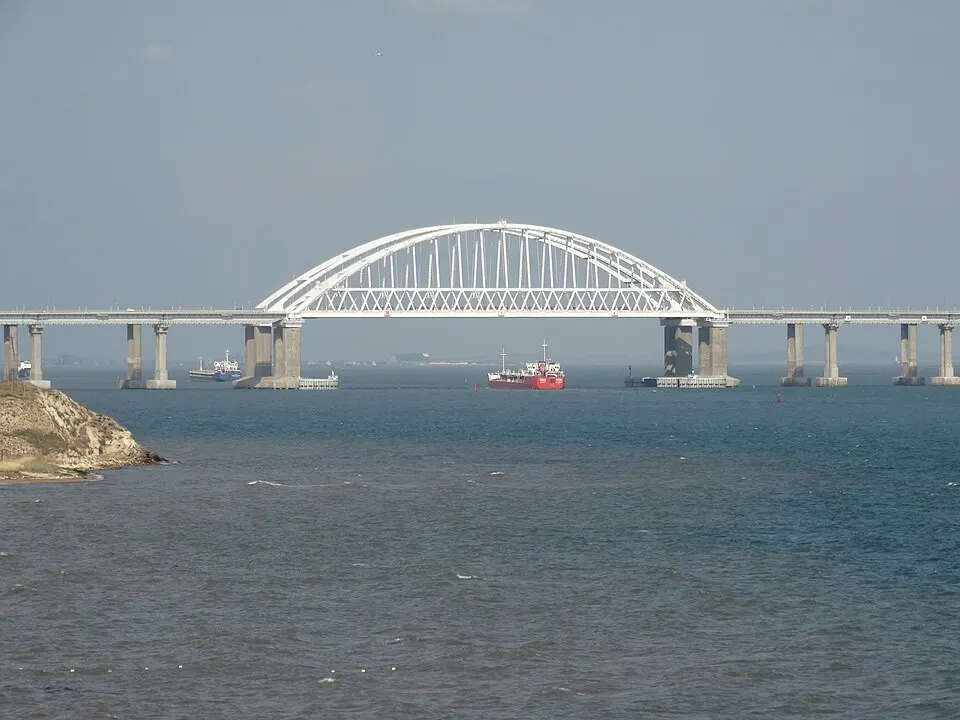
On 17 November, a new Ukrainian strike targets the Crimean Bridge. Kyiv claims destruction, while Moscow-installed authorities announce suspended traffic. The extent of structural damage remains independently unverified.
Commission proposes 22nd package of sanctions against Russia
On 23 November, the European Commission proposed further sanctions against Russia, targeting banks, cryptocurrency and participation under the Russian flag at sporting events in the European Union.
European flag, illustration. — Wikimedia Commons, contributeurs du fichier Flag of Europe.svg — domaine public pour le fichier ; emblème européen utilisé à titre informatif ; rendu PNG.
The proposal would extend a transaction ban to around 60 Russian banks and remove them from the SWIFT banking messaging network. It also targets cryptocurrency platforms and Russian participation in European sporting and cultural events.
Put forward in the context of the war in Ukraine, the measures remain proposals and have not yet been adopted by member states.
Crimean Bridge hit by new Ukrainian strike, traffic suspended
A new Ukrainian attack targeted the Crimean Bridge overnight on 16–17 November 2026. Moscow-installed authorities announced suspended traffic, while Kyiv claims major damage to the link between Russia and the occupied peninsula.
Archive, 19 August 2020; not the 2026 damage. Leon petrosyan / Wikimedia Commons, CC BY-SA 4.0 https://creativecommons.org/licenses/by-sa/4.0/; resized. — Leon petrosyan / Wikimedia Commons — CC BY-SA 4.0 https://creativecommons.org/licenses/by-sa/4.0/ — 19 août 2020, redimensionnement.
Volodymyr Zelensky says Ukrainian drones and missiles struck both road and rail sections. Ukraine’s security service claims an arch and a road span were destroyed.
Russia’s Transport Ministry says it is assessing damage. Circulating images appear to show a partial collapse, but the extent of structural damage has not been independently verified. The bridge is a logistics route for Russian forces; the reviewed evidence establishes no reliable timetable for full restoration.
Ukraine: IMF reports progress towards conditional $1.6 billion financing
The IMF announced progress on 16 November 2026 in talks with Ukraine towards a staff-level agreement that could unlock $1.6 billion, Reuters reported. The necessary financing assurances have yet to be secured.
Archive image, date unknown; not the talks. IMF / Wikimedia Commons, public domain; resized. — Fonds monétaire international / Wikimedia Commons — domaine public, autorisation VRT 2007052110013541 ; image d’archives, taille réduite.
Virtual discussions between the Fund and Ukrainian authorities are continuing. A staff-level agreement is being sought in the near term, while international partners are being engaged to secure programme financing.
This step is neither a final agreement nor a disbursement. It comes amid substantial budget needs linked to the continuing war. The proposed sum must therefore be distinguished from aid already paid and decisions taken separately by the European Union.
Kyiv mayor reports strikes on two bridges and service outages
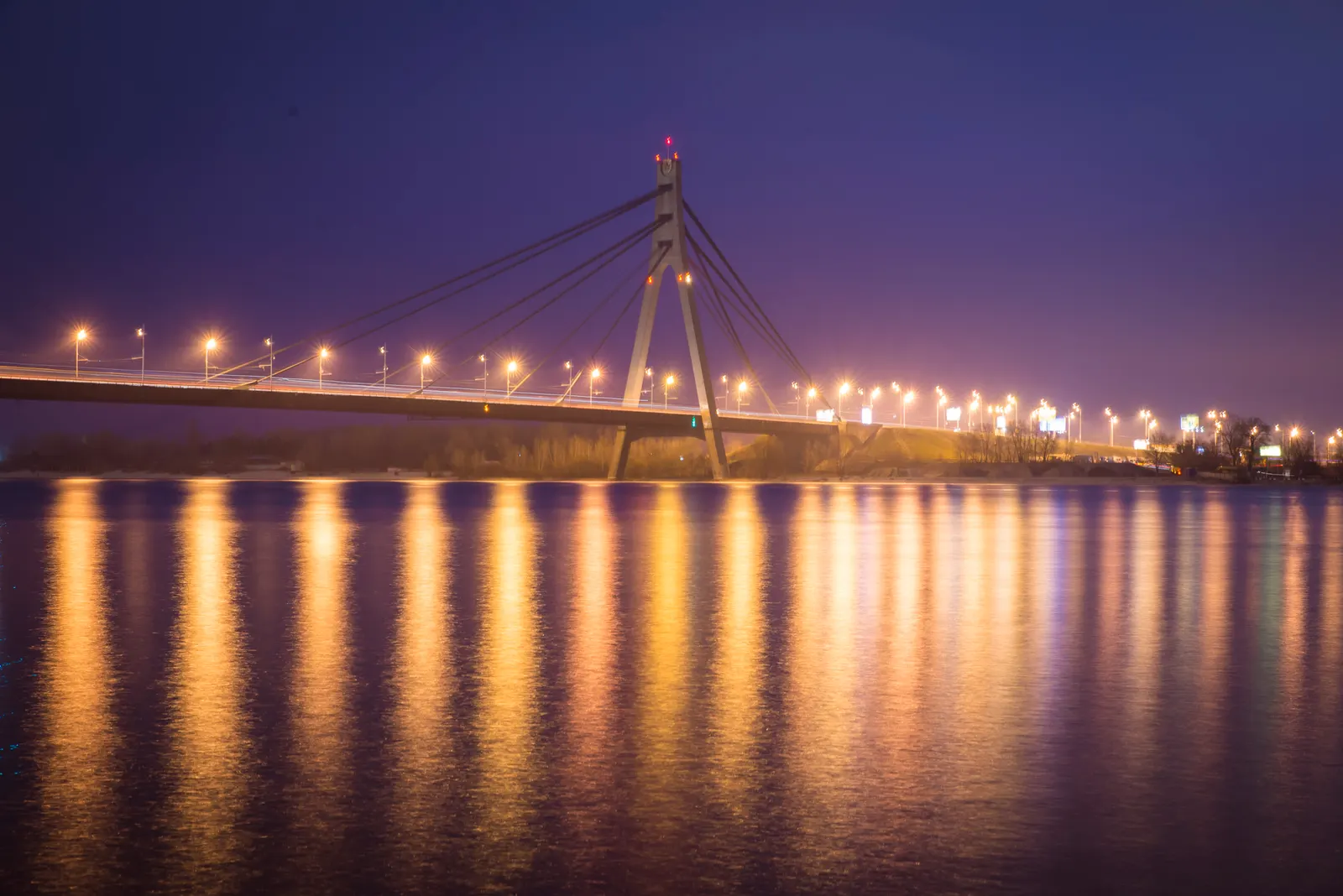
Russian strikes hit Kyiv's Northern and Southern bridges late on 16 November 2026, according to Mayor Vitali Klitschko's preliminary information. He also reported damage to critical infrastructure and water and heating cuts in some districts.
Archive image, 23 November 2016; not the reported damage. Konstantin Brizhnichenko, CC BY-SA 4.0 https://creativecommons.org/licenses/by-sa/4.0/ ; unmodified. — Konstantin Brizhnichenko / Wikimedia Commons — CC BY-SA 4.0 https://creativecommons.org/licenses/by-sa/4.0/ ; 23 novembre 2016 ; sans modification.
The announcement followed a Ukrainian Air Force warning of incoming missiles. AFP journalists heard loud explosions, but initial images circulating online were not verified in their report.
This establishes alerts, explosions heard and municipal statements. It does not yet provide a complete damage assessment, establish how long the outages will last or independently confirm the condition of each bridge.
EU ministers seek Ukraine ceasefire before wider security talks with Moscow
Several EU ministers said in Brussels on 16 November 2026 that discussing Europe’s security architecture with Moscow before a Ukraine ceasefire would be premature. Kaja Kallas called for Russian concessions.
Illustration; does not depict the 16 November meeting. Wikimedia Commons, public-domain file; PNG rendering. — Wikimedia Commons, contributeurs du fichier Flag of Europe.svg — domaine public pour le fichier ; emblème européen utilisé à titre informatif ; rendu PNG.
The EU foreign-policy chief argues that Moscow’s demands serve as a pretext to continue the war. Reuters and Italy’s Quotidiano Nazionale report her assessment.
Lithuania’s and Sweden’s foreign ministers urged stronger leverage in support of Kyiv. The remarks clarify European positions after a negotiating team was chosen in Dublin; they represent neither a ceasefire nor the actual opening of new talks.
EU sanctions SDA and NoName057(16) over interference and cyberattacks
The EU Council announced sanctions on 16 November 2026 against 30 people and two entities in response to hybrid operations attributed to Russia. Social Design Agency and hacker collective NoName057(16) are among the targets.
Illustration; does not depict the 16 November meeting. Wikimedia Commons, public-domain file; PNG rendering. — Wikimedia Commons, contributeurs du fichier Flag of Europe.svg — domaine public pour le fichier ; emblème européen utilisé à titre informatif ; rendu PNG.
The Council accuses SDA of information-manipulation campaigns directed by Russia’s presidential administration, including against France, Germany and European support for Ukraine. Twenty-four agency staff are listed.
NoName057(16) is designated under the separate cyberattacks regime. Measures include asset freezes and financing bans; individuals face travel restrictions. The descriptions of responsibility remain the Council’s stated grounds for the decisions.
EU adds 12 people and 101 entities to Russia sanctions
The EU Council adopted sanctions on 16 November 2026 against 12 people and 101 entities it links to financing Russia’s war against Ukraine. Nearly fifty Russian banks and financial institutions are covered.
Illustration; does not depict the 16 November meeting. Wikimedia Commons, public-domain file; PNG rendering. — Wikimedia Commons, contributeurs du fichier Flag of Europe.svg — domaine public pour le fichier ; emblème européen utilisé à titre informatif ; rendu PNG.
The measures also target e-commerce, oil interests and the so-called shadow fleet. The Council names Wildberries’ owner and a controlling Ozon shareholder; AFP identifies Tatiana Kim among those targeted.
Listings entail asset freezes and a ban on providing funds. Individuals also face an EU travel ban. These decisions do not amount to adoption of the broader 22nd sanctions package, which remains in preparation.