Belarus · Canada · Germany · Norway · Russian Federation · Ukraine · United States of America
File
Russia–Ukraine: origins, war since 2014 and timeline
This dossier traces the Russia–Ukraine war from the seizure of Crimea and the start of fighting in the Donbas in 2014, through the full-scale invasion of 24 February 2022 and its military, diplomatic, economic and humanitarian consequences. It distinguishes recognised sovereignty, claimed annexations and actual military control.
Earlier milestones explain relations between the two states since Ukrainian independence in 1991: the 1994 Budapest security assurances, the 1997 friendship treaty, the 2003 Tuzla crisis, gas disputes and the 2010 Kharkiv agreements. The suspension of preparations for the European Union agreement in November 2013 opens the Euromaidan crisis. These antecedents are distinguished from the war that began in 2014; each entry links to its sources.
The timeline follows Ilovaisk, Donetsk airport, Debaltseve, the Minsk agreements, disengagement attempts, fighting and the humanitarian crisis in Avdiivka in 2017, the trade blockade, detainee exchanges and the Kerch maritime crisis. It then documents the war’s expansion, Ukrainian territorial recaptures, Bakhmut, international justice, grain, energy, external assistance and negotiations. Retrospective investigations are identified and claims remain attributed.
This selection of turning points includes canonical occurrences from the archived energy dossier. It expands previously sparse years without providing an exhaustive daily record: local fighting, successive sanctions, all weapons deliveries and population displacement are not detailed. Cumulative military losses and complete territorial control remain coverage limitations.
Last updated : 80 key moments
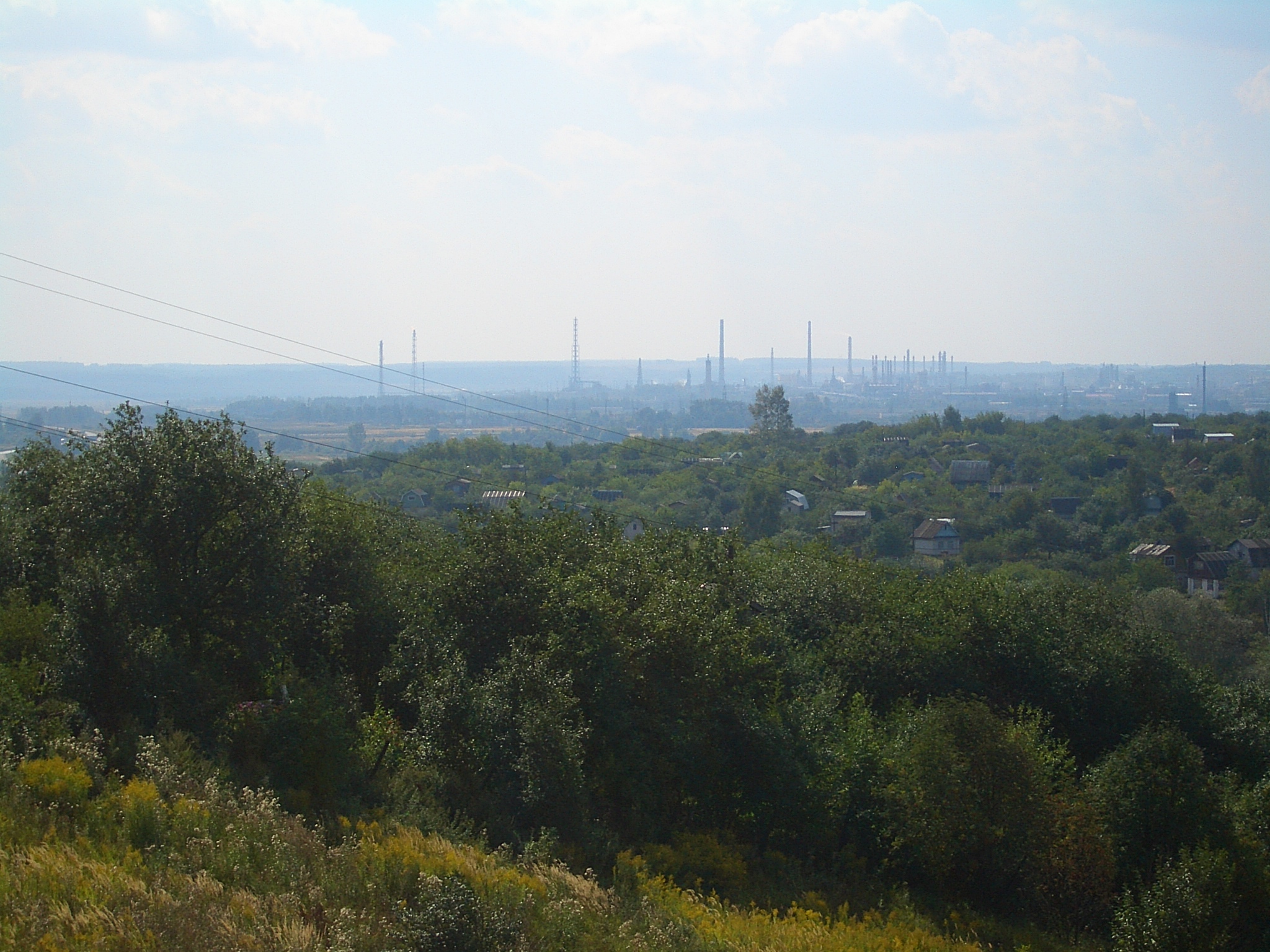
Kstovo industrial area, 29 August 2007. Archive image; it does not show the attack. Vmenkov, CC BY-SA 3.0 https://creativecommons.org/licenses/by-sa/3.0/, unchanged. — Vmenkov / Wikimedia Commons — CC BY-SA 3.0 https://creativecommons.org/licenses/by-sa/3.0/ — 29 août 2007, sans modification.
Where things stand
On 31 October 2026, residents evacuated from Russian-occupied Oleshky reached Kyiv-controlled territory after travelling through Russia and Belarus. The exact number arriving has not been published. The truce remains local. Washington has authorised a potential sale of 500 Patriot interceptors, with no evidence of delivery; the proposed €45 billion in EU loans for 2027 remains subject to adoption.
Reported information
Kstovo: Russia reports industrial damage after drone attack
An industrial site in Russia's Kstovo district sustained significant damage in a drone attack overnight into 1 November 2026, according to Nizhny Novgorod governor Gleb Nikitin. Ukrainian sources identify a Lukoil refinery, but that identification has not been independently confirmed.
Kstovo industrial area, 29 August 2007. Archive image; it does not show the attack. Vmenkov, CC BY-SA 3.0 https://creativecommons.org/licenses/by-sa/3.0/, unchanged. — Vmenkov / Wikimedia Commons — CC BY-SA 3.0 https://creativecommons.org/licenses/by-sa/3.0/ — 29 août 2007, sans modification.
The governor says more than 100 drones were destroyed and reports no casualties in a preliminary assessment. Those figures remain attributed to Russian authorities. He refers to emergency repairs and possible disruption to heating and hot water.
AFP reports that Russian authorities did not specify the damaged enterprise's activity. War-monitoring channels and Ukrainian media say the Kstovo refinery was hit. These reports must be distinguished from the Russian announcement, which does not name the site.
The sources consulted do not establish the extent of damage to the refinery or its production level after the attack. A complete shutdown has not been confirmed.
Residents of Oleshky, a Russian-occupied town in the Kherson region, reached Kyiv-controlled territory on 31 October 2026. Reuters and RBC-Ukraine covered their arrival in the Chernihiv region at the Belarusian border.
Oleshky, April 2016. Archive image; not the town’s current condition or the evacuation. Dmytro Petishkin, CC BY 4.0, resized. — Dmytro Petishkin / Wikimedia Commons — CC BY 4.0 https://creativecommons.org/licenses/by/4.0/ ; 17 avril 2016 ; redimensionnement.
The evacuees travelled through Crimea and the Russian town of Anapa, then flew to Belarus before continuing into Ukraine. Relatives and aid teams welcomed them, with medical care to be provided according to need.
Their return took place under a humanitarian truce limited to the Oleshky area. Residents could choose to leave for Ukrainian- or Russian-controlled areas, or remain in the town. Ukrainian authorities have not published the exact number evacuated and arriving on the Ukrainian side; statements about more than 750 departures should not be treated as that arrival tally.
Washington approves possible sale of 500 Patriot interceptors to Ukraine
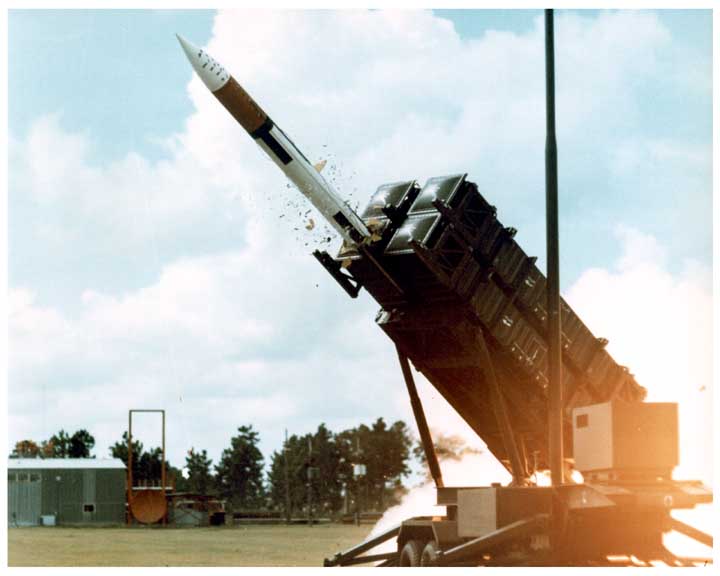
The United States approved a possible sale of 500 Patriot PAC-3 MSE interceptors to Ukraine on 30 October 2026, estimated at $2.1 billion. The authorisation does not mean the missiles have been delivered.
Archive illustration of a PAC-2; neither the PAC-3 MSE missiles in the authorised sale nor a delivery to Ukraine. U.S. Army, public domain. — U.S. Army / Wikimedia Commons — domaine public, photographie d’archives d’un PAC-2, date de prise de vue inconnue, sans modification.
According to the notification cited by Inside Defense and Le Parisien, financing is to involve allies including Canada, Germany and Norway, as well as Ukrainian national funds financed through the European support loan. No US funding is committed.
The notification gives no schedule. Volodymyr Zelensky welcomes the decision but warns that deliveries could start several years later and calls for a response to immediate needs. The timetable therefore remains separate from sale authorisation.
Commission proposes €45 billion in Ukraine loans for 2027
The European Commission proposed on 30 October 2026 the allocation of the remaining €45 billion of the European loan for Ukraine for 2027. The arrangement still requires adoption by the Council of the EU before disbursements.
Commission headquarters, May 2016. Archive illustration. almathias, CC0. — almathias / Pixabay / Wikimedia Commons — CC0 1.0 https://creativecommons.org/publicdomain/zero/1.0/ — 7 mai 2016, sans modification.
The proposal earmarks €31.7 billion for defence industrial capacity and up to €13.3 billion for budget support. The latter would be split equally between the Ukraine Facility and macro-financial assistance.
This envelope is the second half of the €90 billion loan programme covering 2026 and 2027. It is therefore not a new €45 billion grant on top of that programme.
Budget funding is subject to conditions including the rule of law and anti-corruption measures. The Commission plans to prepare payments from early 2027 following Council adoption: the announcement does not establish that a payment has already been made.
Dnipro: Ukrainian authorities report at least 14 killed in station strike
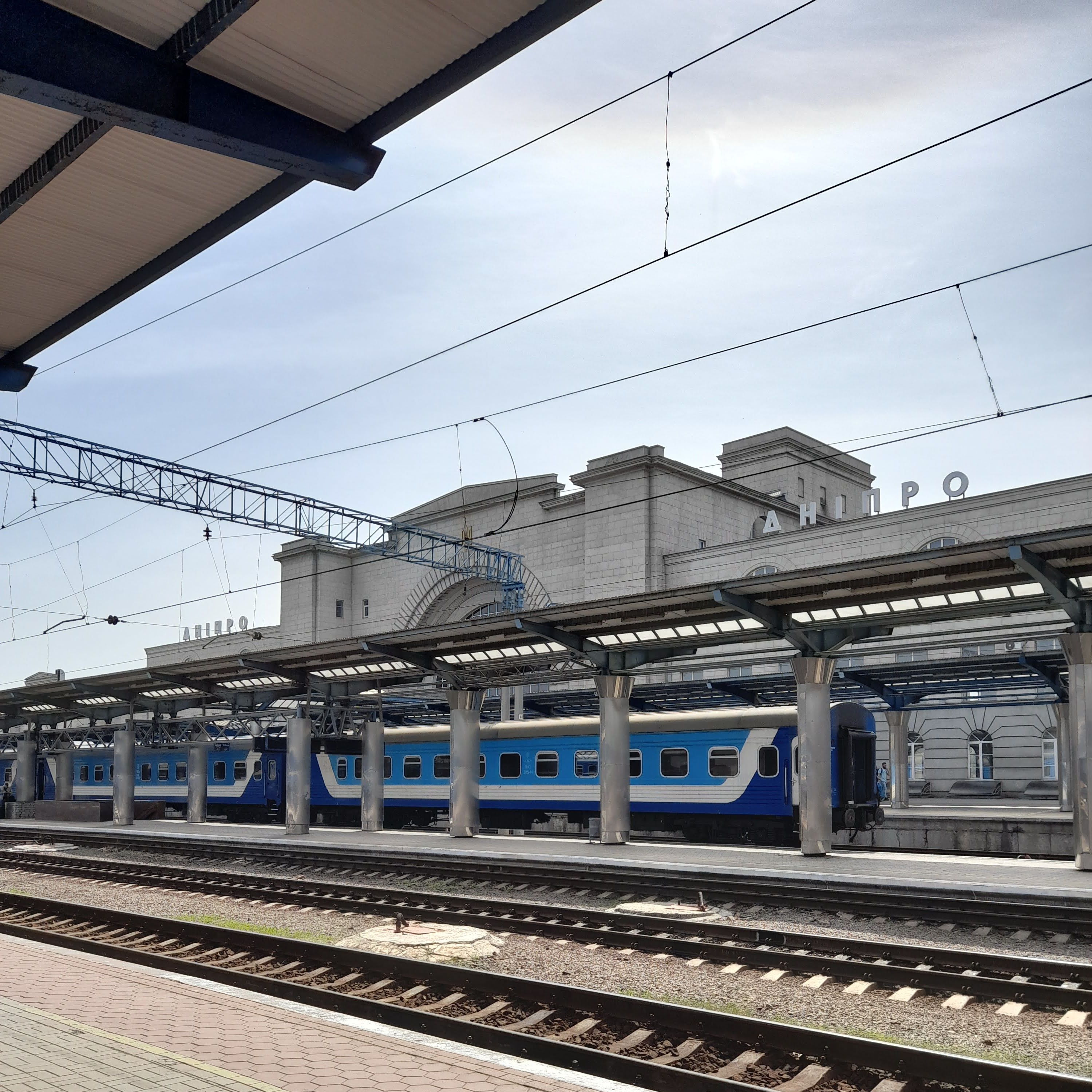
At least 14 people were killed and 14 injured in a drone strike on a railway platform in Dnipro on 29 October 2026, Ukrainian authorities said. They attribute the attack to Russia.
Platforms at Dnipro’s main station, May 2021. Archive illustration; neither the strike nor its aftermath is shown. — Toss12 / Wikimedia Commons — CC BY 4.0 https://creativecommons.org/licenses/by/4.0/ ; 14 mai 2021, sans modification.
Railway operator Ukrzaliznytsia says a commuter train and a passenger train were at the targeted platform. The regional governor reports that six of the injured are in serious condition, including an 11-year-old child.
Reuters and AFP separately report the attack and the Ukrainian statements. The casualty count remains a provisional toll attributed to the authorities. The strike comes while a humanitarian truce limited to Russian-occupied Oleshky in Kherson region does not apply to Ukraine as a whole.
Oleshky: both sides report thirty hours without truce violations
Ukrainian and Russian human rights ombudsmen said separately on 28 October 2026 that no incidents had been recorded during the first thirty hours of the local truce in Oleshky. The town in Ukraine’s Kherson region is under Russian occupation.
St Michael’s Church in Oleshky, April 2016. Archive photograph; it does not show the town’s current condition or the humanitarian operation. Dmytro Petishkin, CC BY 4.0. — Dmytro Petishkin / Wikimedia Commons — CC BY 4.0 https://creativecommons.org/licenses/by/4.0/ ; 17 avril 2016 ; redimensionnement.
According to Anadolu, both officials say they remain in contact to coordinate arrangements. The pause in fighting is intended to facilitate aid deliveries and the departure of civilians who wish to leave.
The Associated Press reports that around 2,000 residents remain and face shortages of food and medicine. The operation aims to bring essential supplies and prepare evacuations, but the sources consulted do not establish a complete tally of deliveries or departures already completed.
The truce is geographically limited. It is not a general ceasefire between Russia and Ukraine: fighting and strikes continue elsewhere. The account of no recorded incidents remains attributed to officials on both sides.
Ukraine: EU authorises €4.9 billion for reimbursements and training
The Council of the European Union announced eight decisions on 26 October mobilising about €4.9 billion for Ukraine through the European Peace Facility. Most of the funding concerns military assistance already delivered.
European flag, archive image uploaded in 2005. Institutional illustration, not the Council decision in 2026. — Robo Blazek (Robo) / Wikimedia Commons — domaine public, libéré par l’auteur — image d’archives mise en ligne le 13 juillet 2005, sans modification.
According to the Council, €4.7 billion will partially reimburse member states that supplied that assistance. An additional €230 million funds the EU training mission EUMAM Ukraine.
This is therefore neither a new €4.9 billion weapons delivery nor a transfer of the entire amount to Kyiv. Adoption authorises the funds’ use; it does not establish that all reimbursements have already been paid.
The measures implement part of a wider €6.6 billion political agreement. The two amounts should not be added together. The announcement does not specify a detailed payment schedule or country-by-country allocation.
On 16 October 2026, AP reports, citing officials, Russian strikes across nine Ukrainian regions, with at least fifteen people injured and emergency power outages.
The report describes damaged homes and hundreds of thousands of households affected by outages. This toll remains attributed to the officials cited and may be revised.
The attacks continue the sequence already documented in this dossier on 14–15 October. Their immediate damage does not establish the condition of the entire energy network or a change in the frontline.
Zelensky ends pause on Russian refinery strikes; fire reported in Ryazan
Volodymyr Zelensky announced the resumption of Ukrainian strikes on Russian refineries in a Financial Times interview published on October 15, 2026. Reuters reports a refinery fire in Russia’s Ryazan region the same day, citing its governor.
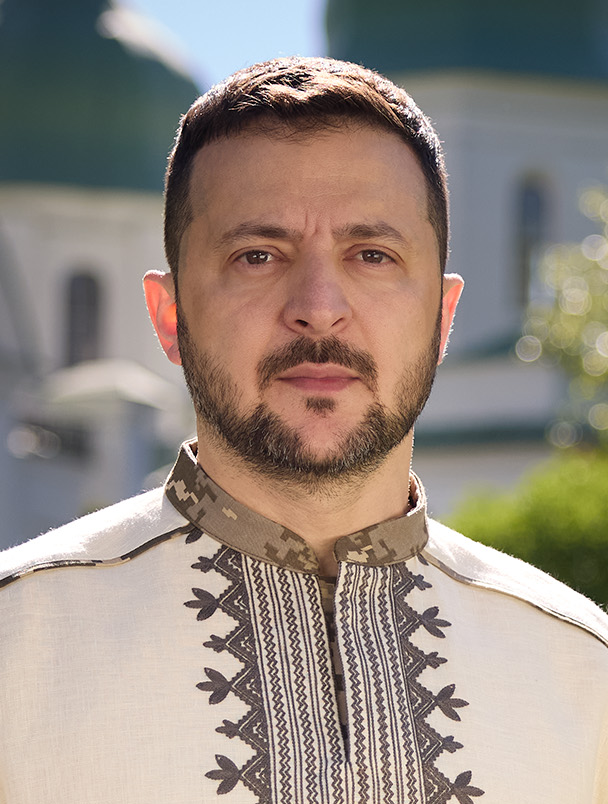
Archive portrait of Volodymyr Zelensky from the May 2024 Easter greetings, cropped in 2025. Presidency of Ukraine / Wikimedia Commons, CC0. — Présidence de l’Ukraine / Wikimedia Commons — CC0 1.0 (https://creativecommons.org/publicdomain/zero/1.0/). Portrait d’archives de mai 2024, recadré par Ooligan en 2025 ; aucune modification supplémentaire.
The Ukrainian president says he suspended energy strikes for three days in response to US requests. He accuses Russia of continuing to attack Ukrainian infrastructure during the pause. These details remain attributed to his account.
According to Reuters, Governor Pavel Malkov attributes the Ryazan fire to a Ukrainian drone attack and says emergency services are responding. He says material damage is being assessed.
Zelensky’s announcement and the Russian report are distinct elements: the sources consulted do not independently establish the damage or consequences for refinery production.
Ukraine: Starshield service on the move reportedly restored, with limits still unclear
On 15 October 2026, a Ukrainian Defense Ministry source told the Kyiv Independent that Starshield service on the move had been restored. The military version of SpaceX’s satellite connection had faced restrictions the previous day.
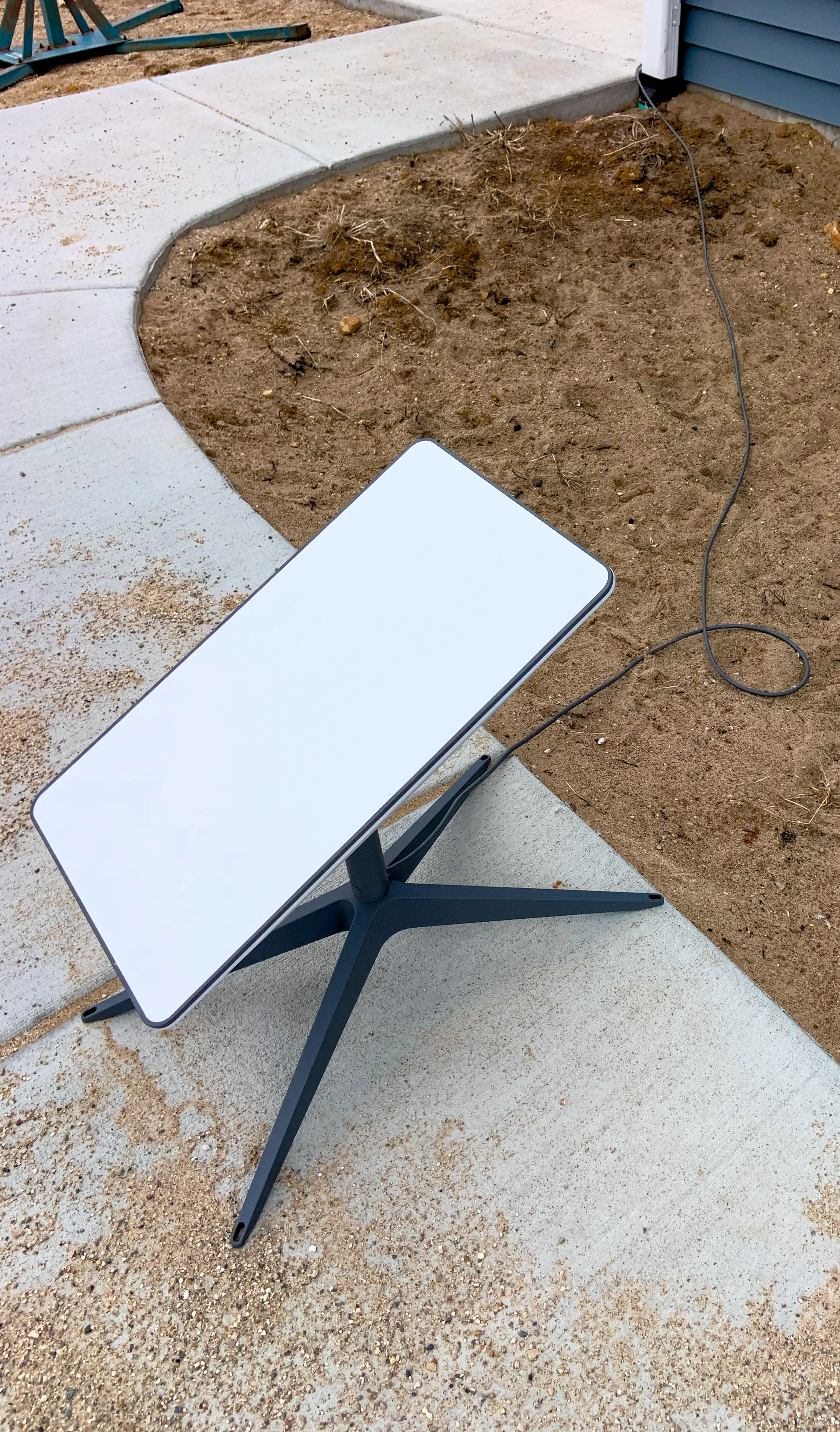
Archive image: Starlink dish beside a home, 29 January 2024. Civilian equipment shown for illustration, with no established link to Ukrainian units. Wikideas1, CC0. — Wikideas1 / Wikimedia Commons — CC0 1.0, https://creativecommons.org/publicdomain/zero/1.0/. Photo d’archives du 29 janvier 2024, sans modification.
According to Reuters, restrictions above 160 km/h had disrupted drone missions along the frontline. The ministry is still seeking to establish their causes and circumstances.
The Kyiv Independent nevertheless reports that a Ukrainian drone industry source describes performance varying between cases. Its ministry source did not specify whether every restriction had been removed. The announced restoration therefore does not establish a uniform return of all capabilities.
Reuters has no independent confirmation of a White House order imposing the restrictions. The origin of the decision remains separate from the resumption reported by Ukrainian officials.