Belarus · Canada · Germany · Norway · Russian Federation · Ukraine · United States of America
File
Russia–Ukraine: origins, war since 2014 and timeline
This dossier traces the Russia–Ukraine war from the seizure of Crimea and the start of fighting in the Donbas in 2014, through the full-scale invasion of 24 February 2022 and its military, diplomatic, economic and humanitarian consequences. It distinguishes recognised sovereignty, claimed annexations and actual military control.
Earlier milestones explain relations between the two states since Ukrainian independence in 1991: the 1994 Budapest security assurances, the 1997 friendship treaty, the 2003 Tuzla crisis, gas disputes and the 2010 Kharkiv agreements. The suspension of preparations for the European Union agreement in November 2013 opens the Euromaidan crisis. These antecedents are distinguished from the war that began in 2014; each entry links to its sources.
The timeline follows Ilovaisk, Donetsk airport, Debaltseve, the Minsk agreements, disengagement attempts, fighting and the humanitarian crisis in Avdiivka in 2017, the trade blockade, detainee exchanges and the Kerch maritime crisis. It then documents the war’s expansion, Ukrainian territorial recaptures, Bakhmut, international justice, grain, energy, external assistance and negotiations. Retrospective investigations are identified and claims remain attributed.
This selection of turning points includes canonical occurrences from the archived energy dossier. It expands previously sparse years without providing an exhaustive daily record: local fighting, successive sanctions, all weapons deliveries and population displacement are not detailed. Cumulative military losses and complete territorial control remain coverage limitations.
Last updated : 80 key moments
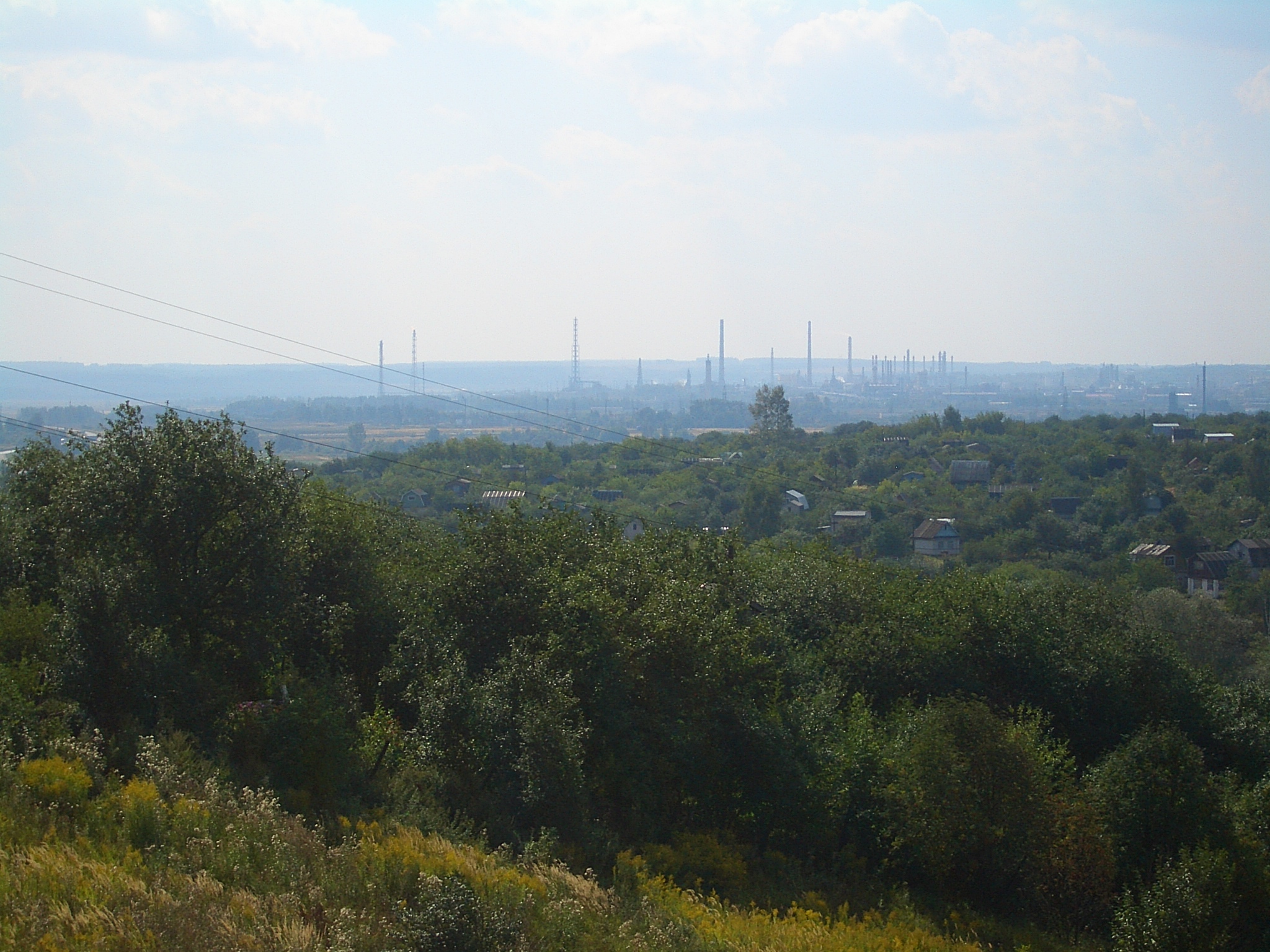
Kstovo industrial area, 29 August 2007. Archive image; it does not show the attack. Vmenkov, CC BY-SA 3.0 https://creativecommons.org/licenses/by-sa/3.0/, unchanged. — Vmenkov / Wikimedia Commons — CC BY-SA 3.0 https://creativecommons.org/licenses/by-sa/3.0/ — 29 août 2007, sans modification.
Where things stand
On 31 October 2026, residents evacuated from Russian-occupied Oleshky reached Kyiv-controlled territory after travelling through Russia and Belarus. The exact number arriving has not been published. The truce remains local. Washington has authorised a potential sale of 500 Patriot interceptors, with no evidence of delivery; the proposed €45 billion in EU loans for 2027 remains subject to adoption.
Confirmed
Kharkiv agreements extend the Russian fleet’s presence in Crimea
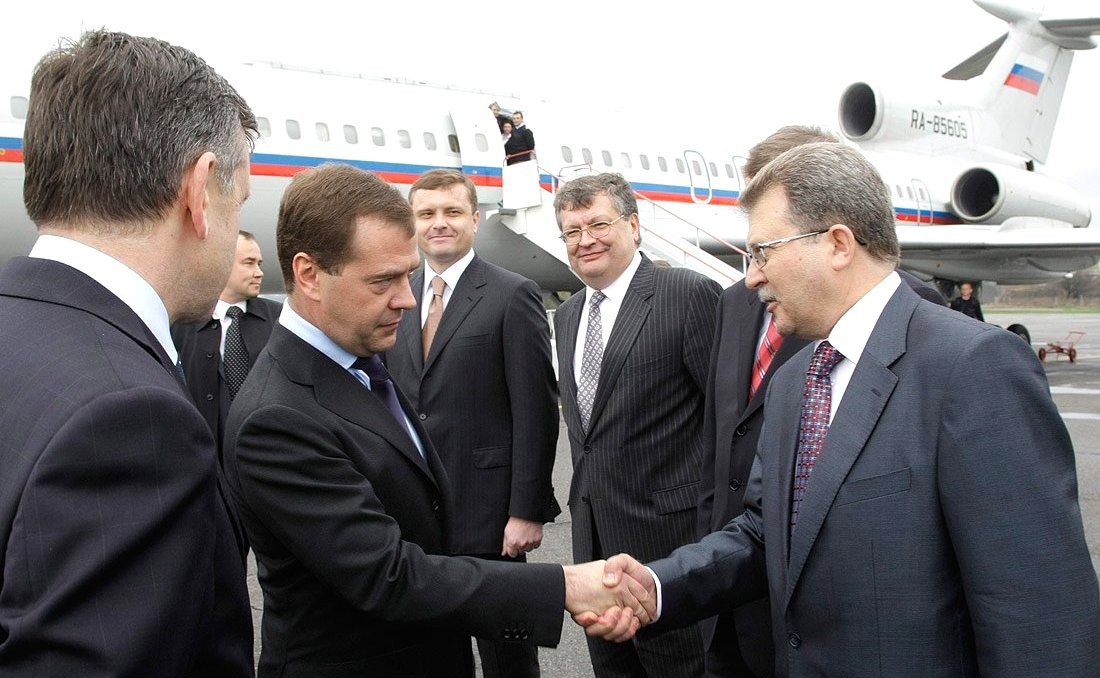
On 21 April 2010, Viktor Yanukovych and Dmitry Medvedev reach an agreement in Kharkiv extending the Russian Black Sea Fleet’s stationing in Ukraine until 2042 in exchange for gas discounts.
Dmitry Medvedev arrives in Kharkiv on 21 April 2010. — President Press and Information Office / Kremlin.ru / Wikimedia Commons, CC BY 4.0 — https://creativecommons.org/licenses/by/4.0/. Aucune modification.
The arrangement links a military issue, Russia’s presence in Sevastopol, to an energy negotiation. It changes the 2017 expiry date for the naval facilities lease.
This is an agreement on military stationing on Ukrainian territory, not a transfer of sovereignty over Crimea.
Russian gas transit through Ukraine resumes after January crisis
On 20 January 2009, Russian gas begins transiting Ukraine towards Europe again after a complete interruption since 7 January amid a commercial dispute between Moscow and Kyiv.
Gazprom and Naftogaz signed new supply and transit contracts on 19 January. Implementation allows flows to resume after winter disruptions affecting several European countries.
This episode predates the war and illustrates the importance of gas prices and transit infrastructure in Russian-Ukrainian relations.
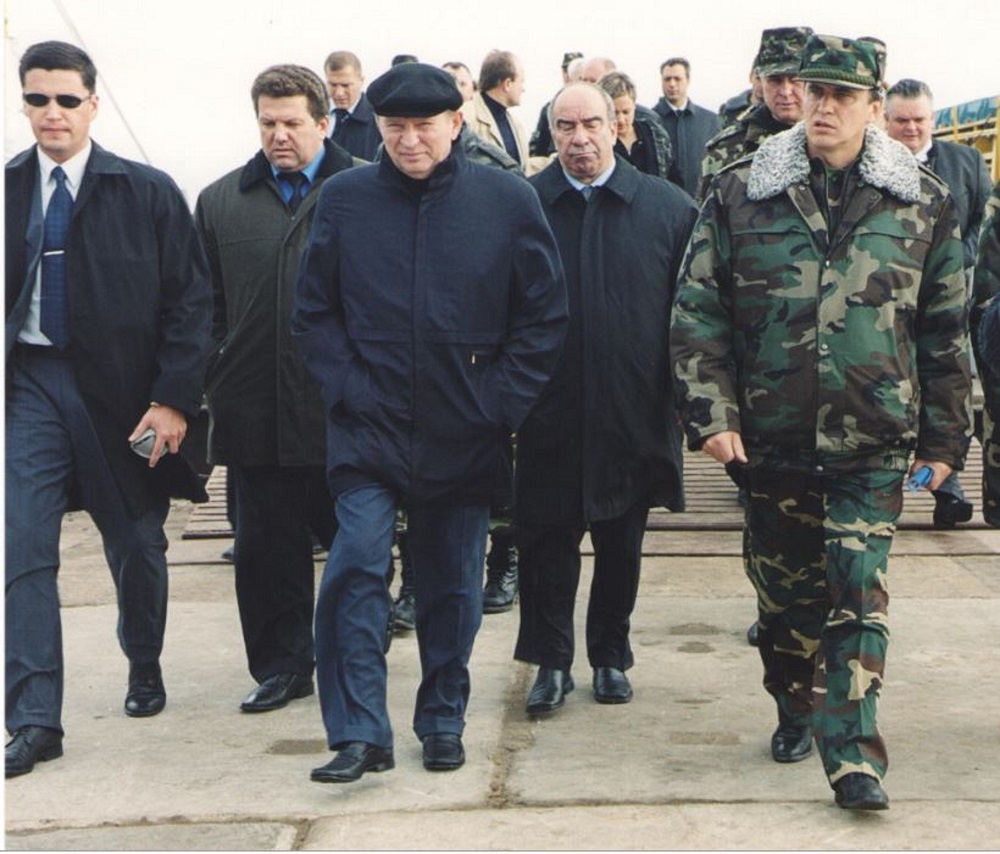
On 23 October 2003, authorities in Russia’s Krasnodar region order work suspended on a dam extending towards Ukraine’s Tuzla Island in the Kerch Strait.
Leonid Kuchma on Tuzla Island on 23 October 2003. ArmyInform archive. — ArmyInform / Wikimedia Commons, auteur non identifié, CC BY 4.0 — https://creativecommons.org/licenses/by/4.0/. Archives du 23 octobre 2003, sans modification.
Construction has triggered a territorial crisis between Moscow and Kyiv. Russia cites protection against coastal erosion; Ukraine describes a threat to its territory and strengthens surveillance of the island.
The halt reduces the immediate risk of confrontation without settling every navigation and border issue.
Moscow and Kyiv sign a treaty recognising their borders
On 31 May 1997, Boris Yeltsin and Leonid Kuchma sign the Treaty on Friendship, Cooperation and Partnership between Russia and Ukraine in Kyiv.
Article 2 affirms mutual respect for territorial integrity and the inviolability of existing borders. The two countries jointly transmit the document to the United Nations.
This commitment provides a documentary reference for understanding subsequent territorial disputes. Signature is distinct from the treaty’s entry into force.
Budapest Memorandum sets out security assurances for Ukraine
On 5 December 1994, Ukraine, Russia, the United States and the United Kingdom sign a memorandum in Budapest linked to Ukraine’s accession to the Nuclear Non-Proliferation Treaty.
The signatories reaffirm respect for Ukraine’s independence, sovereignty and existing borders, and a commitment to refrain from the threat or use of force.
These assurances accompany Ukraine’s nuclear disarmament. The text does not create a collective defence alliance comparable to NATO.
On 1 December 1991, Ukrainian voters approve the independence proclaimed on 24 August and elect Leonid Kravchuk president.
The vote confirms the creation of a sovereign state as the Soviet Union breaks up. The CSCE observers’ report documents the election and its role in discussions among the Ukrainian, Russian and Belarusian leaders.
This entry opens the dossier’s background chronology; it does not date the start of the 2014 war to 1991.