Morocco · Algeria · Germany · Spain · France · United Kingdom · Mauritania · United States of America · Russian Federation
File
Moroccan Sahara: from the roots of the conflict to the 2026 negotiations
This dossier traces the origins and transformation of the Moroccan Sahara conflict: historical ties and allegiances, Spanish colonial rule from 1884, decolonisation, war, the referendum process, the autonomy proposal and diplomacy through 17 October 2026. It also covers populations, Hassani culture, Tindouf refugees, prisoners and missing persons, human rights, resources and trade agreements.
Morocco claims the territory on grounds of territorial integrity and historical ties; the Polisario Front seeks independence through self-determination, with Algerian support. Mauritania withdrew from the territorial conflict in 1979 but remains involved through neighbourhood interests and negotiations. Morocco administers the principal cities and Atlantic coast; the military berm is not an agreed international border. The dossier distinguishes effective control, sovereignty claims, bilateral recognition and status in international institutions.
In 1975, the ICJ recognised allegiance ties with certain tribes without finding territorial sovereignty that would exclude self-determination. The settlement plan accepted in 1988 and MINURSO established in 1991 did not deliver the planned referendum. The Baker initiatives and Morocco’s 2007 autonomy plan shifted negotiations towards institutions, safeguards and consent. US, Spanish, French and British positions use different wording and should not be counted as identical acts.
Sources accompany each milestone. “Moroccan Sahara” is the editorial designation; UN and court documents generally use “Western Sahara.” Their substantive qualifications are preserved. No map is used. Day-level dates do not imply a known time of day.
Last updated : 92 key moments
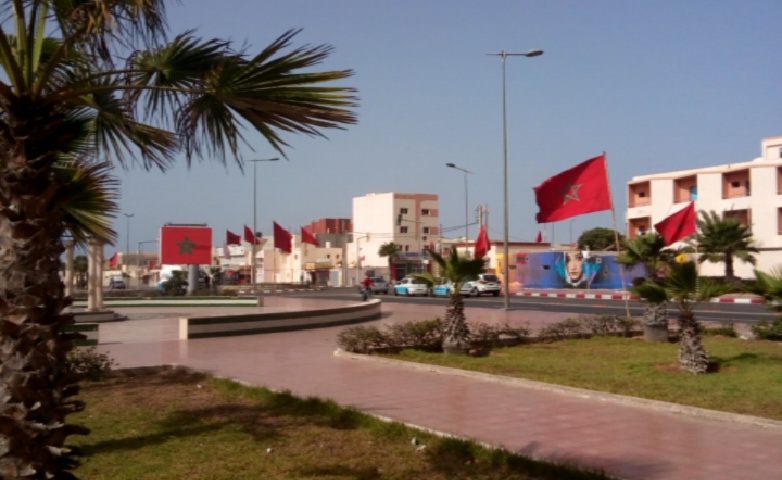
Dakhla, Moroccan Sahara, 5 September 2016. Illustrative view, no map. hamza / Hamiz11, CC BY-SA 4.0. — hamza / Hamiz11 — Wikimedia Commons — CC BY-SA 4.0, https://creativecommons.org/licenses/by-sa/4.0/ — photographie non modifiée
Where things stand
As of 1 November 2026, the UN announces MINURSO's liquidation while maintaining its political engagement. Médias24 observes reduced activity at headquarters in Laâyoune. An internal meeting is reported for 2 November, with no final departure timetable established. Parliament also plans a joint session on 2 November.
Viewpoints
Attributed and documented positions
Where do positions converge and diverge in seeking a settlement?
Common facts
UN texts seek a lasting, mutually acceptable political solution. Resolution 2797 gives Morocco’s autonomy proposal a central place. Sources establish no final agreement.
Main disagreement
Disagreement concerns sovereignty, the choices offered to the population and implementation guarantees. Algeria disputes being a party to the conflict; Morocco stresses its role. Protection of people remains a requirement distinct from status.
View detailed positionsHide detailed positions6
Kingdom of Morocco
summary
Morocco proposes negotiated autonomy under its sovereignty, with regional institutions and retention of sovereign state powers. The 2007 text provides consultation on the negotiated statute, not independence as an option. Rabat links this position to territorial integrity.
The Security Council supports negotiations based on Morocco’s autonomy proposal, without preconditions, towards a mutually acceptable solution providing for self-determination. It identifies genuine autonomy as a possible outcome and welcomes constructive suggestions. It does not find that a final agreement exists.
Mauritania describes its position in the UN report as positive neutrality and support for the political process. Its 1979 withdrawal distinguishes this from its former territorial claim. Border security and neighbourhood stability are direct interests.
HRW calls for safeguards for free and genuine choice, return and reparations. It says it takes no position on independence. Its criticism concerns rights and process safeguards; it is neither a court judgment nor the voice of every Sahrawi.
In positions recorded by the UN, Polisario demands that Sahrawis decide territorial status with independence among the options. It rejects fixing Moroccan sovereignty before that choice. Its willingness to talk does not establish acceptance of Rabat’s proposed outcome.
Algeria supports Polisario and self-determination while telling the UN envoy it does not consider itself a party to the conflict. It supports direct Morocco–Polisario talks with neighbouring states present. Participation does not resolve disagreement over its formal role.
Germany calls autonomy plan a good basis for agreement
In Rabat on 25 August 2022, Germany described Morocco’s 2007 autonomy plan as a serious and credible effort and a good basis for a solution accepted by the parties to the Moroccan Sahara dispute.
The wording appears in paragraph 15 of the joint declaration issued after Annalena Baerbock’s talks with Nasser Bourita. The text reaffirms support for the UN-led process, personal envoy Staffan de Mistura and MINURSO.
The visit accompanied the restoration of bilateral cooperation after a period of tensions. Germany’s position supported a negotiating basis; the declaration did not express recognition of sovereignty equivalent to Washington’s 2020 announcement. This distinction allows diplomatic support to be tracked without treating different formulations as identical.
Spain makes autonomy its preferred basis for a settlement
On 18 March 2022, a letter from Pedro Sánchez to King Mohammed VI makes public Spain’s assessment of Morocco’s autonomy plan as the most serious, realistic and credible basis for resolving the dispute.
The Rabat meeting on 7 April places the change within a new phase of bilateral relations. Spain has a particular role because of its colonial past, proximity and relations with Morocco and Algeria.
This wording supports a settlement framework; it is not identical to the US sovereignty-recognition proclamation. The shift draws political criticism in Spain and a reaction from Algeria. The dossier preserves these distinctions: diplomatic support is growing, but its legal and political content differs across states.
Staffan de Mistura appointed personal envoy for Sahara
On 6 October 2021, António Guterres announced Staffan de Mistura’s appointment as personal envoy for the Moroccan Sahara, succeeding Horst Köhler, whose assignment had ended on 22 May 2019.
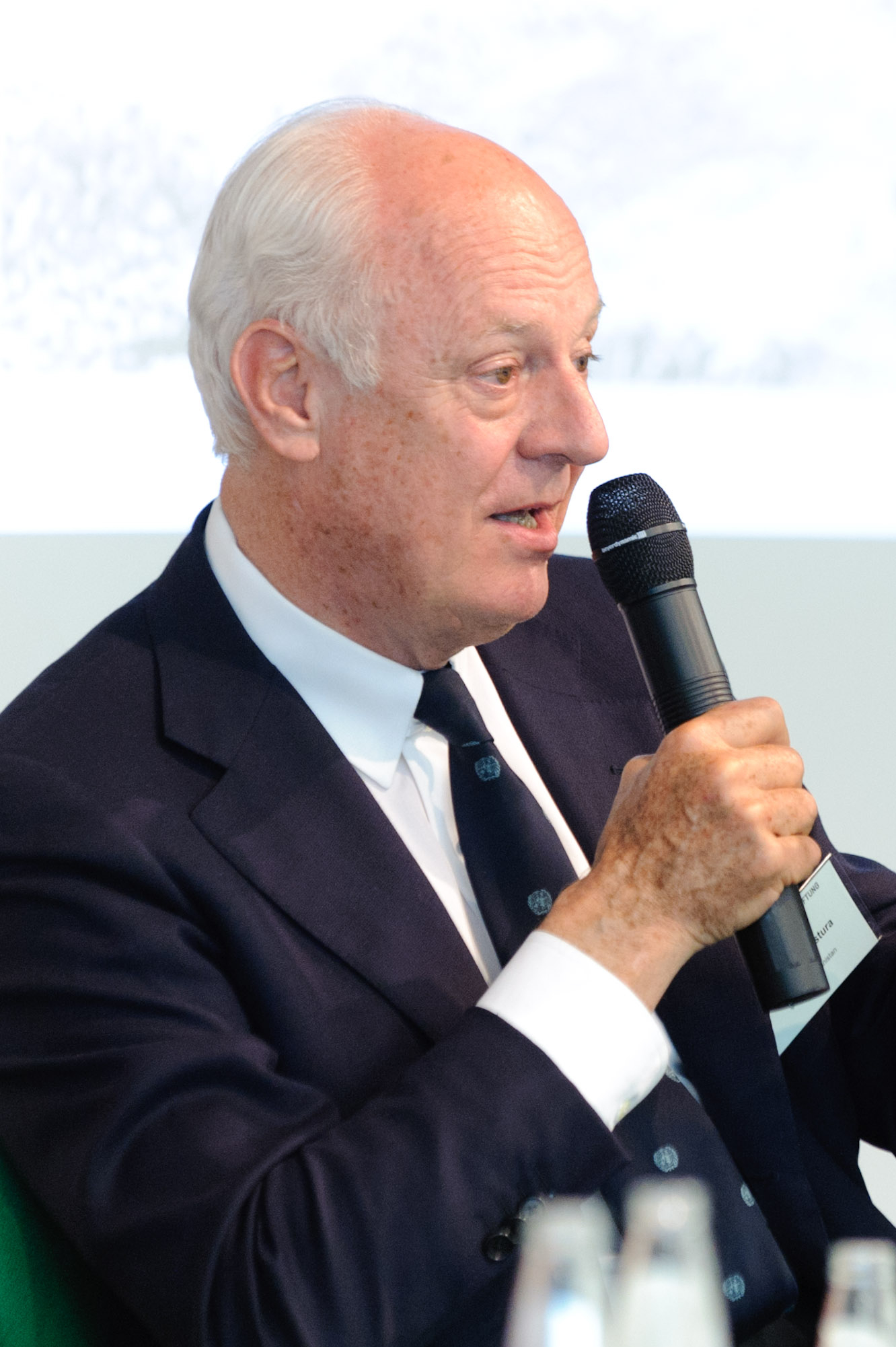
Staffan de Mistura in a 2011 archive portrait. This image does not depict his 2021 appointment. — Heinrich-Böll-Stiftung / recadrage FishInWater — Wikimedia Commons — CC BY-SA 2.0 https://creativecommons.org/licenses/by-sa/2.0/ — sans modification supplémentaire
According to the official announcement, the diplomat would provide good offices and work with the parties, neighbouring countries and other relevant interlocutors within the framework of Security Council resolutions, including resolution 2548 of 2020.
The appointment filled the mediation post after more than two years of vacancy. It did not establish an immediate resumption of formal negotiations or agreement on their outcome. MAP reported Morocco’s support for the appointment.
EU General Court annuls decisions approving the 2019 agreements
On 29 September 2021, the EU General Court annulled Council decisions approving the 2019 EU–Morocco trade and fisheries agreements because the consent of the people of the Moroccan Sahara had not been obtained.
The court examined application of those agreements to the territory, called “Western Sahara” in the proceedings. It distinguished the consultation carried out by EU institutions from the consent required under the law it applied.
The decisions’ effects were temporarily maintained to protect legal certainty and the Union’s external action. Annulment therefore did not immediately halt all trade. The General Court’s judgments opened an appeal stage and must be distinguished from the Court’s final judgments of October 2024, already included in the dossier.
On 24 August 2021, Algeria announces it is severing diplomatic relations with Morocco, citing acts it describes as hostile; Rabat rejects the decision’s justification.
The break forms part of a longstanding rivalry involving border disputes, the Sahara issue and reciprocal security allegations. These allegations must be reported as government positions, not as facts proven merely by being asserted.
Algeria’s support for Polisario and hosting of the Tindouf camps give it a major material role. Algiers nevertheless refuses to define itself as a party to the territorial conflict, while Morocco requires its involvement in a settlement. Bilateral deterioration complicates regional cooperation; it does not make interstate disputes identical to the rights or preferences of affected populations.
United States recognises Moroccan sovereignty over the Sahara
On 10 December 2020, Donald Trump announces US recognition of Moroccan sovereignty over the entire Sahara territory in a sequence also involving resumed Morocco–Israel relations.
The US proclamation supports autonomy under Moroccan sovereignty and is a major diplomatic gain for Rabat. It is a US decision, not collective recognition by the United Nations.
In July 2023, the State Department says the policy announced in December 2020 has not changed, while supporting the UN Personal Envoy’s efforts. This continuity helps explain Washington’s particular role: explicit support for Morocco’s position alongside facilitation of the political process. Bilateral recognition, endorsement of autonomy and conclusion of a peace agreement remain distinct.
Guerguerat crisis marks the breakdown of the 1991 ceasefire
On 13 November 2020, Moroccan intervention at Guerguerat following a traffic blockade opens a new phase of hostilities; Polisario announces it is no longer bound by the ceasefire.
The crossing is a trade route to Mauritania and West Africa. Morocco presents its operation as restoring traffic; Polisario calls it a violation of ceasefire arrangements. The UN describes efforts to avert escalation and preserve military agreements.
Subsequent reports describe low-intensity hostilities, with firing and strikes whose effects are not always independently verifiable. MINURSO remains, facing movement restrictions. Neither the absence of all-out war nor daily military communiqués alone measures losses or establishes that the ceasefire operates as before 2020.
On 18 December 2019, Comoros inaugurates a consulate-general in Laayoune, according to MAP’s report.
The opening becomes a milestone in Morocco’s consular diplomacy in Moroccan Sahara cities. Rabat presents these representations as support for its sovereignty.
Each opening nevertheless requires examining the relevant state’s declared position. Consulate counts, support for autonomy and formal recognition are different indicators; no unverified count is treated here as a collective UN vote.
On 22 May 2019, the UN announced the resignation for health reasons of Horst Köhler, the Secretary-General’s Personal Envoy for the Moroccan Sahara.
António Guterres expressed regret and gratitude for the mediator’s efforts. The statement did not specify the health issues; it established no alternative cause.
Köhler had brought Morocco, Polisario, Algeria and Mauritania together at round tables in December 2018 and March 2019. He left without a final agreement. Staffan de Mistura’s appointment on 6 October 2021, already covered in the dossier, would end the vacancy.
Geneva roundtables bring together four regional participants
On 21–22 March 2019, Morocco, Polisario, Algeria and Mauritania attend a second roundtable near Geneva following the December 2018 meeting.
Under Horst Köhler’s mediation, discussions seek convergence towards a realistic, lasting political solution based on compromise. The format brings together actors whose regional participation is necessary without removing disagreement over the territory’s status.
Rabat regards Algeria as indispensable to a settlement; Algiers presents itself as a neighbouring country supporting self-determination. Disagreement over Algeria’s role matters alongside disagreement over the solution itself. Talks yield no final agreement; their prolonged interruption will make the 2026 resumption politically significant.
First Geneva round table restarts four-way dialogue
On 5–6 December 2018, Morocco, Polisario, Algeria and Mauritania attended a Geneva round table convened by Horst Köhler on the Moroccan Sahara. Delegations agreed to meet again in early 2019.
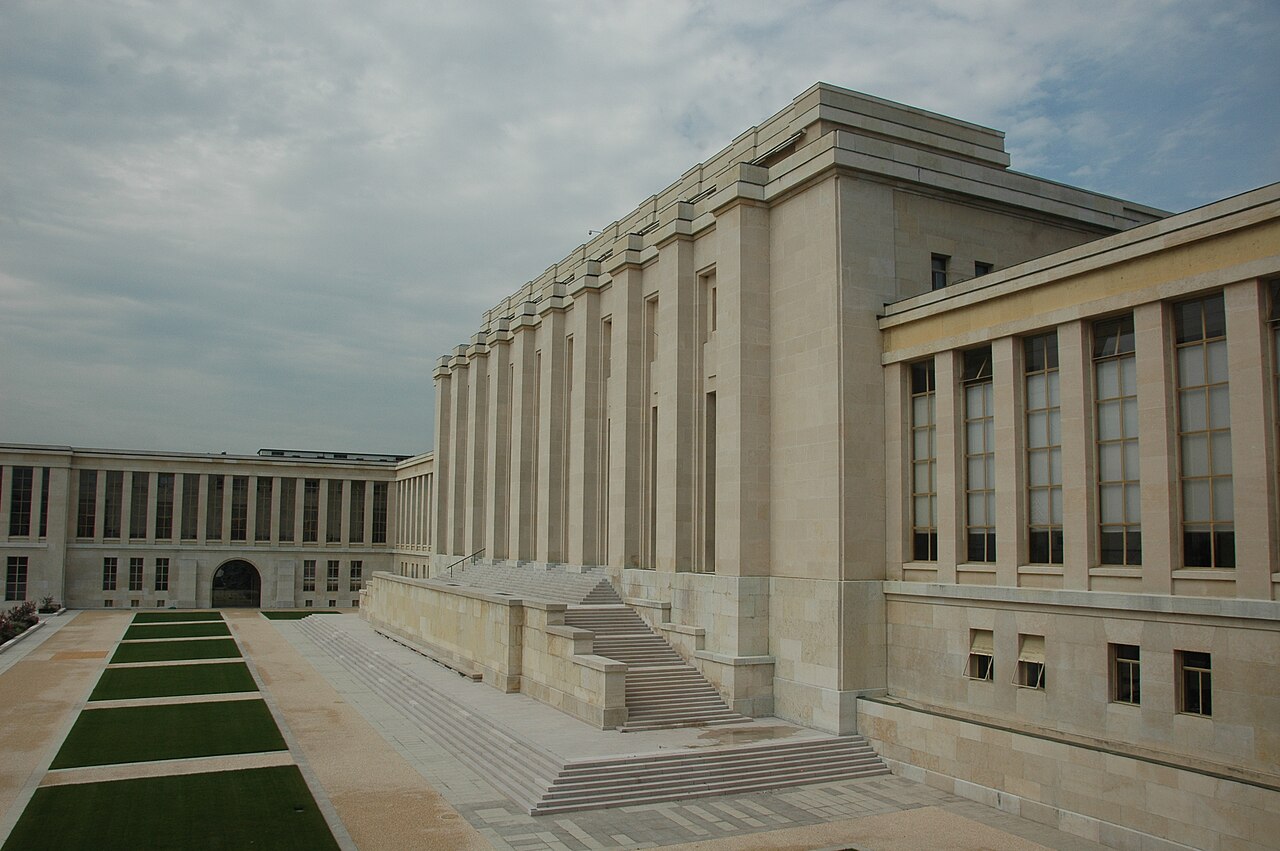
The Palace of Nations in Geneva, photographed in 2011. Illustration of the venue, not the 2018 round table. — Matteo Corti — Wikimedia Commons — CC BY-SA 3.0 https://creativecommons.org/licenses/by-sa/3.0/ — redimensionnement
The format brought together the four participants after several years without a meeting of this kind. The communiqué records discussions of recent developments, regional issues and the next steps in the political process. It emphasizes regional cooperation and integration.
The established outcome was renewed dialogue and a commitment to another meeting, without settlement of the status dispute. This first gathering is distinct from the second round table of 21–22 March 2019, already covered in the dossier: it explains how the Geneva diplomatic cycle began.