Morocco · Algeria · Germany · Spain · France · United Kingdom · Mauritania · United States of America · Russian Federation
File
Moroccan Sahara: from the roots of the conflict to the 2026 negotiations
This dossier traces the origins and transformation of the Moroccan Sahara conflict: historical ties and allegiances, Spanish colonial rule from 1884, decolonisation, war, the referendum process, the autonomy proposal and diplomacy through 17 October 2026. It also covers populations, Hassani culture, Tindouf refugees, prisoners and missing persons, human rights, resources and trade agreements.
Morocco claims the territory on grounds of territorial integrity and historical ties; the Polisario Front seeks independence through self-determination, with Algerian support. Mauritania withdrew from the territorial conflict in 1979 but remains involved through neighbourhood interests and negotiations. Morocco administers the principal cities and Atlantic coast; the military berm is not an agreed international border. The dossier distinguishes effective control, sovereignty claims, bilateral recognition and status in international institutions.
In 1975, the ICJ recognised allegiance ties with certain tribes without finding territorial sovereignty that would exclude self-determination. The settlement plan accepted in 1988 and MINURSO established in 1991 did not deliver the planned referendum. The Baker initiatives and Morocco’s 2007 autonomy plan shifted negotiations towards institutions, safeguards and consent. US, Spanish, French and British positions use different wording and should not be counted as identical acts.
Sources accompany each milestone. “Moroccan Sahara” is the editorial designation; UN and court documents generally use “Western Sahara.” Their substantive qualifications are preserved. No map is used. Day-level dates do not imply a known time of day.
Last updated : 91 key moments
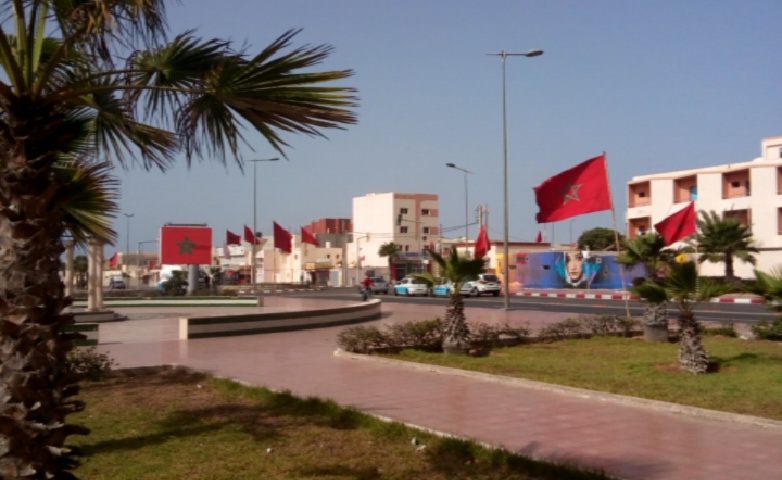
Dakhla, Moroccan Sahara, 5 September 2016. Illustrative view, no map. hamza / Hamiz11, CC BY-SA 4.0. — hamza / Hamiz11 — Wikimedia Commons — CC BY-SA 4.0, https://creativecommons.org/licenses/by-sa/4.0/ — photographie non modifiée
Where things stand
As of 1 November 2026, the UN announces MINURSO's liquidation while maintaining its political engagement. Médias24 observes reduced activity at headquarters in Laâyoune. An internal meeting is reported for 2 November, with no final departure timetable established. Parliament also plans a joint session on 2 November.
Viewpoints
Attributed and documented positions
Where do positions converge and diverge in seeking a settlement?
Common facts
UN texts seek a lasting, mutually acceptable political solution. Resolution 2797 gives Morocco’s autonomy proposal a central place. Sources establish no final agreement.
Main disagreement
Disagreement concerns sovereignty, the choices offered to the population and implementation guarantees. Algeria disputes being a party to the conflict; Morocco stresses its role. Protection of people remains a requirement distinct from status.
View detailed positionsHide detailed positions6
Kingdom of Morocco
summary
Morocco proposes negotiated autonomy under its sovereignty, with regional institutions and retention of sovereign state powers. The 2007 text provides consultation on the negotiated statute, not independence as an option. Rabat links this position to territorial integrity.
The Security Council supports negotiations based on Morocco’s autonomy proposal, without preconditions, towards a mutually acceptable solution providing for self-determination. It identifies genuine autonomy as a possible outcome and welcomes constructive suggestions. It does not find that a final agreement exists.
Mauritania describes its position in the UN report as positive neutrality and support for the political process. Its 1979 withdrawal distinguishes this from its former territorial claim. Border security and neighbourhood stability are direct interests.
HRW calls for safeguards for free and genuine choice, return and reparations. It says it takes no position on independence. Its criticism concerns rights and process safeguards; it is neither a court judgment nor the voice of every Sahrawi.
In positions recorded by the UN, Polisario demands that Sahrawis decide territorial status with independence among the options. It rejects fixing Moroccan sovereignty before that choice. Its willingness to talk does not establish acceptance of Rabat’s proposed outcome.
Algeria supports Polisario and self-determination while telling the UN envoy it does not consider itself a party to the conflict. It supports direct Morocco–Polisario talks with neighbouring states present. Participation does not resolve disagreement over its formal role.
Moroccan Sahara: Bourita pledges logistical support for MINURSO departure
Speaking on 2M on 31 October 2026, Nasser Bourita said Morocco would allow the time and logistical resources needed for MINURSO’s departure. He reaffirmed the Kingdom’s commitment to the ceasefire.
Dakhla, 2016. Geographic archive image; does not show MINURSO. hamza / Hamiz11, CC BY-SA 4.0 https://creativecommons.org/licenses/by-sa/4.0/; unchanged. — hamza / Hamiz11 — Wikimedia Commons — CC BY-SA 4.0, https://creativecommons.org/licenses/by-sa/4.0/ — photographie non modifiée
The foreign minister described a transition Rabat intends to facilitate after competing renewal proposals failed at the Security Council. His remarks set no agreed withdrawal date and do not establish that a departure has already begun.
He distinguished the ceasefire commitment from the UN mechanism monitoring it. He also discussed diplomatic action at the General Assembly’s Fourth Committee. This represents Morocco’s position; the sources do not establish a decision by that body.
Moroccan Sahara: Bourita sets conditions for possible future talks
In his 2M interview on 31 October 2026, Nasser Bourita set out Morocco’s parameters for a possible resumption of talks on the Moroccan Sahara, Médias24 and Walaw report.
Dakhla, 5 September 2016. Archive illustration; not the interview. hamza / Hamiz11, CC BY-SA 4.0. — hamza / Hamiz11 — Wikimedia Commons — CC BY-SA 4.0, https://creativecommons.org/licenses/by-sa/4.0/ — photographie non modifiée
The minister wants the autonomy initiative to be the sole basis for discussions and autonomy under Moroccan sovereignty to be their outcome. He calls for all four parties to participate and for a clarified framework. He mentions other possible diplomatic venues without announcing that talks have opened.
In a separate 31 October statement reported by Hespress, the UMT backs the Royal Cabinet’s orientations and calls for national mobilisation. This trade-union position does not constitute an agreement between the parties to the dispute.
Moroccan Sahara: two civil centres support Royal Cabinet position
The Centre for Shared Memory and the Moroccan Centre for Strategic Studies and Research expressed support on October 31, 2026 for the Royal Cabinet statement on the Moroccan Sahara, according to LeBrief and Barlamane.
Dakhla, Moroccan Sahara, September 2016. Geographic archive image; does not show the centres mentioned. hamza / Hamiz11, CC BY-SA 4.0 https://creativecommons.org/licenses/by-sa/4.0/ ; unchanged. — hamza / Hamiz11 — Wikimedia Commons — CC BY-SA 4.0, https://creativecommons.org/licenses/by-sa/4.0/ — photographie non modifiée
The first plans to mobilise its international partnerships for dialogue and reconciliation initiatives. It seeks to involve young people, women and civil society in the southern provinces and calls for rejection of hate speech, LeBrief reports.
The second, Cemers, calls for stronger diplomatic, academic and media advocacy and criticises obstacles to a peaceful settlement, according to its statement reproduced by Marsool Press. These positions constitute neither an agreement between the parties to the dispute nor an account of actions already completed.
Moroccan Sahara: Washington says it is ready to work with UN on MINURSO drawdown
Mike Waltz said on 30 October 2026 that the United States was ready to work with the UN Secretary-General on an orderly reduction of MINURSO's presence, according to several reports.
Dakhla, Moroccan Sahara, September 2016. Geographic archive; does not depict MINURSO. hamza / Hamiz11, CC BY-SA 4.0. — hamza / Hamiz11 — Wikimedia Commons — CC BY-SA 4.0, https://creativecommons.org/licenses/by-sa/4.0/ — photographie non modifiée
After the Security Council drafts failed, the US representative stressed protection for UN personnel and security and humanitarian needs. He also said diplomatic work would continue with the personal envoy and the parties concerned.
The statement sets out a US intention. It establishes neither a withdrawal already under way nor a timetable agreed with the UN. The previously approved mandate reaches its deadline on 31 October.
Moroccan Sahara: Hilale calls for registration of Tindouf residents and freedom to return
Following the Security Council votes on the Moroccan Sahara on 30 October 2026, Omar Hilale responded to Algeria’s representative by calling for registration of Tindouf camp residents and guarantees of their freedom of movement and return, according to Hespress, LeBrief and Le360.
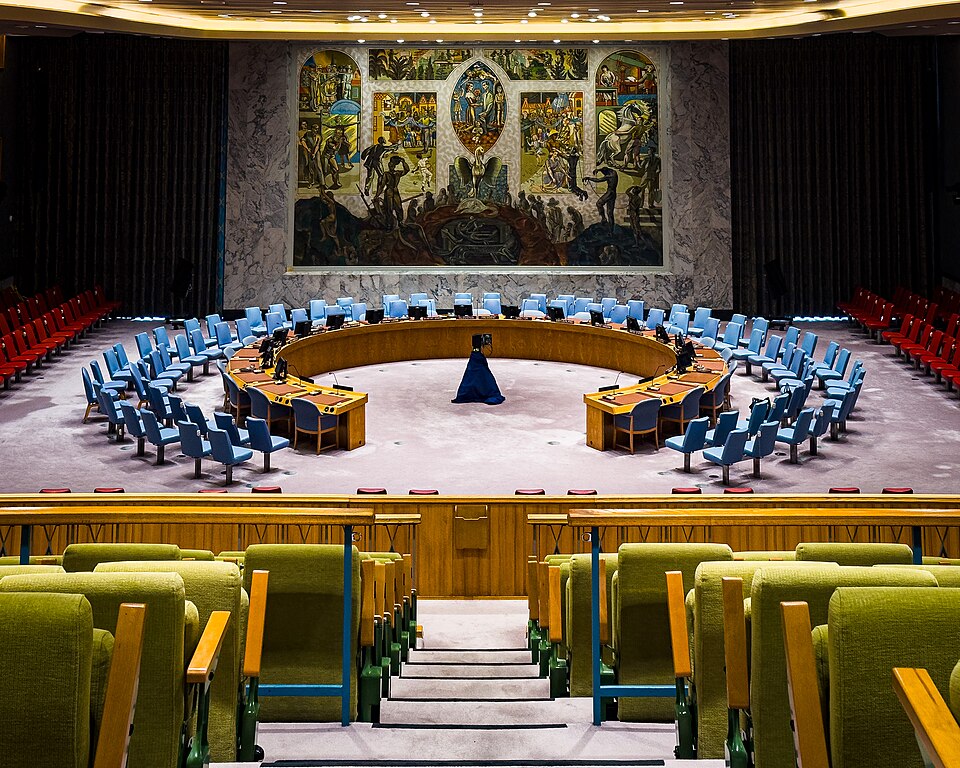
Archive photograph, 6 September 2024; not the session of 30 October 2026. Jdforrester / Wikimedia Commons, CC BY 4.0 https://creativecommons.org/licenses/by/4.0/ ; resized. — Jdforrester / Wikimedia Commons / CC BY 4.0 — https://creativecommons.org/licenses/by/4.0/ — resized
Morocco’s permanent representative describes Algeria as a party to the dispute, challenging its description of itself as an observer. He accuses it of obstructing population registration; this is the Moroccan diplomat’s allegation, not an independently established finding in these reports.
Hilale says Morocco is ready to facilitate the return of those who wish to return, with international guarantees and support from the UN refugee agency. His intervention sets out a diplomatic position; it does not establish that a return programme has opened or that a registration operation has begun.
Moroccan Sahara: Royal Cabinet sets out its position after the votes
In a statement released on October 30, 2026, the Royal Cabinet said MINURSO’s non-renewal should lead to the mission’s departure and removal of the issue from the Security Council agenda.
September 6, 2024 archive photograph, not the meeting reported. Jdforrester / Wikimedia Commons, CC BY 4.0 https://creativecommons.org/licenses/by/4.0/ ; resized. — Jdforrester / Wikimedia Commons / CC BY 4.0 — https://creativecommons.org/licenses/by/4.0/ — resized
The statement, reproduced by Le360 with MAP, says the UN political process is suspended and announces steps in other UN bodies. Morocco reaffirms its commitment to the ceasefire and continued bilateral and regional diplomacy.
Moroccan Sahara: Security Council also rejects Russia’s draft
The Security Council failed to adopt Russia’s MINURSO extension draft on October 30, 2026: three members voted in favour, the United States against and eleven abstained, according to matching AP and Hespress reports.
September 6, 2024 archive photograph, not the meeting reported. Jdforrester / Wikimedia Commons, CC BY 4.0 https://creativecommons.org/licenses/by/4.0/ ; resized. — Jdforrester / Wikimedia Commons / CC BY 4.0 — https://creativecommons.org/licenses/by/4.0/ — resized
The text proposed keeping the mission until October 31, 2027. It fell short of the nine votes required. This second rejection followed Russia’s veto of the US draft, leaving renewal unresolved in these votes.
Media coverage shifts from anticipating Russia's stance to reporting its veto
A gap emerged between press expectations and reports of the 30 October 2026 vote on the Moroccan Sahara: TSA had considered a Russian abstention before Atlasinfo and Yabiladi reported the veto.
Archive illustration, 6 September 2024; does not depict the voting session. Jdforrester / Wikimedia Commons, CC BY 4.0: https://creativecommons.org/licenses/by/4.0/; resized. — Jdforrester / Wikimedia Commons / CC BY 4.0 — https://creativecommons.org/licenses/by/4.0/ — resized
Before the vote, a Tunisie Numérique article portrayed changes to the US draft as a gain for Algeria and Russia. That was its author's editorial interpretation, rather than a voting outcome.
Afterwards, coverage focused on the blocked text. Yabiladi reported expressions of regret by the French and British representatives and the US representative's continued support for a revised mission and the UN envoy.
Russian draft proposes extending MINURSO to October 2027 without restructuring
Russia submitted an alternative draft on the Moroccan Sahara on 30 October 2026 proposing to extend MINURSO until 31 October 2027, according to Lakome2 and LeBrief.
Archive illustration, 6 September 2024; does not depict the voting session. Jdforrester / Wikimedia Commons, CC BY 4.0: https://creativecommons.org/licenses/by/4.0/; resized. — Jdforrester / Wikimedia Commons / CC BY 4.0 — https://creativecommons.org/licenses/by/4.0/ — resized
The circulated text calls for regular briefings by the secretary-general and keeps the issue before the Council. It proposes neither renaming the mission nor reducing its personnel, and does not mention Morocco's autonomy initiative.
It supports a political solution acceptable to the parties under the UN Charter, including the principle of self-determination. These are provisions of a proposal, rather than an operative decision.
Russian veto blocks US draft on the Moroccan Sahara
Russia vetoed the US draft on the Moroccan Sahara at the Security Council on 30 October 2026 despite eleven votes in favour, according to Atlasinfo and Yabiladi.
Archive illustration, 6 September 2024; does not depict the voting session. Jdforrester / Wikimedia Commons, CC BY 4.0: https://creativecommons.org/licenses/by/4.0/; resized. — Jdforrester / Wikimedia Commons / CC BY 4.0 — https://creativecommons.org/licenses/by/4.0/ — resized
Russia voted against and three members abstained. Atlasinfo identifies the abstaining countries as China, Pakistan and Somalia; Yabiladi confirms the number and names China and Pakistan.
The draft concerned renewing and transforming MINURSO. A favourable majority does not secure adoption: a permanent member's negative vote blocks a substantive resolution.
Moroccan Sahara: Berrid meets the new MINURSO force commander
Mohammed Berrid received Jawwad Ahmed, the new MINURSO force commander, in Agadir on 29 October 2026, according to a Royal Armed Forces statement carried by MAP and the press.
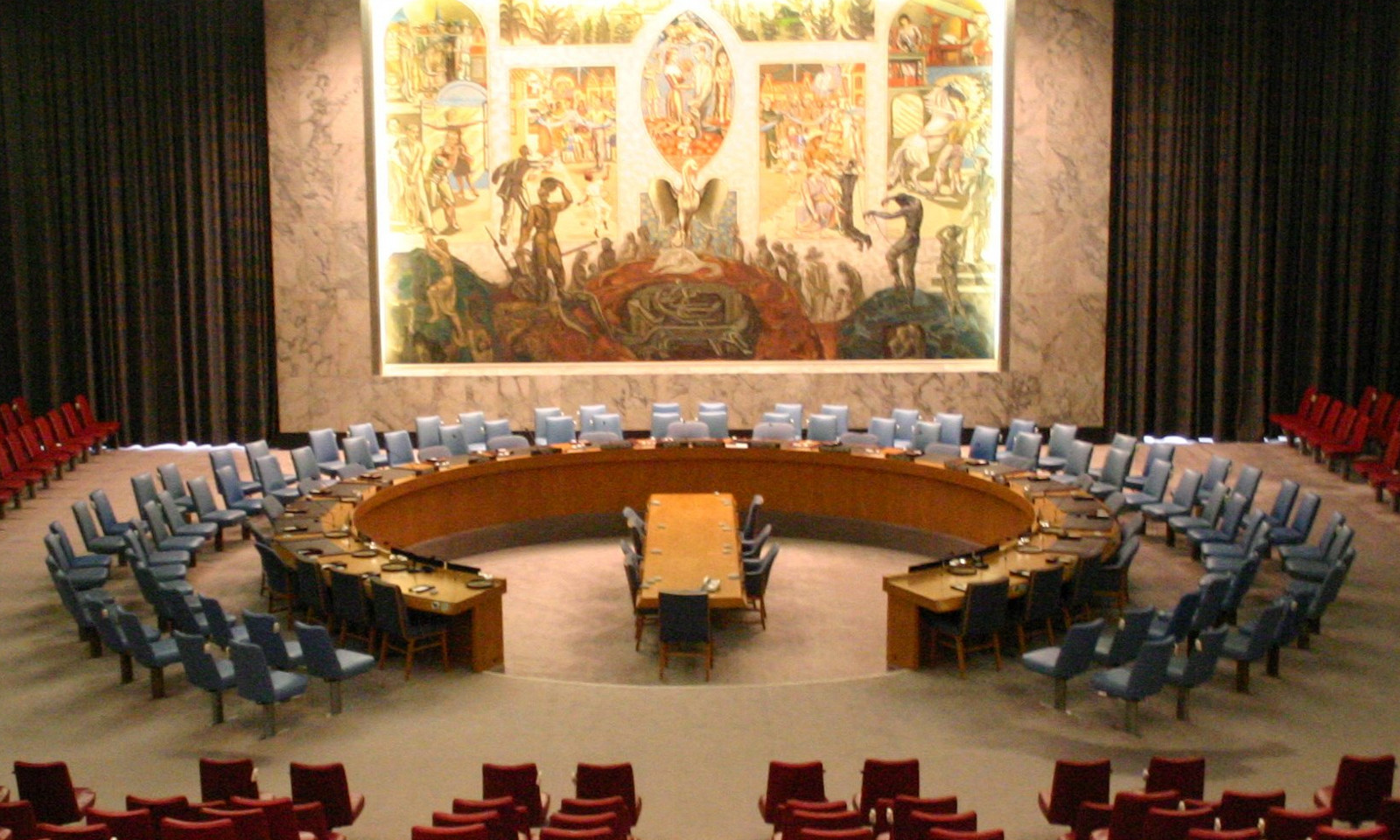
Security Council chamber, archive photograph. Institutional illustration, not the Agadir meeting. Patrick Gruban, CC BY-SA 3.0. — Patrick Gruban / Wikimedia Commons — CC BY-SA 3.0 https://creativecommons.org/licenses/by-sa/3.0/ — existing crop, no further changes.
The meeting took place at Southern Zone headquarters. The statement addresses the mission’s activities in the Moroccan Sahara and operational and security coordination, mine clearance and logistics.
Assessments of the quality of that coordination are attributed to the officials cited. The meeting does not establish any change in the UN mandate or Security Council decision on its renewal.