Morocco · Algeria · Germany · Spain · France · United Kingdom · Mauritania · United States of America · Russian Federation
File
Moroccan Sahara: from the roots of the conflict to the 2026 negotiations
This dossier traces the origins and transformation of the Moroccan Sahara conflict: historical ties and allegiances, Spanish colonial rule from 1884, decolonisation, war, the referendum process, the autonomy proposal and diplomacy through 17 October 2026. It also covers populations, Hassani culture, Tindouf refugees, prisoners and missing persons, human rights, resources and trade agreements.
Morocco claims the territory on grounds of territorial integrity and historical ties; the Polisario Front seeks independence through self-determination, with Algerian support. Mauritania withdrew from the territorial conflict in 1979 but remains involved through neighbourhood interests and negotiations. Morocco administers the principal cities and Atlantic coast; the military berm is not an agreed international border. The dossier distinguishes effective control, sovereignty claims, bilateral recognition and status in international institutions.
In 1975, the ICJ recognised allegiance ties with certain tribes without finding territorial sovereignty that would exclude self-determination. The settlement plan accepted in 1988 and MINURSO established in 1991 did not deliver the planned referendum. The Baker initiatives and Morocco’s 2007 autonomy plan shifted negotiations towards institutions, safeguards and consent. US, Spanish, French and British positions use different wording and should not be counted as identical acts.
Sources accompany each milestone. “Moroccan Sahara” is the editorial designation; UN and court documents generally use “Western Sahara.” Their substantive qualifications are preserved. No map is used. Day-level dates do not imply a known time of day.
Last updated : 91 key moments
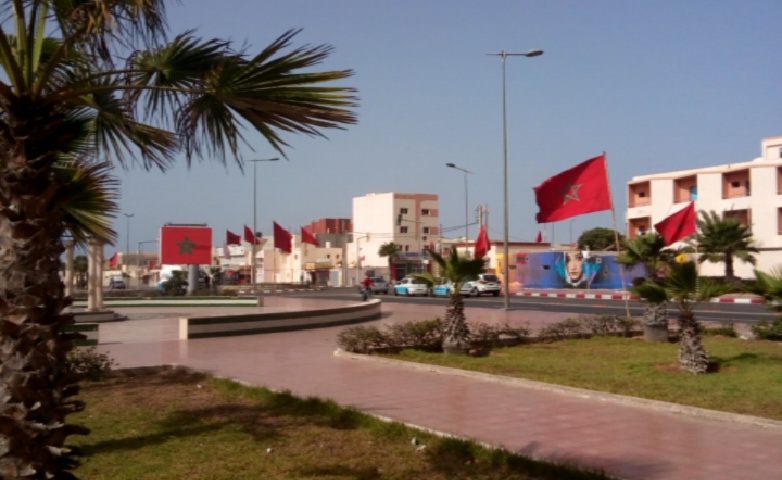
Dakhla, Moroccan Sahara, 5 September 2016. Illustrative view, no map. hamza / Hamiz11, CC BY-SA 4.0. — hamza / Hamiz11 — Wikimedia Commons — CC BY-SA 4.0, https://creativecommons.org/licenses/by-sa/4.0/ — photographie non modifiée
Where things stand
As of 1 November 2026, the UN announces MINURSO's liquidation while maintaining its political engagement. Médias24 observes reduced activity at headquarters in Laâyoune. An internal meeting is reported for 2 November, with no final departure timetable established. Parliament also plans a joint session on 2 November.
Viewpoints
Attributed and documented positions
Where do positions converge and diverge in seeking a settlement?
Common facts
UN texts seek a lasting, mutually acceptable political solution. Resolution 2797 gives Morocco’s autonomy proposal a central place. Sources establish no final agreement.
Main disagreement
Disagreement concerns sovereignty, the choices offered to the population and implementation guarantees. Algeria disputes being a party to the conflict; Morocco stresses its role. Protection of people remains a requirement distinct from status.
View detailed positionsHide detailed positions6
Kingdom of Morocco
summary
Morocco proposes negotiated autonomy under its sovereignty, with regional institutions and retention of sovereign state powers. The 2007 text provides consultation on the negotiated statute, not independence as an option. Rabat links this position to territorial integrity.
The Security Council supports negotiations based on Morocco’s autonomy proposal, without preconditions, towards a mutually acceptable solution providing for self-determination. It identifies genuine autonomy as a possible outcome and welcomes constructive suggestions. It does not find that a final agreement exists.
Mauritania describes its position in the UN report as positive neutrality and support for the political process. Its 1979 withdrawal distinguishes this from its former territorial claim. Border security and neighbourhood stability are direct interests.
HRW calls for safeguards for free and genuine choice, return and reparations. It says it takes no position on independence. Its criticism concerns rights and process safeguards; it is neither a court judgment nor the voice of every Sahrawi.
In positions recorded by the UN, Polisario demands that Sahrawis decide territorial status with independence among the options. It rejects fixing Moroccan sovereignty before that choice. Its willingness to talk does not establish acceptance of Rabat’s proposed outcome.
Algeria supports Polisario and self-determination while telling the UN envoy it does not consider itself a party to the conflict. It supports direct Morocco–Polisario talks with neighbouring states present. Participation does not resolve disagreement over its formal role.
Mohammed VI reshapes CORCAS and seeks proposals on autonomy
On 25 March 2006 in Laâyoune, Mohammed VI appointed members of the reshaped Royal Advisory Council for Saharan Affairs and requested proposals on autonomy for the Moroccan Sahara.
The royal speech provided for tribal notables, elected representatives and civil society members, including women and young people. It assigned the council roles in proposing initiatives, mobilisation and development in the southern provinces.
The consultation concerned autonomy within Moroccan sovereignty. It prepared Morocco’s approach; it was neither a negotiated agreement with Polisario nor a status adopted by the UN. Al Jazeera reported the restructuring and Polisario’s rejection.
Polisario releases its last 404 Moroccan prisoners
On 18 August 2005, Polisario hands its last 404 Moroccan prisoners to the ICRC, enabling their repatriation.
ICRC archives document the handover in Rabouni and the UN yearbook records US mediation. Some men had remained deprived of liberty for many years after fighting ceased in 1991. The release closes an important chapter concerning Moroccan prisoners.
It does not resolve all the war’s human consequences: missing persons, accountability, family support and reparations remain separate issues. A dossier on negotiations must include these experiences without reducing people to diplomatic arguments. The release is not a territorial-status agreement.
In a letter dated 11 June 2004 to the Security Council, Kofi Annan announced that he had accepted James Baker’s resignation after seven years of mediation on the Moroccan Sahara.
Document S/2004/492 assigned continued contacts with the parties and neighbouring countries to Special Representative Álvaro de Soto. It retained the objective of a just, lasting and mutually acceptable political solution providing for self-determination.
The departure followed Baker II in 2003, accepted by Polisario but rejected by Morocco. IRIN’s 14 June reporting describes those positions and reactions. The end of this mediation meant neither dissolution of MINURSO nor settlement of the conflict.
Air bridge opens family visits between Tindouf and Laayoune
On 5 March 2004, UNHCR and MINURSO launched family visits by air between the Tindouf refugee camps in Algeria and Laayoune in the Moroccan Sahara.
The first journeys enabled relatives separated for decades to meet during five-day stays. Flights operated in both directions: refugees travelled to Laayoune while residents of the territory visited relatives in the camps.
The programme formed part of confidence-building measures addressing prolonged family separation. UNHCR distinguished it from an organized permanent repatriation programme. These reunions were neither a political settlement nor a change in refugee status; they created a practical opportunity for contact despite the diplomatic impasse.
Council backs Baker II plan, which fails to secure Morocco’s agreement
On 31 July 2003, Security Council resolution 1495 backs James Baker’s peace plan; Morocco’s opposition to an outcome potentially including independence will prevent implementation.
Following a draft framework agreement in 2001, the 2003 plan combines a period of autonomy with a final-status referendum. Polisario accepts it, while Rabat rejects a transition that could challenge its sovereignty.
Report S/2004/325 records the parties’ positions at the time of the impasse. Transitional autonomy before a final choice and lasting autonomy under Moroccan sovereignty are different architectures. Baker’s resignation in 2004 ends this mediation phase without resolving the conflict.
Corell opinion sets out legal conditions for resource activities
In a letter dated 29 January 2002 to the Security Council President, UN Legal Counsel Hans Corell analyses oil-reconnaissance contracts concluded by Moroccan authorities.
His reasoning distinguishes reconnaissance and evaluation, without extraction, from subsequent exploitation. He finds the contracts examined are not illegal in themselves, but that further activities disregarding the interests and wishes of the people concerned would violate applicable principles.
The opinion answers a specific question and does not provide blanket approval for all economic activity. Debates on Bou Craa phosphates, fisheries, agriculture and energy projects must distinguish economic benefits, participation and legal requirements. Infrastructure construction alone does not determine international status.
Council opens discussion of Baker’s draft framework agreement
On 29 June 2001, resolution 1359 encouraged the parties to discuss the draft framework agreement on the Moroccan Sahara and negotiate changes they wished to propose.
The Council also allowed discussion of other political proposals and retained consideration of Polisario proposals to overcome obstacles to the settlement plan. It extended MINURSO until 30 November 2001.
James Baker’s draft explored delegated local powers while reserving prerogatives to Morocco. Opening discussion neither adopted a final status nor established agreement between the parties. This milestone preceded Baker II, which the Council supported in 2003.
On 17 January 2000, MINURSO communicated the second part of the provisional voter list for the Moroccan Sahara, according to report S/2000/131.
The UN document states that 2,135 additional applicants were accepted from 51,220 people interviewed in three disputed tribal groupings. This brought the provisional total to 86,386.
Excluded applicants could appeal their rejection, while accepted voters could challenge other registrations. Contemporary coverage published by Le Monde from an AFP dispatch records the opening of appeals centres. Completing identification interviews therefore did not settle appeals or establish the conditions needed to hold the referendum.
First provisional list includes 84,251 eligible voters
On 15 July 1999, MINURSO communicated a first provisional list of 84,251 people eligible to vote in the Moroccan Sahara referendum.
The list covered candidates examined in an initial part of the process; it did not settle the files of tribal groupings still in dispute. The Secretary-General’s February 2000 report retrospectively confirms its date and size.
Publication opened an appeals stage. A 1999 French Senate report describes disagreements over tribal affiliation and eligibility. A provisional list therefore did not amount to a finally agreed electorate or an actual referendum.
Houston agreements seek to restart the referendum process
On 16 September 1997, talks under James Baker’s auspices produce a referendum campaign code of conduct in Houston, within arrangements designed to restart the settlement plan.
Discussions address identification and conditions for a free campaign. Freedom of expression, assembly, the press and movement are political safeguards for the vote, rather than technical details.
Procedural progress does not remove disagreements over the electorate and appeals. The referendum remains blocked. Later compromises will attempt to overcome the impasse by combining transitional self-government with a decision on final status. This episode shows why failure cannot be reduced to a practical inability to hold a vote: acceptance of its rules and consequences is central.
Kofi Annan appoints James Baker to address the impasse
On 17 March 1997, Kofi Annan appointed former US Secretary of State James Baker as Personal Envoy for the Moroccan Sahara to assess the impasse and make recommendations.
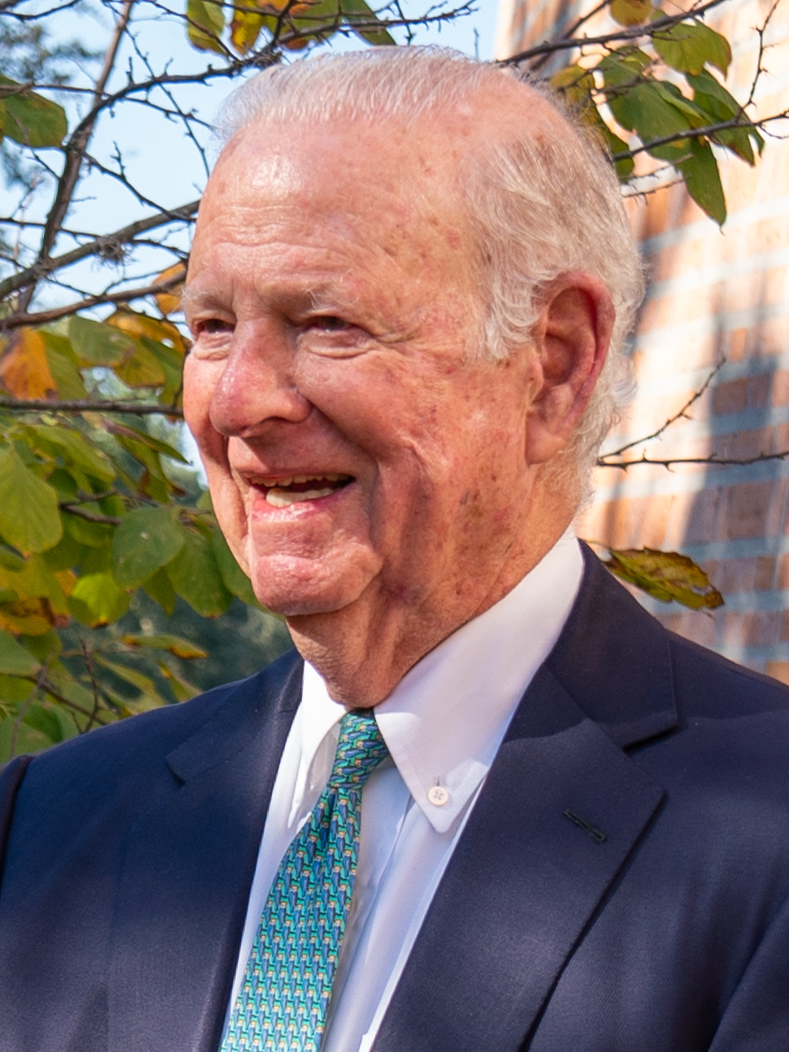
James Baker photographed in 2019. Illustrative portrait; it does not depict his 1997 appointment. — Ron Przysucha / U.S. Department of State — domaine public ; recadrage RoanDM sur Wikimedia Commons ; aucune modification supplémentaire.
Letter S/1997/236 states that implementation of the settlement plan remained blocked. Annan sought to intensify examination of outstanding issues and envisaged an exploratory visit to the region.
The appointment was a mediation initiative, not evidence of agreement on the electorate or status. It preceded negotiations leading to the Houston arrangements in September 1997, already covered in the dossier. The Personal Envoy’s role was distinct from operational leadership of MINURSO.