Morocco · Algeria · Germany · Spain · France · United Kingdom · Mauritania · United States of America · Russian Federation
File
Moroccan Sahara: from the roots of the conflict to the 2026 negotiations
This dossier traces the origins and transformation of the Moroccan Sahara conflict: historical ties and allegiances, Spanish colonial rule from 1884, decolonisation, war, the referendum process, the autonomy proposal and diplomacy through 17 October 2026. It also covers populations, Hassani culture, Tindouf refugees, prisoners and missing persons, human rights, resources and trade agreements.
Morocco claims the territory on grounds of territorial integrity and historical ties; the Polisario Front seeks independence through self-determination, with Algerian support. Mauritania withdrew from the territorial conflict in 1979 but remains involved through neighbourhood interests and negotiations. Morocco administers the principal cities and Atlantic coast; the military berm is not an agreed international border. The dossier distinguishes effective control, sovereignty claims, bilateral recognition and status in international institutions.
In 1975, the ICJ recognised allegiance ties with certain tribes without finding territorial sovereignty that would exclude self-determination. The settlement plan accepted in 1988 and MINURSO established in 1991 did not deliver the planned referendum. The Baker initiatives and Morocco’s 2007 autonomy plan shifted negotiations towards institutions, safeguards and consent. US, Spanish, French and British positions use different wording and should not be counted as identical acts.
Sources accompany each milestone. “Moroccan Sahara” is the editorial designation; UN and court documents generally use “Western Sahara.” Their substantive qualifications are preserved. No map is used. Day-level dates do not imply a known time of day.
Last updated : 92 key moments
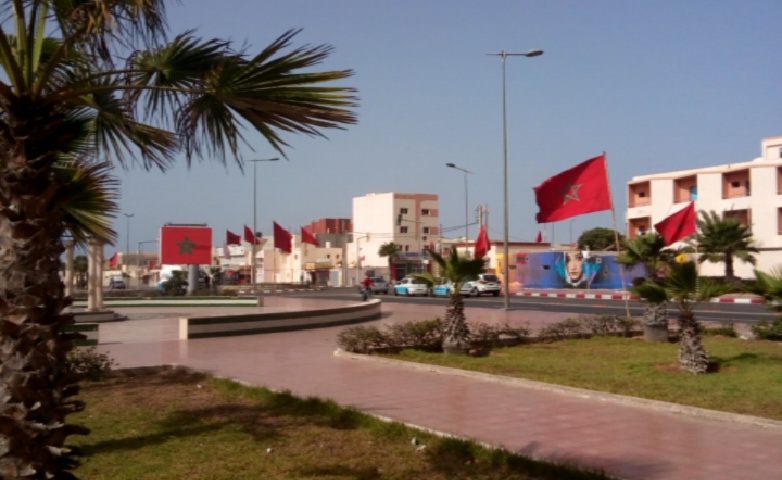
Dakhla, Moroccan Sahara, 5 September 2016. Illustrative view, no map. hamza / Hamiz11, CC BY-SA 4.0. — hamza / Hamiz11 — Wikimedia Commons — CC BY-SA 4.0, https://creativecommons.org/licenses/by-sa/4.0/ — photographie non modifiée
Where things stand
As of 1 November 2026, the UN announces MINURSO's liquidation while maintaining its political engagement. Médias24 observes reduced activity at headquarters in Laâyoune. An internal meeting is reported for 2 November, with no final departure timetable established. Parliament also plans a joint session on 2 November.
Viewpoints
Attributed and documented positions
Where do positions converge and diverge in seeking a settlement?
Common facts
UN texts seek a lasting, mutually acceptable political solution. Resolution 2797 gives Morocco’s autonomy proposal a central place. Sources establish no final agreement.
Main disagreement
Disagreement concerns sovereignty, the choices offered to the population and implementation guarantees. Algeria disputes being a party to the conflict; Morocco stresses its role. Protection of people remains a requirement distinct from status.
View detailed positionsHide detailed positions6
Kingdom of Morocco
summary
Morocco proposes negotiated autonomy under its sovereignty, with regional institutions and retention of sovereign state powers. The 2007 text provides consultation on the negotiated statute, not independence as an option. Rabat links this position to territorial integrity.
The Security Council supports negotiations based on Morocco’s autonomy proposal, without preconditions, towards a mutually acceptable solution providing for self-determination. It identifies genuine autonomy as a possible outcome and welcomes constructive suggestions. It does not find that a final agreement exists.
Mauritania describes its position in the UN report as positive neutrality and support for the political process. Its 1979 withdrawal distinguishes this from its former territorial claim. Border security and neighbourhood stability are direct interests.
HRW calls for safeguards for free and genuine choice, return and reparations. It says it takes no position on independence. Its criticism concerns rights and process safeguards; it is neither a court judgment nor the voice of every Sahrawi.
In positions recorded by the UN, Polisario demands that Sahrawis decide territorial status with independence among the options. It rejects fixing Moroccan sovereignty before that choice. Its willingness to talk does not establish acceptance of Rabat’s proposed outcome.
Algeria supports Polisario and self-determination while telling the UN envoy it does not consider itself a party to the conflict. It supports direct Morocco–Polisario talks with neighbouring states present. Participation does not resolve disagreement over its formal role.
Kofi Annan appoints James Baker to address the impasse
On 17 March 1997, Kofi Annan appointed former US Secretary of State James Baker as Personal Envoy for the Moroccan Sahara to assess the impasse and make recommendations.
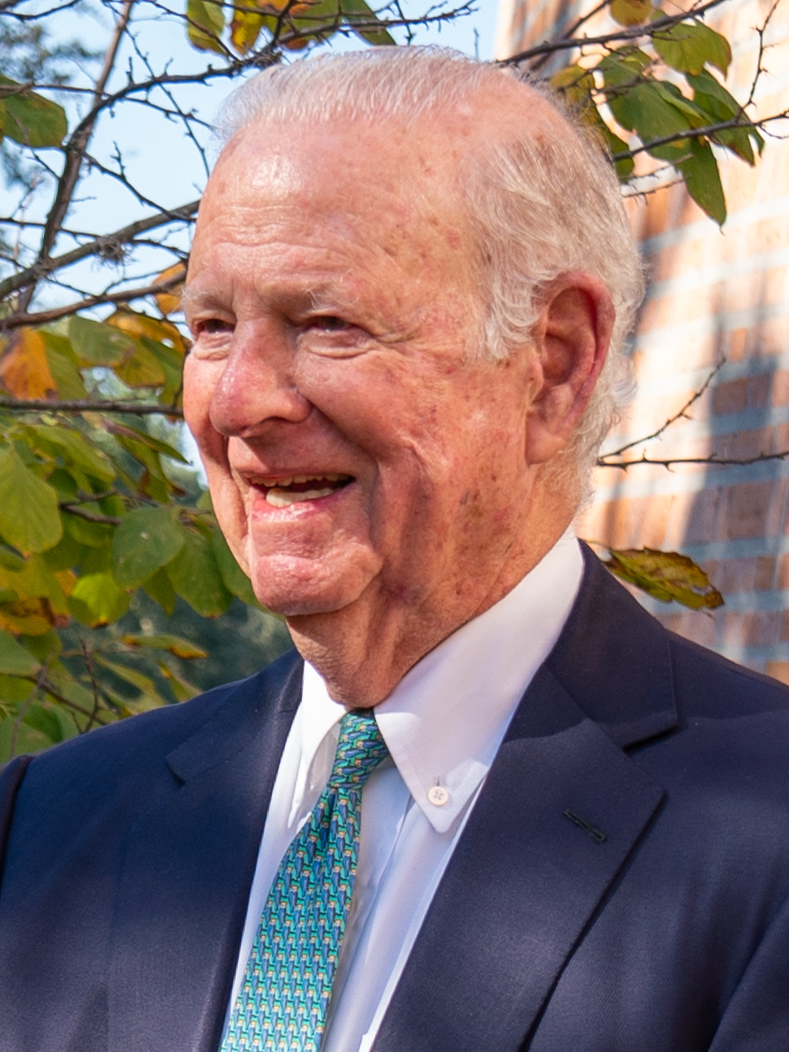
James Baker photographed in 2019. Illustrative portrait; it does not depict his 1997 appointment. — Ron Przysucha / U.S. Department of State — domaine public ; recadrage RoanDM sur Wikimedia Commons ; aucune modification supplémentaire.
Letter S/1997/236 states that implementation of the settlement plan remained blocked. Annan sought to intensify examination of outstanding issues and envisaged an exploratory visit to the region.
The appointment was a mediation initiative, not evidence of agreement on the electorate or status. It preceded negotiations leading to the Houston arrangements in September 1997, already covered in the dossier. The Personal Envoy’s role was distinct from operational leadership of MINURSO.
On 28 August 1994, the identification commission began interviewing prospective voters for the referendum on the Moroccan Sahara.
The operation was intended to establish eligibility under the settlement plan. Available documents, including the 1974 Spanish census, were examined alongside admission criteria and tribal testimony.
This step was neither the referendum itself nor the automatic start of the entire transitional period. Human Rights Watch’s 1995 field report describes the centres and criticises transparency and access conditions. Those criticisms are the organisation’s findings and are distinct from the established start of identification.
The ceasefire between Morocco and the Polisario Front entered into force in the Moroccan Sahara on 6 September 1991, within the UN-backed settlement process.
This step is distinct from MINURSO’s establishment on 29 April: it marks implementation of the cessation of fighting and the deployment of observers. UN report S/2018/910/Rev.1 records its arrangements and date.
Military monitoring accompanied a settlement process that envisaged a referendum; it did not constitute the holding of that vote. The UN also states that the ceasefire was not intended to alter the territory’s internationally recognized boundaries. The cessation of fighting at that stage was therefore not an agreement on final status.
On 29 April 1991, resolution 690 establishes MINURSO to support the settlement plan and preparation of a referendum; the ceasefire enters into force on 6 September 1991.
The mission combines military observation with referendum-related tasks. The vote is intended to offer independence or integration with Morocco. It will not take place: identification, appeals and subsequent disagreements over options and political conditions prevent completion.
MINURSO nevertheless maintains an international presence on the ground. Its existence means neither that the referendum occurred nor that status was settled. The gap between its original mandate and the political process actually pursued becomes a central institutional problem. Ending open warfare does not resolve separated families, missing persons or prisoners.
Council approves settlement proposals and prepares the future mission
On 27 June 1990, resolution 658 approved the report containing settlement proposals accepted in principle in 1988 and an outline for implementing them in the Moroccan Sahara.
The Council supported joint UN–OAU good offices. It welcomed a technical mission to refine administrative arrangements and requested a detailed report, including estimated costs for the proposed MINURSO operation.
This resolution organised preparations; it did not yet establish the mission. Authorisation to create MINURSO followed in resolution 690 of 29 April 1991. Distinguishing the decisions explains the transition from agreement in principle to planning and then deployment.
Morocco and Polisario accept settlement proposals in principle
On 30 August 1988, Morocco and Polisario accept in principle settlement proposals developed through UN and OAU good offices.
The mechanism is intended to combine a ceasefire, a transitional period and a referendum on the territory’s future. This procedural compromise enables a gradual exit from open warfare but does not mean that the parties agree on the final outcome.
Defining the electorate becomes decisive: identifying eligible voters, links to the 1974 Spanish census, tribal and family criteria, displaced people and appeals. The issue is therefore more than logistical. Who votes, on which options and with what safeguards determines the process’s legitimacy and acceptance.
Morocco leaves the OAU amid war and consolidation of its defensive system
On 12 November 1984, Morocco withdraws from the Organisation of African Unity after the SADR’s admission in 1982 and its participation in the organisation’s proceedings.
The dispute becomes an institutional issue across Africa. Membership of the African organisation and bilateral recognition are distinct matters; neither amounts to SADR membership of the United Nations.
On the ground, Morocco’s successive berms during the 1980s consolidate control over major cities and the Atlantic coast. This military system is not an agreed international border. Mines and explosive remnants have lasting effects on movement and civilian safety. This geography of control helps explain subsequent military stability and difficulties implementing the ceasefire.
Mauritania makes peace with Polisario and relinquishes its territorial claim
On 5 August 1979, Mauritania and Polisario sign a peace agreement in Algiers accompanying Nouakchott’s relinquishment of its claims to the territory.
Mauritania’s withdrawal changes the war that followed Spain’s departure: Morocco extends its administration and presence into the area previously controlled by Mauritania. The military conflict subsequently centres on Rabat and Polisario.
Mauritania retains a direct interest in border security, Nouadhibou and cross-border trade. Its later participation in talks does not mean that it renews its territorial claim. The UN archival source distinguishes the signing date, 5 August, from the dates of letters transmitting the agreement to the United Nations.
Spanish withdrawal is followed by proclamation of the SADR
After Spain announces the end of its presence on 26 February 1976, Polisario proclaims the Sahrawi Arab Democratic Republic, or SADR, on 27 February.
War then pits Polisario against Morocco and Mauritania. People flee to Algeria’s Tindouf region; the camps become a lasting place of exile and the movement’s political centre. Proclamation does not mean universal recognition or UN membership. The SADR will nevertheless obtain bilateral recognitions and membership of the African organisation.
Morocco views its action as completing its territorial integrity; Polisario fights it in pursuit of independence. Algeria’s support strengthens the conflict’s regional dimension. No overall death toll for the war is asserted here because a broadly accepted independent series is unavailable.
Madrid agreement establishes a temporary tripartite administration
On 14 November 1975, Spain, Morocco and Mauritania sign a declaration in Madrid arranging a transfer of administrative responsibilities to a temporary tripartite administration.
The agreement opens Spain’s withdrawal and administration by Morocco and Mauritania in their respective areas. Polisario is not a signatory and rejects its consequences.
In his 2002 legal analysis, the UN Legal Counsel will explain that the text transferred neither sovereignty nor administering-Power status to the other signatories. It did not alter the territory’s UN classification. Signature, administrative and military consequences, and settlement of final status must therefore be distinguished: the latter does not follow simply from a transfer between three governments.
Green March accelerates the end of Spain’s presence
On 6 November 1975, Hassan II launches the Green March, a civilian mobilisation supporting Morocco’s territorial claim; the Security Council adopts resolution 380 the same day.
The event becomes a Moroccan symbol of territorial recovery and national unity. Its political importance must be distinguished from its international legal effect: resolution 380 deplores the march and calls for its participants to withdraw from the territory, while urging cooperation with the Secretary-General.
This occurs in the final weeks of Franco’s rule and amid negotiations over Spain’s withdrawal. It soon leads to the Madrid tripartite agreement. The dossier distinguishes Moroccan national memory, diplomacy that changes the balance of power and the exact content of UN texts.