Morocco · Algeria · Germany · Spain · France · United Kingdom · Mauritania · United States of America · Russian Federation
File
Moroccan Sahara: from the roots of the conflict to the 2026 negotiations
This dossier traces the origins and transformation of the Moroccan Sahara conflict: historical ties and allegiances, Spanish colonial rule from 1884, decolonisation, war, the referendum process, the autonomy proposal and diplomacy through 17 October 2026. It also covers populations, Hassani culture, Tindouf refugees, prisoners and missing persons, human rights, resources and trade agreements.
Morocco claims the territory on grounds of territorial integrity and historical ties; the Polisario Front seeks independence through self-determination, with Algerian support. Mauritania withdrew from the territorial conflict in 1979 but remains involved through neighbourhood interests and negotiations. Morocco administers the principal cities and Atlantic coast; the military berm is not an agreed international border. The dossier distinguishes effective control, sovereignty claims, bilateral recognition and status in international institutions.
In 1975, the ICJ recognised allegiance ties with certain tribes without finding territorial sovereignty that would exclude self-determination. The settlement plan accepted in 1988 and MINURSO established in 1991 did not deliver the planned referendum. The Baker initiatives and Morocco’s 2007 autonomy plan shifted negotiations towards institutions, safeguards and consent. US, Spanish, French and British positions use different wording and should not be counted as identical acts.
Sources accompany each milestone. “Moroccan Sahara” is the editorial designation; UN and court documents generally use “Western Sahara.” Their substantive qualifications are preserved. No map is used. Day-level dates do not imply a known time of day.
Last updated : 92 key moments
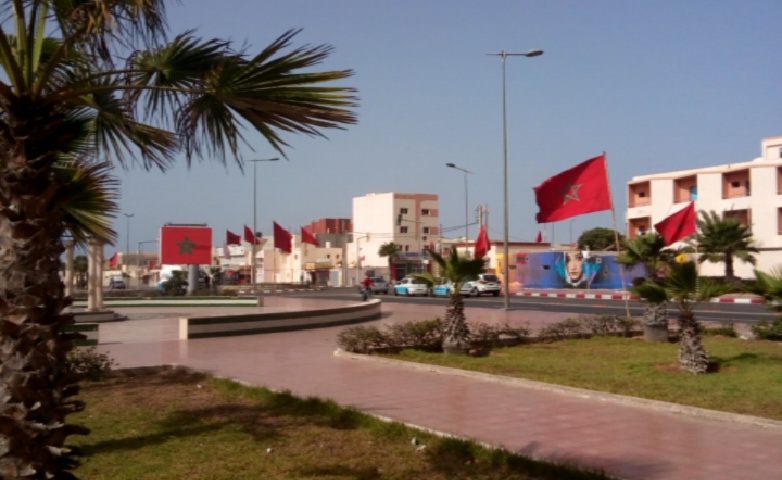
Dakhla, Moroccan Sahara, 5 September 2016. Illustrative view, no map. hamza / Hamiz11, CC BY-SA 4.0. — hamza / Hamiz11 — Wikimedia Commons — CC BY-SA 4.0, https://creativecommons.org/licenses/by-sa/4.0/ — photographie non modifiée
Where things stand
As of 1 November 2026, the UN announces MINURSO's liquidation while maintaining its political engagement. Médias24 observes reduced activity at headquarters in Laâyoune. An internal meeting is reported for 2 November, with no final departure timetable established. Parliament also plans a joint session on 2 November.
Viewpoints
Attributed and documented positions
Where do positions converge and diverge in seeking a settlement?
Common facts
UN texts seek a lasting, mutually acceptable political solution. Resolution 2797 gives Morocco’s autonomy proposal a central place. Sources establish no final agreement.
Main disagreement
Disagreement concerns sovereignty, the choices offered to the population and implementation guarantees. Algeria disputes being a party to the conflict; Morocco stresses its role. Protection of people remains a requirement distinct from status.
View detailed positionsHide detailed positions6
Kingdom of Morocco
summary
Morocco proposes negotiated autonomy under its sovereignty, with regional institutions and retention of sovereign state powers. The 2007 text provides consultation on the negotiated statute, not independence as an option. Rabat links this position to territorial integrity.
The Security Council supports negotiations based on Morocco’s autonomy proposal, without preconditions, towards a mutually acceptable solution providing for self-determination. It identifies genuine autonomy as a possible outcome and welcomes constructive suggestions. It does not find that a final agreement exists.
Mauritania describes its position in the UN report as positive neutrality and support for the political process. Its 1979 withdrawal distinguishes this from its former territorial claim. Border security and neighbourhood stability are direct interests.
HRW calls for safeguards for free and genuine choice, return and reparations. It says it takes no position on independence. Its criticism concerns rights and process safeguards; it is neither a court judgment nor the voice of every Sahrawi.
In positions recorded by the UN, Polisario demands that Sahrawis decide territorial status with independence among the options. It rejects fixing Moroccan sovereignty before that choice. Its willingness to talk does not establish acceptance of Rabat’s proposed outcome.
Algeria supports Polisario and self-determination while telling the UN envoy it does not consider itself a party to the conflict. It supports direct Morocco–Polisario talks with neighbouring states present. Participation does not resolve disagreement over its formal role.
Russian draft proposes extending MINURSO to October 2027 without restructuring
Russia submitted an alternative draft on the Moroccan Sahara on 30 October 2026 proposing to extend MINURSO until 31 October 2027, according to Lakome2 and LeBrief.
Archive illustration, 6 September 2024; does not depict the voting session. Jdforrester / Wikimedia Commons, CC BY 4.0: https://creativecommons.org/licenses/by/4.0/; resized. — Jdforrester / Wikimedia Commons / CC BY 4.0 — https://creativecommons.org/licenses/by/4.0/ — resized
The circulated text calls for regular briefings by the secretary-general and keeps the issue before the Council. It proposes neither renaming the mission nor reducing its personnel, and does not mention Morocco's autonomy initiative.
It supports a political solution acceptable to the parties under the UN Charter, including the principle of self-determination. These are provisions of a proposal, rather than an operative decision.
Russian veto blocks US draft on the Moroccan Sahara
Russia vetoed the US draft on the Moroccan Sahara at the Security Council on 30 October 2026 despite eleven votes in favour, according to Atlasinfo and Yabiladi.
Archive illustration, 6 September 2024; does not depict the voting session. Jdforrester / Wikimedia Commons, CC BY 4.0: https://creativecommons.org/licenses/by/4.0/; resized. — Jdforrester / Wikimedia Commons / CC BY 4.0 — https://creativecommons.org/licenses/by/4.0/ — resized
Russia voted against and three members abstained. Atlasinfo identifies the abstaining countries as China, Pakistan and Somalia; Yabiladi confirms the number and names China and Pakistan.
The draft concerned renewing and transforming MINURSO. A favourable majority does not secure adoption: a permanent member's negative vote blocks a substantive resolution.
Moroccan Sahara: Berrid meets the new MINURSO force commander
Mohammed Berrid received Jawwad Ahmed, the new MINURSO force commander, in Agadir on 29 October 2026, according to a Royal Armed Forces statement carried by MAP and the press.
Security Council chamber, archive photograph. Institutional illustration, not the Agadir meeting. Patrick Gruban, CC BY-SA 3.0. — Patrick Gruban / Wikimedia Commons — CC BY-SA 3.0 https://creativecommons.org/licenses/by-sa/3.0/ — existing crop, no further changes.
The meeting took place at Southern Zone headquarters. The statement addresses the mission’s activities in the Moroccan Sahara and operational and security coordination, mine clearance and logistics.
Assessments of the quality of that coordination are attributed to the officials cited. The meeting does not establish any change in the UN mandate or Security Council decision on its renewal.
Moroccan Sahara: US draft circulated in voting form, Agenzia Nova reports
Agenzia Nova reported on 28 October 2026 that a US draft resolution on the Moroccan Sahara had been distributed to the fifteen Security Council members as a “blue draft”, intended for a vote. The text remains open to amendment.
Archive view published in 2013, not the 2026 consultations. Patrick Gruban, CC BY-SA 3.0. — Patrick Gruban / Wikimedia Commons — CC BY-SA 3.0 https://creativecommons.org/licenses/by-sa/3.0/ — existing crop, no further changes.
According to the Italian agency, the proposal would refocus the UN mission on supporting a political agreement between the parties. TelQuel, which says it consulted two versions, separately describes a stronger role for autonomy under Moroccan sovereignty in the discussions.
These reports concern a proposal, not an adopted resolution or an already effective change to MINURSO’s mandate. Their voting references differ: TelQuel mentions 30 October, while Agenzia Nova gives a deadline of 31 October. An authenticated official text of this version was not obtained during this research.
Moroccan Sahara: Berlin reiterates autonomy as a serious basis for talks
Reports published on 28 October 2026 say German diplomats are urging the parties to negotiate in good faith and describing Morocco’s autonomy plan as a serious and credible basis for a mutually acceptable solution in the Moroccan Sahara.
Archive photograph of the Security Council chamber, not the October 2026 consultations. Patrick Gruban, CC BY-SA 3.0. — Patrick Gruban / Wikimedia Commons — CC BY-SA 3.0 https://creativecommons.org/licenses/by-sa/3.0/ — existing crop, no further changes.
The articles attribute this position to spokesperson Annika Clasen-Edris and Clemens Hach, the official responsible for the Middle East and North Africa department. They link the statement to consideration of MINURSO’s future.
This reiteration establishes neither adoption of the US draft resolution nor a final agreement between the parties. The two reports describe different draft provisions; this brief retains only the German position common to both. The full original message and final negotiated text remain to be obtained.
Moroccan Sahara: revised US draft defers decision on MINURSO’s future
Le Desk and Agenzia Nova reported on 27 October 2026 that a revised US Security Council draft circulated the previous day drops MINURSO’s automatic conversion into a political mission and a mandatory personnel cut of at least 50%. Its provisions remain negotiating proposals, with adoption not established.
Archive view of the Security Council chamber, published in 2013; not the October 2026 consultations. Patrick Gruban, CC BY-SA 3.0. — Patrick Gruban / Wikimedia Commons — CC BY-SA 3.0 https://creativecommons.org/licenses/by-sa/3.0/ — existing crop, no further changes.
Mission timetable: the 20 October draft envisaged ending peacekeeping on 30 April 2027 and conversion to a political mission on 1 May. According to Nova and Le360, the revision instead proposes renewal until 31 October 2027, leaving transformation to a later decision. It seeks proposals on structure, staffing and resources by 30 January 2027, including personnel reductions and site closures or consolidation, without requiring a halving.
Political wording: reports describe autonomy under Moroccan sovereignty as the most viable solution, replacing the only viable solution, subject to agreement between the parties and the UN Charter. Explicit reference to self-determination returns to the operative paragraph, while Morocco’s proposal remains the sole negotiating basis in the circulating text.
Retained and removed provisions: the proposed removal of referendum from the mission’s name from 1 November 2026 remains, alongside registration of Tindouf refugees within six months and wider consultations with Sahrawis in the territory, camps and diaspora. Nova and Le360 report deletion of criticism of one party’s engagement and of language envisaging further measures, while condemnation of the Smara attack and calls to cease hostilities remain.
MINURSO’s official page lists the existing mandate’s expiry as 31 October 2026. An authenticated official revised draft was not obtained; this comparison rests on press reporting and an unofficial published text. A proposed renaming establishes neither the mission’s actual termination nor a settlement.
Bourita and Lavrov hold call ahead of MINURSO deadline
Nasser Bourita and Sergei Lavrov spoke by telephone on 23 October 2026, according to a Russian statement reported by FNH. Morocco initiated the call.
Announced topics included bilateral relations, preparations for the third Russia–Africa summit and diplomatic coordination, including at the United Nations.
The call comes ahead of MINURSO’s 31 October mandate deadline. The sources consulted document neither Russian agreement on the US draft nor a Moscow voting commitment: the call alone does not establish a policy change.
Moroccan Sahara: reports describe US autonomy and MINURSO draft
Moroccan and Algerian media on 22 October 2026 described an initial US draft resolution on Moroccan Sahara. According to those accounts, it would strengthen the role of Morocco’s autonomy plan and change MINURSO’s tasks.
This is a draft under discussion, not an adopted Security Council decision. Reports differ on some details of renewal and the proposed transition.
An authenticated full text of this draft was not obtained during this research. Its provisions are therefore attributed to the media describing them; no effective mission termination or final settlement is announced here.
Nouakchott clarifies its position on Lagouira border request
Mauritania’s government spokesperson clarified Nouakchott’s position on Lagouira on 21 October 2026, according to Médias24. He reaffirmed support for a peaceful, consensual solution under UN auspices.
Minister Mohamed Ould Bebana urged that the request to clarify the border not be interpreted as an exchange of concessions with neighbours. His remarks respond to media interpretations of UN discussions.
They constitute neither a published border agreement nor new recognition of sovereignty. The account consulted reports a political clarification; no implemented territorial change is established.
October 2026 report describes revived negotiations without a final agreement
Report S/2026/781 of 1 October 2026, listed in the Security Council register, is described by several analyses as recording substantive autonomy discussions but continuing disagreements.
Médias24 and the Policy Center for the New South describe three first-quarter rounds in Washington, Madrid and Washington. Topics include possible transitional arrangements, division of powers and implementation guarantees. A transitional council remains an option under discussion, not an established institution.
El País emphasises consultation enabling the population to accept or reject a proposal; the Policy Center favours interpreting this within an autonomy framework. Disagreements on sovereignty and self-determination therefore remain substantive. The dossier attributes these interpretations: the full report could not be retrieved directly during research, and confidential details are not presented as verified.
As of 17 October, resolution 2797 still sets MINURSO’s expiry at 31 October 2026. A renewal recommendation or discussion of adaptation is not an already adopted extension. The consulted sources establish no final mutually accepted settlement.
Dakhla’s major works raise water and economic-use questions
On 31 July 2026, Le Matin describes Dakhla’s desalination plant as nearing completion; its precise commissioning date cannot be established from the consulted accounts.
A Le360 report of 2 March had already referred to commissioning. This discrepancy prevents presenting full-capacity operation as verified. The common stated objective is to combine wind power, drinking water and irrigation; urban needs and agricultural expansion must be distinguished.
Dakhla Atlantic port is another major project: the Ports Directorate’s 2026 presentation gives projected completion in 2028, not an already completed opening. These projects explain employment, logistics and resource-use stakes. Their income, water and environmental effects require measured outcomes rather than inferences from announced capacity.