Egypt · France · United Kingdom · Israel · Jordan · Lebanon · State of Palestine · Qatar · Saudi Arabia · Syrian Arab Republic · United States of America
File
Israeli–Palestinian conflict: from its origins to today
This dossier traces the modern origins and major stages of the Israeli–Palestinian conflict from the late nineteenth century to today: national movements, the British Mandate, Israel’s creation and the Nakba, wars, occupation and settlements, Palestinian mobilization, peace efforts, political divisions, humanitarian crises and international proceedings. Each published occurrence includes its sources and distinguishes established facts, attributed statements and judicial findings. The timeline needs further detail on local settlement developments, some regional episodes and negotiations; it does not claim to catalogue every incident.
Last updated : 109 key moments
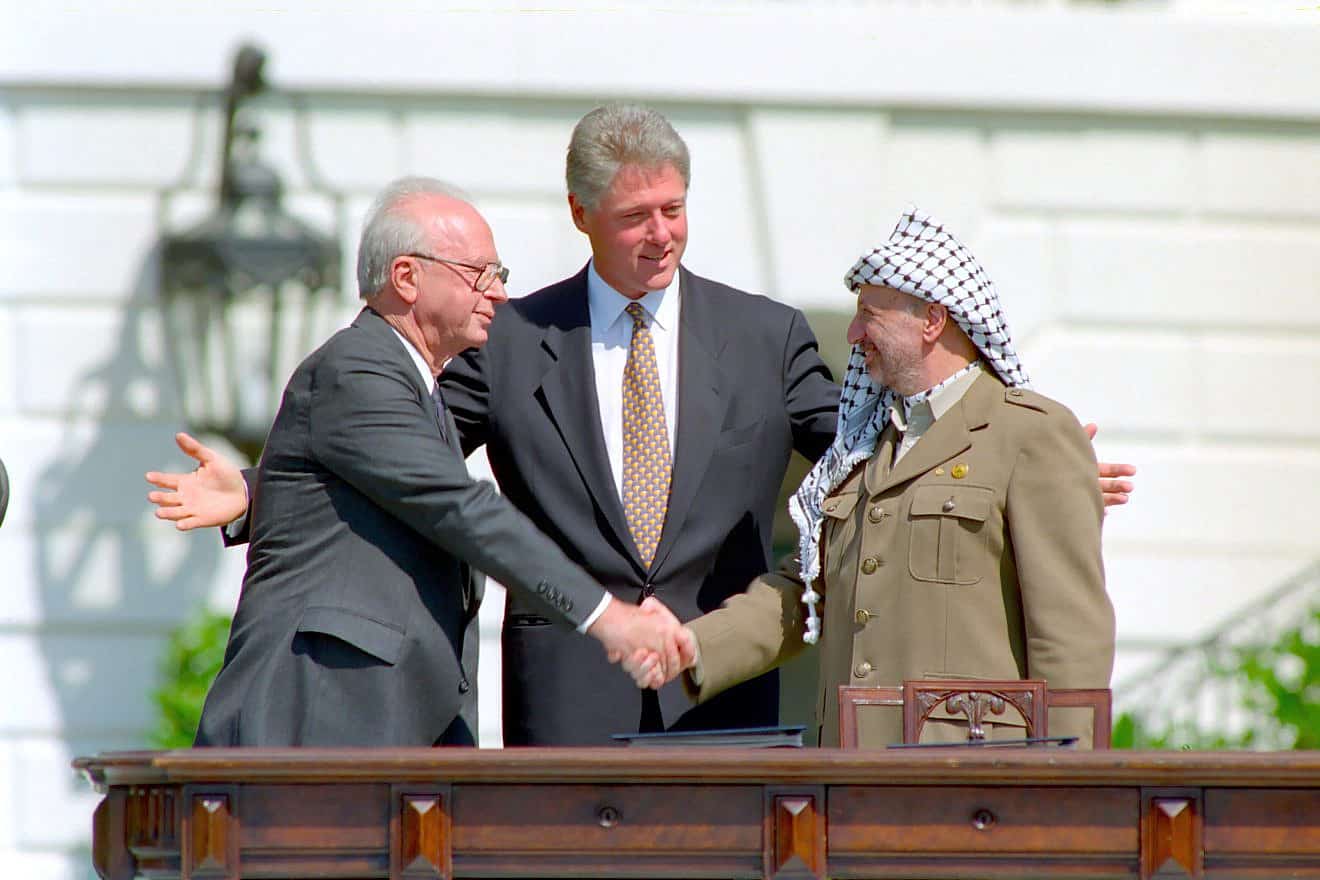
Signing of the Oslo accords in Washington, 13 September 1993. Vince Musi / White House, public domain. Archival photograph. — Vince Musi / The White House / Wikimedia Commons — domaine public, 13 septembre 1993.
Where things stand
As of 4 November 2026, the dossier contains 109 dated occurrences beginning in 1882. Following the ceasefire that took effect on 10 October 2025 and the release of the last twenty living Israeli hostages on 13 October, entries for October and November 2026 document continuing strikes and severe humanitarian difficulties in Gaza. Recent UN reports address displacement, access to health care and waste collection. Casualty figures remain attributed to their sources, with verification limits stated. The West Bank situation and regional developments require more detailed coverage.
Confirmed
Israel announces a complete siege of Gaza
On 9 October 2023, Israeli Defence Minister Yoav Gallant announces a complete siege of Gaza, halting supplies during the military campaign launched after the 7 October attacks.
OCHA reports the announced cutoff of electricity, fuel, food and water. Bombardment and displacement increase protection and relief needs. The announcement is distinct from the blockade imposed in 2007 and tightens an already highly restricted situation.
On 7 October 2023, Hamas-led armed groups attack communities and military sites in southern Israel, killing about 1,200 people and taking 251 hostages to Gaza.
Civilians are massacred in homes and at a festival; security personnel are also among those killed and abducted. Human Rights Watch documents war crimes and crimes against humanity. Figures used here reflect later findings rather than the day’s initial reports.
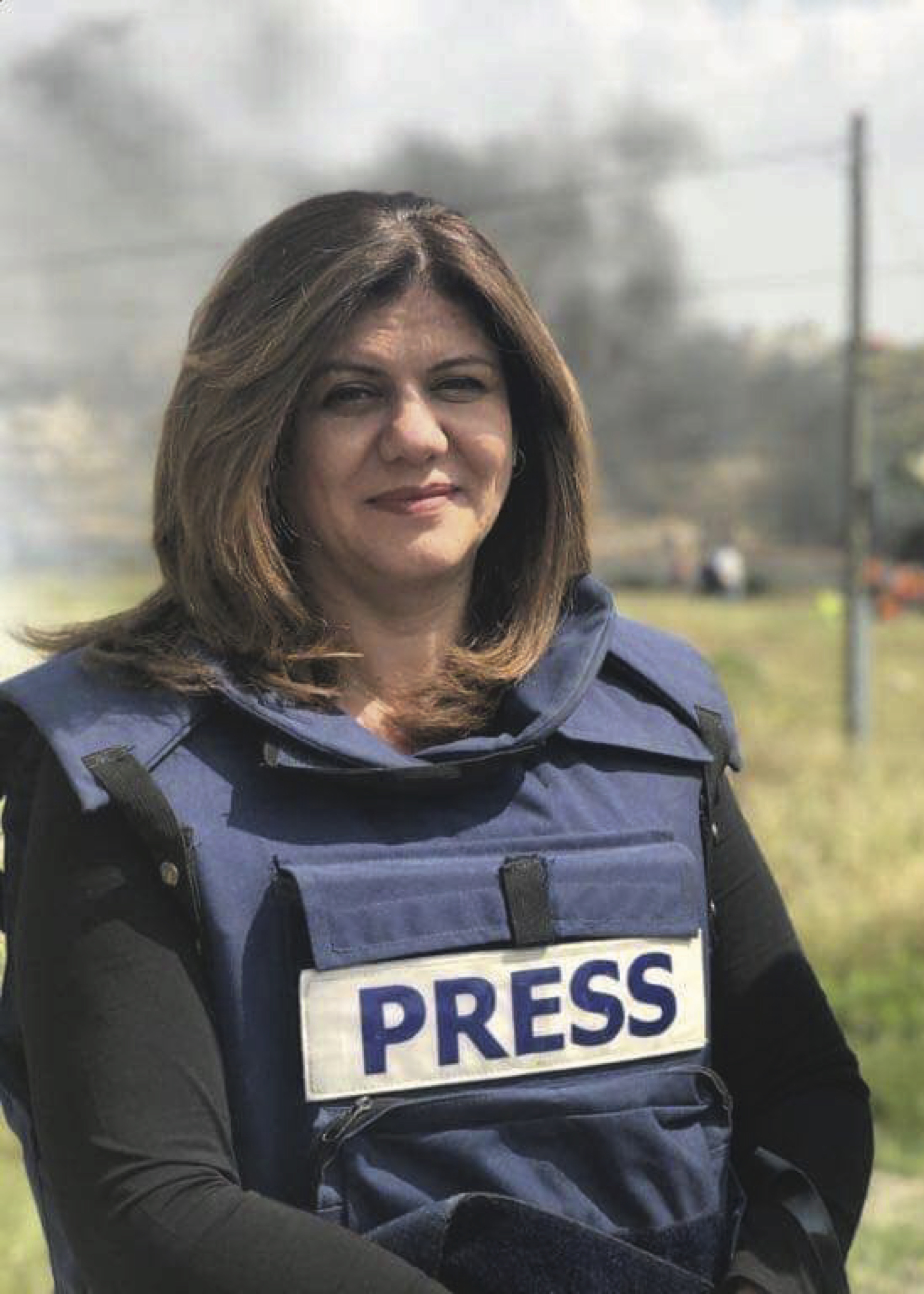
On 11 May 2022, Palestinian-American Al Jazeera journalist Shireen Abu Akleh is killed while covering an Israeli operation in Jenin in the occupied West Bank.
Archival portrait of the journalist; not the circumstances of her death. Al Jazeera Media Network, CC BY-SA 4.0. — Al Jazeera Media Network / Wikimedia Commons — CC BY-SA 4.0 https://creativecommons.org/licenses/by-sa/4.0/ ; portrait d’archives, sans modification.
Her colleague Ali Sammoudi is wounded. The UN human rights office subsequently concludes that the shots hitting the journalists came from Israeli forces and calls for a criminal investigation. That later finding is distinguished from conflicting accounts at the time of her death.
On 21 May 2021, a ceasefire between Israel and Palestinian armed groups in Gaza takes effect after hostilities that began on 10 May.
Egyptian mediation follows eleven days of Israeli strikes and Palestinian rocket fire. Displaced people begin returning, but destruction, humanitarian needs and tensions in Jerusalem and the West Bank do not disappear with the truce.
Israel signs normalization accords with UAE and Bahrain
On 15 September 2020, Israel, the United Arab Emirates and Bahrain sign normalization texts in Washington under Donald Trump’s sponsorship.
The accords open official relations between Israel and the two Gulf states. They are not an Israeli–Palestinian agreement and do not resolve occupation or final status. They change the Arab diplomatic setting in which Palestinians pursue their claims.
On 30 March 2018, Palestinians begin demonstrations near the fence separating Gaza from Israel, demanding refugee return and an end to the blockade.
Israeli fire kills and injures protesters on the first day. Human Rights Watch denounces unlawful lethal force against demonstrators posing no imminent threat to life. Protests continue weekly; this attributed finding is not a criminal judgment.
Donald Trump recognizes Jerusalem as Israel’s capital
On 6 December 2017, Donald Trump announces US recognition of Jerusalem as Israel’s capital and preparations to move the embassy from Tel Aviv.
The US decision does not internationally settle the city’s sovereignty boundaries. The UN maintains that Jerusalem is a final-status issue to be resolved through negotiations. The embassy’s actual move follows in 2018.
Resolution 2334 demands an end to settlement activity
On 23 December 2016, the Security Council adopts Resolution 2334, with the United States abstaining.
The text states that Israeli settlements in territory occupied since 1967, including East Jerusalem, have no legal validity and demands an end to settlement activity. Adoption establishes the Council’s position; it does not show that settlement activity actually stopped.
On 1 April 2015, Palestine becomes the 123rd state party to the Rome Statute, the International Criminal Court’s founding treaty.
Accession brings international criminal justice rights and obligations. A separate declaration accepts Court jurisdiction from 13 June 2014. Membership does not automatically produce an investigation, warrant or conviction.
On 26 August 2014, an Egyptian-mediated ceasefire ends the main phase of hostilities in Gaza and Israel.
The July–August campaign includes Israeli strikes and a ground offensive as well as Palestinian rocket and mortar fire. OCHA describes extensive civilian losses and destruction in Gaza. Ending the fighting does not resolve access and reconstruction issues.
On 29 November 2012, the General Assembly grants Palestine non-member observer state status through Resolution 67/19.
The vote is 138 in favour, nine against and 41 abstentions. The decision upgrades its international status without admission to full UN membership or an end to occupation.