Egypt · France · United Kingdom · Israel · Jordan · Lebanon · State of Palestine · Qatar · Saudi Arabia · Syrian Arab Republic · United States of America
File
Israeli–Palestinian conflict: from its origins to today
This dossier traces the modern origins and major stages of the Israeli–Palestinian conflict from the late nineteenth century to today: national movements, the British Mandate, Israel’s creation and the Nakba, wars, occupation and settlements, Palestinian mobilization, peace efforts, political divisions, humanitarian crises and international proceedings. Each published occurrence includes its sources and distinguishes established facts, attributed statements and judicial findings. The timeline needs further detail on local settlement developments, some regional episodes and negotiations; it does not claim to catalogue every incident.
Last updated : 109 key moments
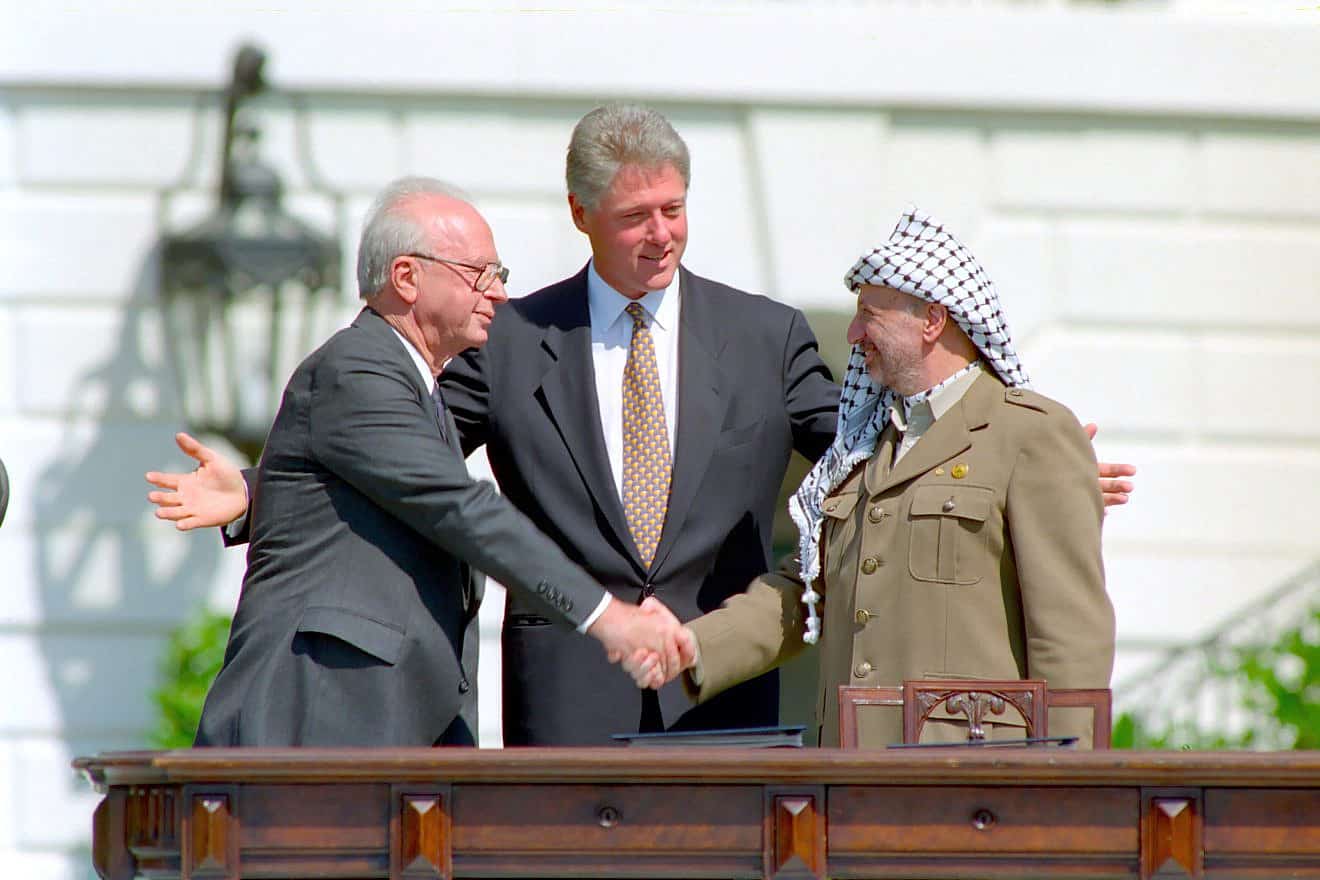
Signing of the Oslo accords in Washington, 13 September 1993. Vince Musi / White House, public domain. Archival photograph. — Vince Musi / The White House / Wikimedia Commons — domaine public, 13 septembre 1993.
Where things stand
As of 4 November 2026, the dossier contains 109 dated occurrences beginning in 1882. Following the ceasefire that took effect on 10 October 2025 and the release of the last twenty living Israeli hostages on 13 October, entries for October and November 2026 document continuing strikes and severe humanitarian difficulties in Gaza. Recent UN reports address displacement, access to health care and waste collection. Casualty figures remain attributed to their sources, with verification limits stated. The West Bank situation and regional developments require more detailed coverage.
Confirmed
Egypt and Israel sign their peace treaty
On 26 March 1979, Egypt and Israel sign a peace treaty in Washington following the Camp David Accords.
It ends the state of war between them and provides for Israeli withdrawal from Sinai and diplomatic relations. The treaty changes the regional balance but is not a final-status agreement between Israel and the Palestinians.
Camp David sets a framework for peace and autonomy
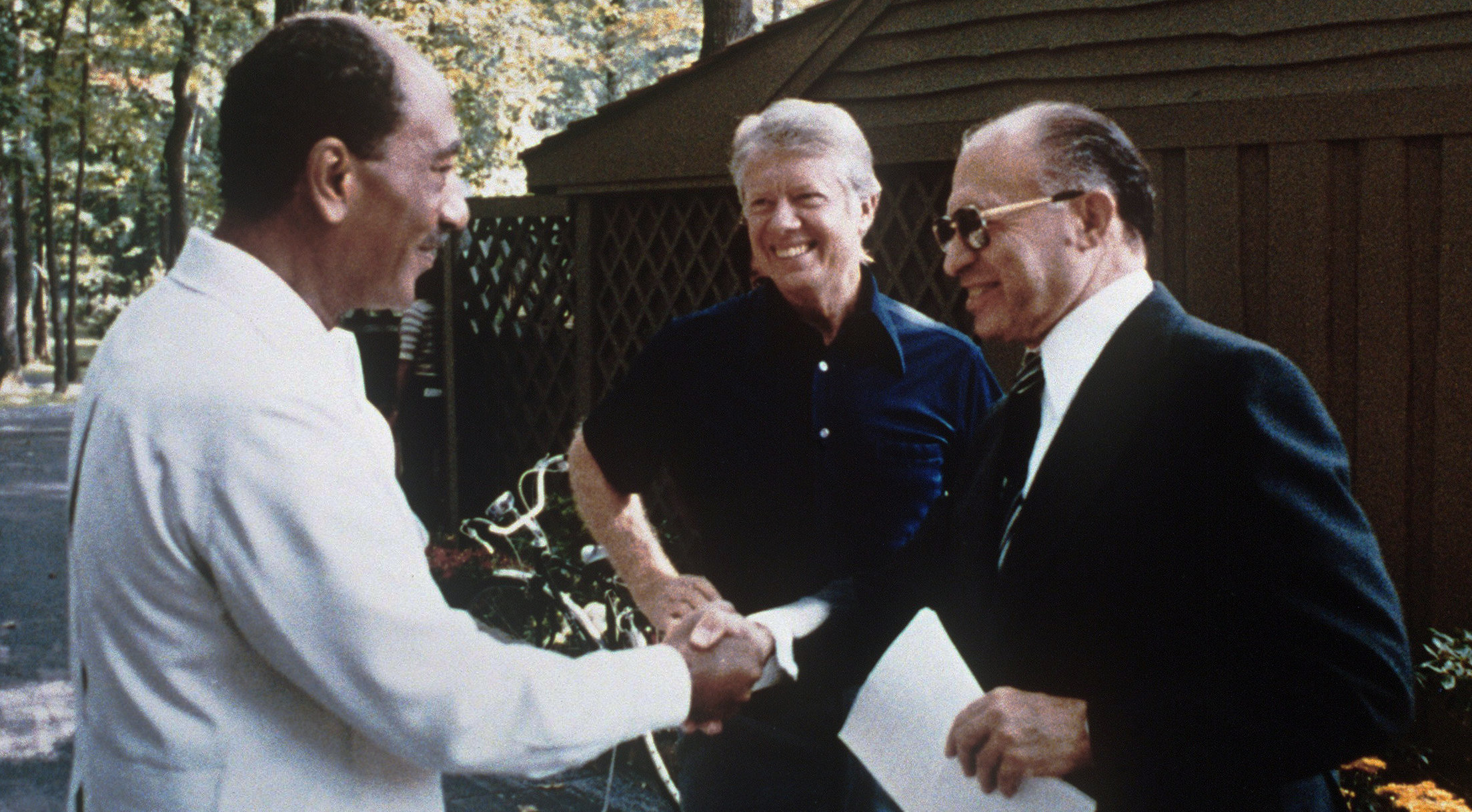
On 17 September 1978, Anwar Sadat and Menachem Begin conclude the Camp David Accords with Jimmy Carter’s mediation.
The three leaders at Camp David in September 1978. White House, public domain. — White House / Wikimedia Commons — domaine public, Camp David en septembre 1978.
The texts include a framework for Egyptian–Israeli peace and another for the Middle East, envisaging autonomy in the West Bank and Gaza. A bilateral treaty follows in March 1979. The Palestinian component does not deliver the envisaged comprehensive settlement.
Land Day emerges from mobilization against expropriation
On 30 March 1976, Palestinian citizens of Israel hold a strike and demonstrations against land confiscations in Galilee.
Israeli forces kill six Palestinians. The date becomes Land Day, commemorated annually. It highlights land and civil rights of Palestinians living within Israel, distinct from the status of residents of occupied territories.
On 22 November 1974, the General Assembly grants the PLO observer status through Resolution 3237 (XXIX).
That day, Resolution 3236 reaffirms the Palestinian people’s inalienable rights, including self-determination, independence and sovereignty. The status concerns the organization at this stage; it is distinct from the non-member observer state status granted to Palestine in 2012.
On 6 October 1973, Egyptian and Syrian forces attack Israeli positions in Sinai and the Golan Heights, occupied since 1967.
Also known as the Yom Kippur or Ramadan War, the conflict returns occupied territory to the centre of regional diplomacy. A ceasefire and Resolution 338 lead to renewed negotiating efforts without resolving the Israeli–Palestinian conflict.
Munich: Black September attacks Israeli Olympic delegation
On 5 September 1972, members of the Palestinian group Black September attack Israel’s delegation at the Munich Olympics.
Two delegation members are killed and nine taken hostage. All nine hostages die during the rescue attempt, along with a German police officer. The attack carries the conflict onto an international civilian and sporting stage.
Black September: Jordanian army attacks Palestinian bases
On 17 September 1970, Jordan’s army attacks Palestinian organizations’ positions, notably around Amman.
Fighting follows a crisis between the monarchy and armed groups, aggravated by aircraft hijackings. The confrontation and subsequent elimination of Palestinian bases in Jordan in 1971 shift the PLO’s military centre towards Lebanon.
Karameh battle pits Israel against Jordanian and Palestinian forces
On 21 March 1968, the Israeli army launches an operation against Karameh in Jordan, where Fatah has a base.
Jordanian forces and Palestinian fighters engage Israeli units, which withdraw after the fighting. The parties offer different interpretations of the military outcome. The battle becomes a landmark in Palestinian mobilization after the Arab defeat of 1967.
On 22 November 1967, the Security Council unanimously adopts Resolution 242 following the June war.
The text links withdrawal of Israeli forces from occupied territories, termination of belligerency and every state’s right to live within secure and recognized boundaries. It also calls for a just settlement of the refugee problem. The extent of withdrawal becomes a subject of differing interpretations.
June war brings Palestinian territories under Israeli occupation
From 5 to 10 June 1967, Israel fights Egypt, Jordan and Syria and occupies the West Bank, East Jerusalem and Gaza.
Israel also captures Egypt’s Sinai and Syria’s Golan Heights. The war follows a crisis involving withdrawal of the UN force and Egypt’s closure of the Straits of Tiran. For Palestinians it opens a new phase of occupation and displacement, distinct from the 1948 Nakba.
On 28 May 1964, the first Palestine National Council opens in East Jerusalem under Ahmed Shukeiri.
The meeting adopts a national charter and establishes the Palestine Liberation Organization, following an Arab summit decision. The PLO becomes a framework for Palestinian representation and mobilization; its creation is distinct from that of the Palestinian Authority under the Oslo process thirty years later.