
Skip to content
Indonesia
File

Indonesia: health impact of wildfire smoke

Published Updated

This dossier follows health assessments of fire-related air pollution in Indonesia. It distinguishes modelled deaths from individually recorded deaths and identifies the periods studied.

Latest event : 2 key moments

Where things stand

On 4 November 2026, the Health Ministry announced 401,586 cumulative respiratory infections in seven provinces using data through 2 November. This administrative surveillance is separate from the CREA mortality estimates already covered in the dossier.

Indonesia reports 401,586 respiratory cases in fire-affected areas

Indonesia’s Health Ministry presented a cumulative tally of 401,586 acute respiratory infections across seven fire-affected provinces on 4 November 2026. The administrative tally uses data through 4 p.m. local time on 2 November.
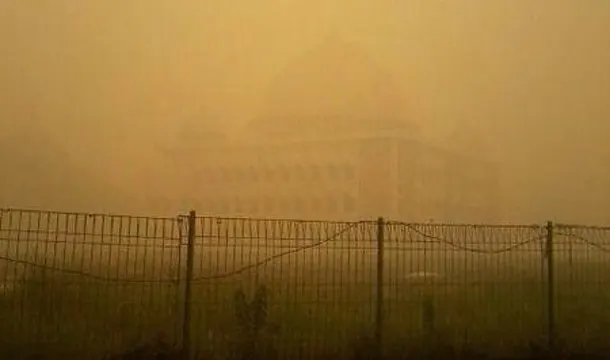
Palangkaraya, 3 October 2015. Archive fire haze; does not depict conditions in 2026. Franky Acil Zamzani, public domain.
Palangkaraya, 3 October 2015. Archive fire haze; does not depict conditions in 2026. Franky Acil Zamzani, public domain. — Franky Acil Zamzani / Wikimedia Commons — domaine public ; 3 octobre 2015, sans modification.

The data cover 63 districts and cities. Spokeswoman Widyawati said the total includes 3,906 additional cases recorded on 2 November; these are therefore not infections that all occurred on the announcement date.

The ministry recorded 91,913 cases among children aged zero to five, 87,704 among children aged six to nine and 56,092 among people over 60. ANTARA and Metro TV reported the figures presented in Jakarta.

Authorities link the health monitoring to smoke exposure. This respiratory-infection tally should be distinguished from separately published statistical estimates of pollution-related mortality.

Sources 3

Indonesia: study estimates 3,560 deaths linked to fire smoke in September

Smoke from fires in Indonesia may have caused about 3,560 deaths in September 2026, according to a Centre for Research on Energy and Clean Air (CREA) study published on 29 October and reported on 30 October. This is a statistical estimate, not an official count.

Darussalam Mosque in Palangkaraya amid haze in 2015.
Palangkaraya, 3 October 2015. Archive haze photograph; it does not depict the 2026 fires. — Franky Acil Zamzani / Wikimedia Commons — domaine public ; 3 octobre 2015, sans modification.

The assessment covers short-term effects of fine PM2.5 particles, within days of exposure. CREA separately estimates 1,750 deaths from non-fire pollution sources, bringing the September total to 5,310.

The researchers combine particle concentrations, population exposure and relationships between pollution and mortality. They do not count individually identified victims.

At the month's peak, 57.8 million people were estimated to be breathing air classified as unhealthy to hazardous. According to AFP, the government has neither confirmed nor rejected the mortality estimate.

Sources 3