
Skip to content
State of Palestine
File

Gaza: health surveillance and access to care

Published Updated

This dossier follows health warnings and care needs in Gaza, distinguishing findings attributed to health bodies from independently established totals.

Latest event : 4 key moments

Where things stand

On 3 November 2026, the UN said only half its waste-collection partners' fleet was operational because of supply restrictions, warning of public-health risks.

Gaza health authorities issue meningitis epidemic alert

Gaza’s health ministry declared an epidemic alert on 24 November after a rise in meningitis cases. It reported 272 infections in October alone.
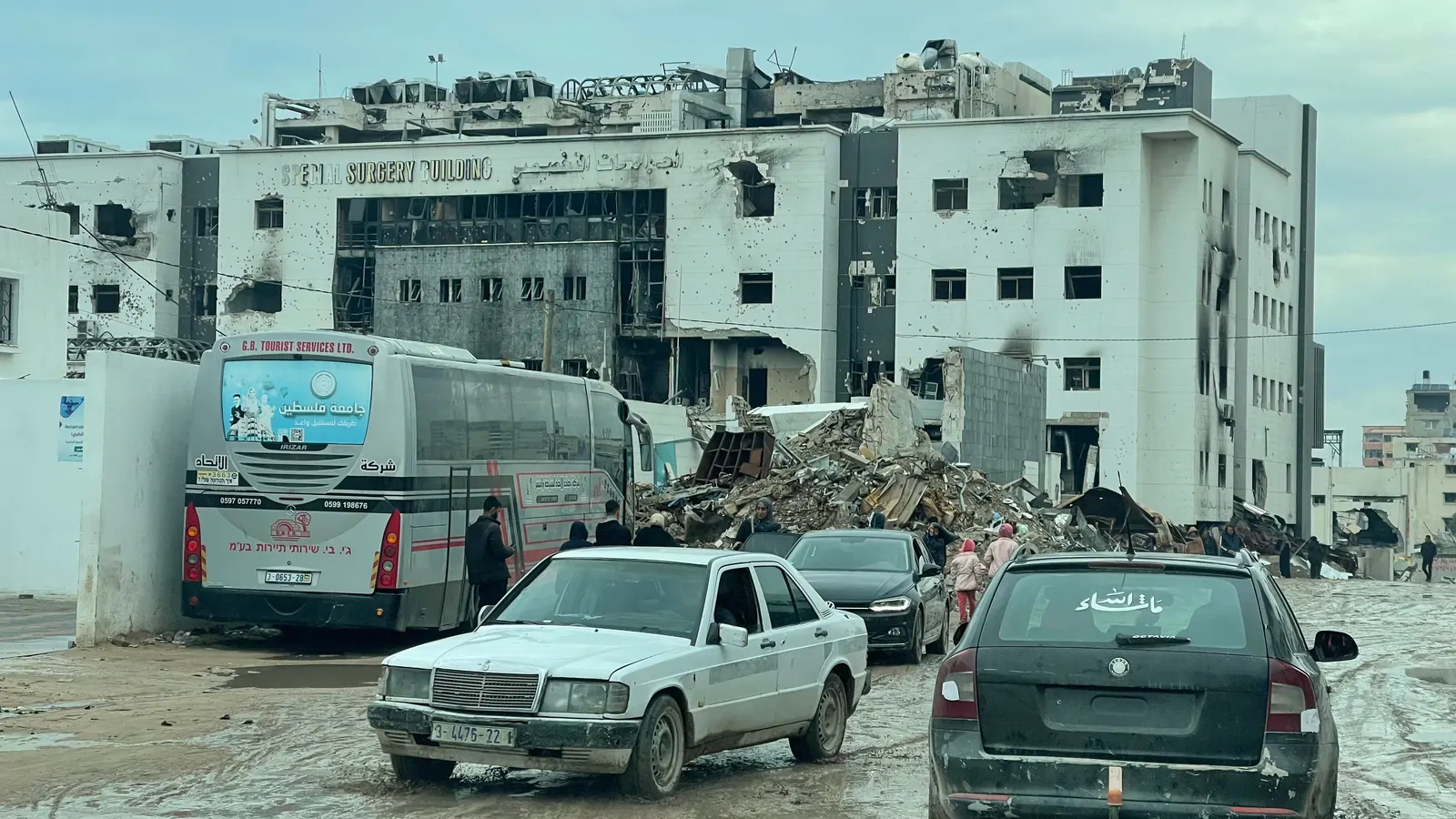
Al-Shifa hospital in Gaza in 2025.
Al-Shifa hospital in February 2025. File photo; it does not document the November 2026 alert. Jaber Jehad Badwan / Wikimedia Commons, CC BY-SA 4.0. — Jaber Jehad Badwan / Wikimedia Commons — CC BY-SA 4.0 https://creativecommons.org/licenses/by-sa/4.0/ ; 23 février 2025, sans modification.

Health officials warn of risks to the population amid displacement and deteriorating living conditions. The figure is attributed to the ministry; the reports consulted do not independently verify it. It covers October and is not a count for the past 24 hours.
Sources 2

Gaza: WHO calls for rapid access to supplies as winter health risks grow

The WHO director-general called on 17 November for rapid, unhindered entry of shelter materials, water, medicines and hypothermia equipment into Gaza after rains flooded displacement camps.

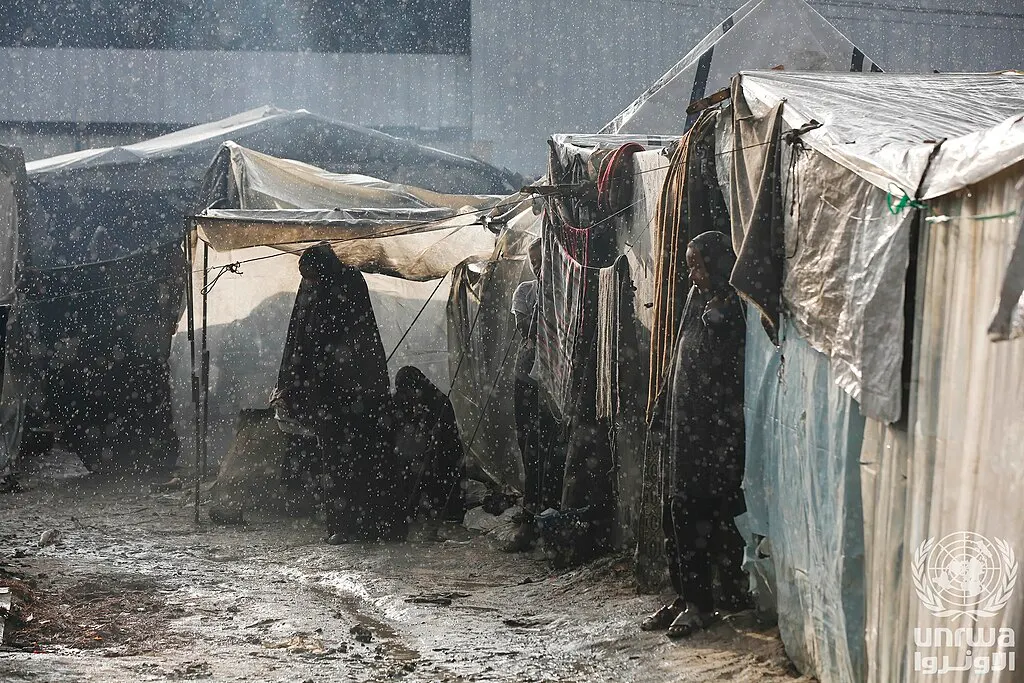
Flooded tents in Deir el-Balah.
Deir el-Balah, January 2025. Archive photograph; it does not show the November 2026 rains. — Ashraf Amra / UNRWA / Wikimedia Commons — CC BY-SA 3.0 IGO https://creativecommons.org/licenses/by-sa/3.0/igo/ ; January 2025; unmodified.

Tedros Adhanom Ghebreyesus warned that cold and contaminated water expose families to health risks while damaged health facilities and transport disruption restrict access to care. He also called for laboratory supplies to enter so outbreaks can be detected.

The same day, the World Food Programme and the International Organization for Migration warned that funding shortages and aid access restrictions threatened their operations. Their accounts describe needs and obstacles reported by the agencies, not an independently verified count of everyone affected.

Sources 4

Gaza: UN warns of health risks from uncollected waste

The UN warned on 3 November that only half of its partners' waste-collection vehicle fleet in Gaza was operational, increasing public health risks.

A stethoscope.
Generic health illustration, August 2014; it does not depict conditions in Gaza. ICUnurses, CC BY-SA 4.0. — ICUnurses / Wikimedia Commons — CC BY-SA 4.0 https://creativecommons.org/licenses/by-sa/4.0/ ; 1 août 2014, redimensionnement.

Spokesperson Stéphane Dujarric attributed the problem to Israeli restrictions on entry of engine oil and spare parts needed to keep vehicles running. Only some rubbish can consequently be collected.

The UN called for easier delivery of supplies and more humanitarian funding before winter. The warning describes declining collection capacity; it does not provide a new numerical tally of infections.

Sources 2

Gaza: UN warns of heightened viral meningitis transmission risk

The UN warned on 29 October 2026 that overcrowding, damaged water networks and shortages of treatment were increasing the risk of viral meningitis transmission in Gaza.

Al-Shifa Hospital in February 2025. Archive image; it does not document October 2026 meningitis cases.
Al-Shifa Hospital in February 2025. Archive image; it does not document October 2026 meningitis cases. — Jaber Jehad Badwan / Wikimedia Commons — CC BY-SA 4.0 https://creativecommons.org/licenses/by-sa/4.0/ ; 23 février 2025, sans modification.

The UN briefing, citing the World Health Organization, says acute respiratory infections remained the most commonly reported health condition in September's data.

The UN calls for restrictions on humanitarian supplies and specialized equipment to be lifted and for additional funding. The warning provides no updated case count to measure the scale of meningitis; it should be distinguished from separate reports of bacterial forms.

Sources 3