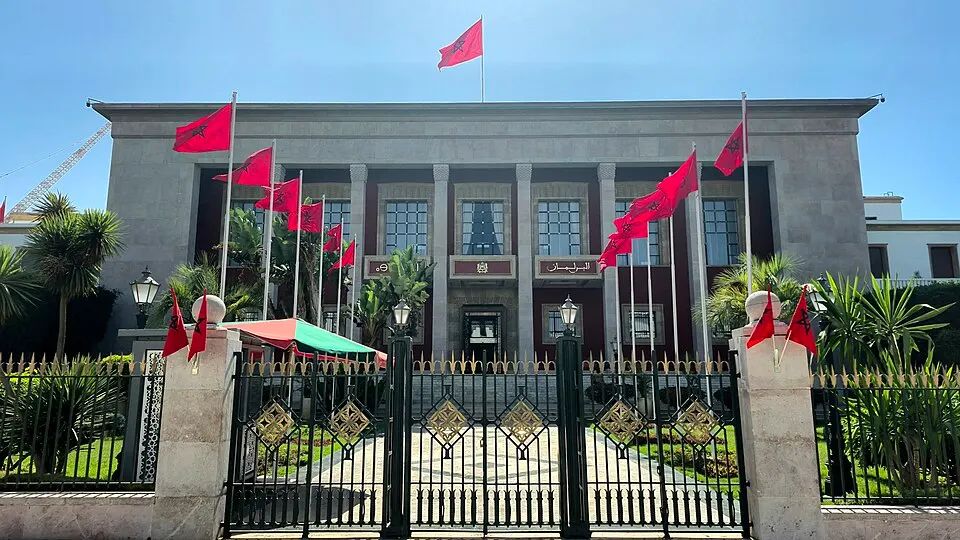
Parliament in Rabat in 2025. File photo; Taha ahh / Wikimedia Commons, CC0. — Taha ahh / Wikimedia Commons — CC0 1.0 https://creativecommons.org/publicdomain/zero/1.0/ — photo du 8 août 2025, redimensionnement uniquement.
Where things stand
On 17 November 2026, the finance minister presented the bill to the relevant committee of the House of Councillors, following its first-reading approval by the lower house. Final adoption remains pending.
Sugar and salt: consumer groups call for binding deadlines and inspections
Two consumer association representatives support reducing sugar and salt in food but want practical measures and protection for purchasing power, in statements published by Hespress on 17 November 2026.
Rabat, August 2025 archive image. Illustration, not the meeting. Taha ahh / Wikimedia Commons, CC0. — Taha ahh / Wikimedia Commons — CC0 1.0 https://creativecommons.org/publicdomain/zero/1.0/ — photo du 8 août 2025, redimensionnement uniquement.
Hassan Aït Ali, president of the Moroccan Consumer Protection Observatory, called for binding deadlines, stronger inspections and transparency about ingredients. He wants to prevent any eventual taxation from being passed on through higher prices.
Boujemâa Mouji, of Casablanca’s consumer protection association, stressed moving from general policy directions to action. Their positions respond to the dialogue with manufacturers announced by Fouzi Lekjaa. They do not establish new regulatory limits or a tax already in force.
2027 budget bill presented to upper house committee
Finance Minister Fouzi Lekjaa presented the 2027 finance bill to the House of Councillors’ finance committee on November 17.
Parliament in Rabat in 2025. File photo; Taha ahh / Wikimedia Commons, CC0. — Taha ahh / Wikimedia Commons — CC0 1.0 https://creativecommons.org/publicdomain/zero/1.0/ — photo du 8 août 2025, redimensionnement uniquement.
He outlined the measures and amendments introduced by the House of Representatives. The government plans, among other things, to raise minimum direct social assistance from 500 to 600 dirhams and revise the income-tax scale.
The lower house passed the bill at first reading on November 14; scrutiny continues in the upper house. The measures remain proposals.
2027 budget: Lekjaa defends over MAD 350 billion in five-year social commitments
Fouzi Lekjaa told Morocco’s House of Representatives on 14 November 2026 that more than MAD 350 billion would be committed over five years to purchasing power and social services. He made the announcement while responding to MPs during scrutiny of the 2027 finance bill.
Parliament in Rabat, August 2025. Archive photograph, not the sitting. Taha ahh / Wikimedia Commons, CC0 1.0. — Taha ahh / Wikimedia Commons — CC0 1.0 https://creativecommons.org/publicdomain/zero/1.0/ — photo du 8 août 2025, redimensionnement uniquement.
The economy and finance minister presented the effort as a priority for Fatima Ezzahra El Mansouri’s government. Reports of the sitting link it to expanding social protection and improving living conditions.
The amount spans the government’s entire term: it is neither the allocation for 2027 alone nor expenditure already carried out. Funding schedules and the measures’ actual implementation will need to be tracked beyond this statement.
The minister’s reply forms part of parliamentary scrutiny of the budget. The sources used for this announcement do not establish the outcome of the final vote or enactment of the bill.
Morocco’s lower house passes 2027 finance bill at first reading
Morocco’s House of Representatives passed the 2027 finance bill on 14 November 2026 by 179 votes to 126, with no abstentions, completing its first reading.
Parliament in Rabat, August 2025. Archive photograph, not the sitting. Taha ahh / Wikimedia Commons, CC0 1.0. — Taha ahh / Wikimedia Commons — CC0 1.0 https://creativecommons.org/publicdomain/zero/1.0/ — photo du 8 août 2025, redimensionnement uniquement.
The bill now goes to the House of Councillors. This parliamentary stage does not amount to enactment of the budget.
Debate focused on taxation and funding social priorities. The approved text includes a 40% corporate tax rate for fuel importers and distributors with net profits of at least MAD 100 million. The proposed extension to cement and telecom companies was rejected, Hespress reports.
Pensions: Lekjaa announces two bills for the following week
Fouzi Lekjaa told MPs on 14 November 2026 that the government intends to submit two pension bills to Parliament after cabinet consideration. They concern minimum retirement pensions and widows’ survivor pensions.
Parliament in Rabat, August 2025. Archive photograph, not the sitting. Taha ahh / Wikimedia Commons, CC0 1.0. — Taha ahh / Wikimedia Commons — CC0 1.0 https://creativecommons.org/publicdomain/zero/1.0/ — photo du 8 août 2025, redimensionnement uniquement.
The minister targets a minimum of MAD 1,700 in January 2027, rising to MAD 3,000 in 2031. He also proposes raising the widows’ survivor-pension rate from 50% to 100%.
The announced timetable puts submission in the week following 14 November. Increases remain subject to passage of the bills and their implementation conditions: the statement does not yet create a new payment entitlement.
Sugar and salt: Lekjaa announces talks with food manufacturers
Fouzi Lekjaa told MPs on 14 November 2026 that talks would be held with food manufacturers to reduce sugar and salt in their products. He outlined tax support followed by higher taxation in the event of refusal.
Parliament in Rabat, August 2025. Archive photograph, not the sitting. Taha ahh / Wikimedia Commons, CC0 1.0. — Taha ahh / Wikimedia Commons — CC0 1.0 https://creativecommons.org/publicdomain/zero/1.0/ — photo du 8 août 2025, redimensionnement uniquement.
According to reports of the sitting, discussions are to follow budget scrutiny and proceed sector by sector. The minister envisages deadlines of one to three years, adapted to manufacturers’ technological capabilities.
This is an announced policy direction: the statements do not establish composition thresholds, tax rates or applicable obligations. The meetings and companies’ commitments remain to be tracked.