Skip to content
Bangladesh
File

Bangladesh: wages and garment labour unrest in Ashulia

Published Updated

This dossier follows garment workers’ pay demands in Ashulia and documented disruption at factories.

Latest event : 5 key moments

Where things stand

On 14 November 2026, employers cited 147 factories not operating normally and warned of indefinite closures. Counts use differing definitions. An employers’ wage proposal is announced for 16 November.

Bangladesh garment employers warn of further indefinite closures

Bangladesh’s garment employers’ associations warned in Dhaka on 14 November 2026 that factories affected by wage disputes could close indefinitely from the following day. BGMEA president Mahmud Hasan Khan says 147 establishments are not operating normally.
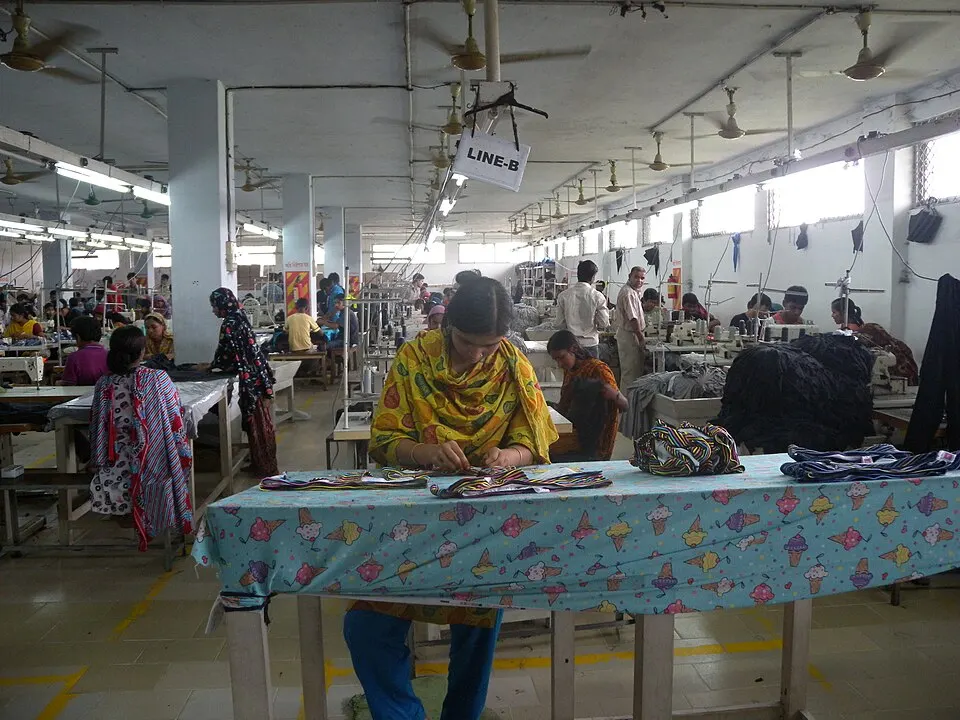
Garment workers in Bangladesh.
Bangladesh, July 2011. Archive, not the affected factories in 2026. Tareq Salahuddin, CC BY 2.0 https://creativecommons.org/licenses/by/2.0/ ; resized. — Tareq Salahuddin / Wikimedia Commons — CC BY 2.0 https://creativecommons.org/licenses/by/2.0/ ; 2 July 2011; resized.

Published counts do not all describe the same conditions: some distinguish 55 indefinite closures and 92 disrupted sites, while others describe 147 factories as shut. This remains an employers’ tally, without plant-by-plant verification in the sources reviewed.

Employers cite factory security and a return to work. Despite warnings about continuing negotiations, Khan also announced that a written wage proposal would be submitted to the minimum wage board on 16 November, according to Jago News. No agreed new wage scale or uniform production restart is established as of 14 November.
Sources 4

Bangladesh garment production faces fresh shutdowns and wage protests

Fresh garment factory closures and wage protests disrupted Ashulia, Savar and Gazipur on 12 November 2026. The Business Standard reported 204 establishments suspending production that day, a broader count than some local observations.

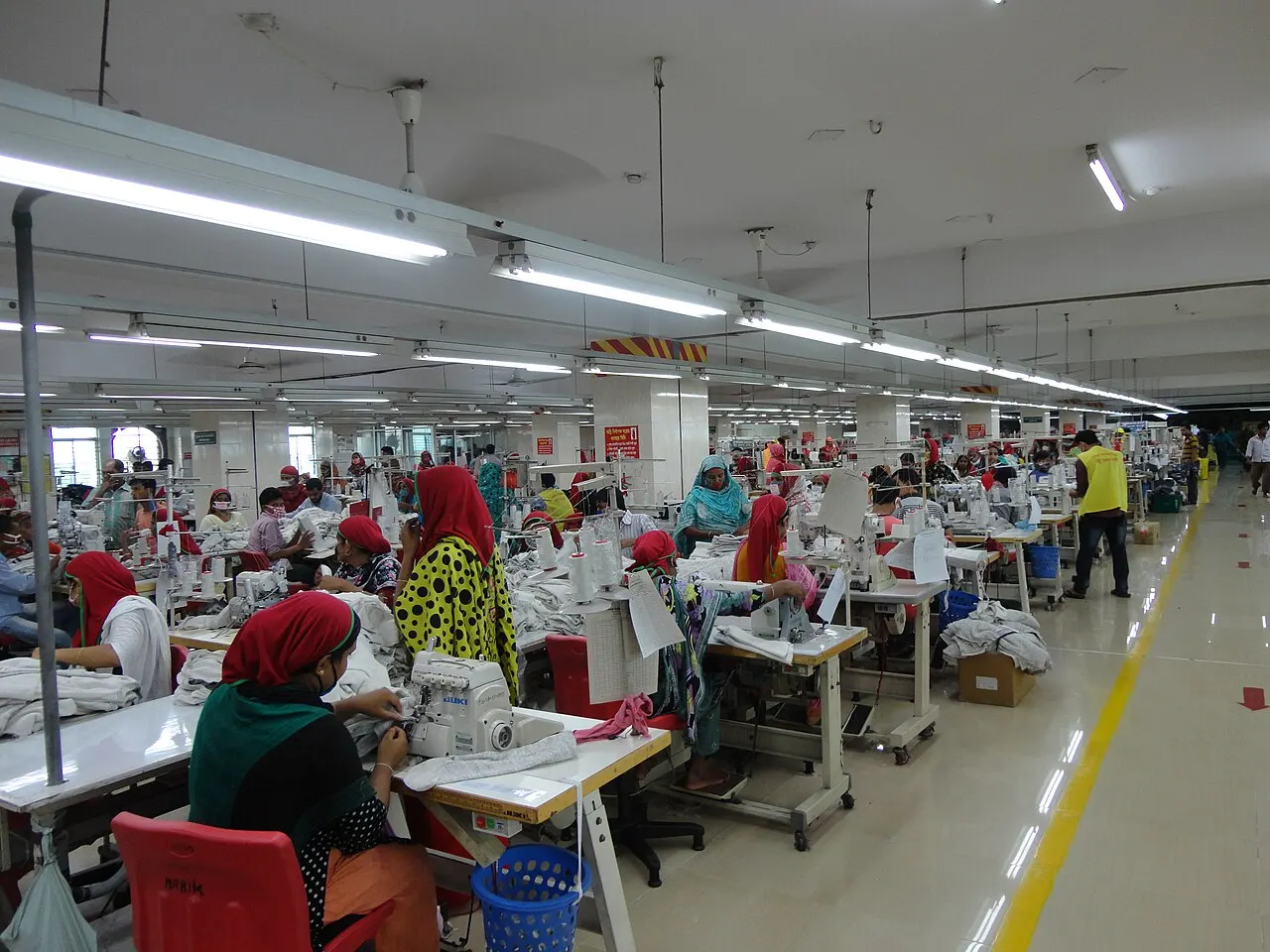
Workers in a Bangladesh garment factory.
Bangladesh, July 2011. Archive; does not show the closed factories or 2026 protesters. Tareq Salahuddin / Wikimedia Commons, CC BY 2.0 https://creativecommons.org/licenses/by/2.0/ ; resized. — Tareq Salahuddin / Wikimedia Commons — CC BY 2.0 https://creativecommons.org/licenses/by/2.0/ ; 2 July 2011; resized.

The newspaper reported nine indefinite closures decided on 11 or 12 November, citing employers’ association BGMEA and inspection authorities. Bonik Barta separately described two such closures in Konabari, including MM Knitwear and Mamun Knitwear.

The counts are not interchangeable: UNB reported more than 150 factories on holiday in Ashulia, while an earlier Bangla Tribune report described normal production at most factories in the area. Reporting times and geographical coverage differ. Demands include a higher minimum wage; temporary shutdowns must be distinguished from closures without a reopening date.

Sources 4

Bangladesh: fresh disruption in Ashulia as work resumes in Gazipur

Garment workers resumed protests in Ashulia on 5 November 2026, forcing factories to suspend operations, according to Reuters. Conditions differed by area: local reporting also described a return to work in Gazipur and parts of Savar.

Garment workers in Bangladesh, 24 July 2013. Archive; these people are not identified as 2026 protesters. Fahad Faisal, CC BY-SA 4.0; resized.
Garment workers in Bangladesh, 24 July 2013. Archive; these people are not identified as 2026 protesters. Fahad Faisal, CC BY-SA 4.0; resized. — Fahad Faisal / Wikimedia Commons — CC BY-SA 4.0 https://creativecommons.org/licenses/by-sa/4.0/ — 24 juillet 2013, redimensionnement.

Reuters quotes industrial police reporting more than 100 factories halted in Ashulia. This is an attributed figure, not a national total. In Gazipur, the Daily Star’s correspondent instead observed workers entering factories in the morning.

Workers are demanding a monthly minimum of 30,000 taka, compared with the current 12,500. According to Reuters, the wage board plans a revised scale from December but has not yet determined the size of the increase.

The local accounts therefore do not establish a uniform return to normal or a nationwide shutdown. Disruption and resumptions concern different places and times.

Sources 3

Bangladesh factory closures persist around Dhaka

Garment factories remained closed around Dhaka, Bangladesh, on 4 November 2026 amid wage demands and fresh clashes. Workers seek a monthly minimum wage of 30,000 takas, up from the current 12,500, the Associated Press reports.

Garment work in Bangladesh, 24 July 2013. Archive; these people are not identified as 2026 protesters. Fahad Faisal, CC BY-SA 4.0; resized.
Garment work in Bangladesh, 24 July 2013. Archive; these people are not identified as 2026 protesters. Fahad Faisal, CC BY-SA 4.0; resized. — Fahad Faisal / Wikimedia Commons — CC BY-SA 4.0 https://creativecommons.org/licenses/by-sa/4.0/ — 24 juillet 2013, redimensionnement.

AP cites industrial police reporting about 100 factories closed in Ashulia. A local evening report on 4 November puts the number declaring holidays across Savar–Ashulia at more than 200; the figures cover different areas and reporting times.

Clashes and roadblocks were also reported in other industrial areas surrounding the capital. Police accounts concerning participants’ identities and responsibility remain attributed assertions.

The garment industry employs about four million people, mostly women. AP reports the formation of a new wage board, without establishing a new wage agreement concluded as of 4 November.

Sources 5

Bangladesh: Ashulia factories close after wage protests

Garment workers’ protests and clashes with police disrupted factories in Ashulia, near Dhaka, on 31 October 2026. Protesters are demanding a minimum monthly wage of 30,000 taka, among other measures.

Garment workers in Bangladesh in 2013.
Bangladesh, July 2013. Illustrative archive photograph; the people shown are not identified as participants in the 2026 protests. — Fahad Faisal / Wikimedia Commons — CC BY-SA 4.0 https://creativecommons.org/licenses/by-sa/4.0/ — 24 juillet 2013, redimensionnement.

Bdnews24 and Chokh report that 25 factories declared temporary closures. Workers are also demanding an end to blacklisting and arbitrary dismissals. Chokh interviewed a New Age worker about the work stoppage.

Police used tear gas. Reports differ on how many police officers were injured; no consolidated count of injured workers is available. The sources consulted do not establish any new wage agreement.

Sources 3