
Skip to content
Bangladesh
File

Bangladesh: wages and garment labour unrest in Ashulia

Published Updated

This dossier follows garment workers’ pay demands in Ashulia and documented disruption at factories.

Latest event : 3 key moments

Where things stand

On 5 November 2026, Reuters reported renewed disruption in Ashulia, while local reporting described returns to work elsewhere. The amount of a new wage increase was not yet fixed in the reviewed sources.

Bangladesh: fresh disruption in Ashulia as work resumes in Gazipur

Garment workers resumed protests in Ashulia on 5 November 2026, forcing factories to suspend operations, according to Reuters. Conditions differed by area: local reporting also described a return to work in Gazipur and parts of Savar.
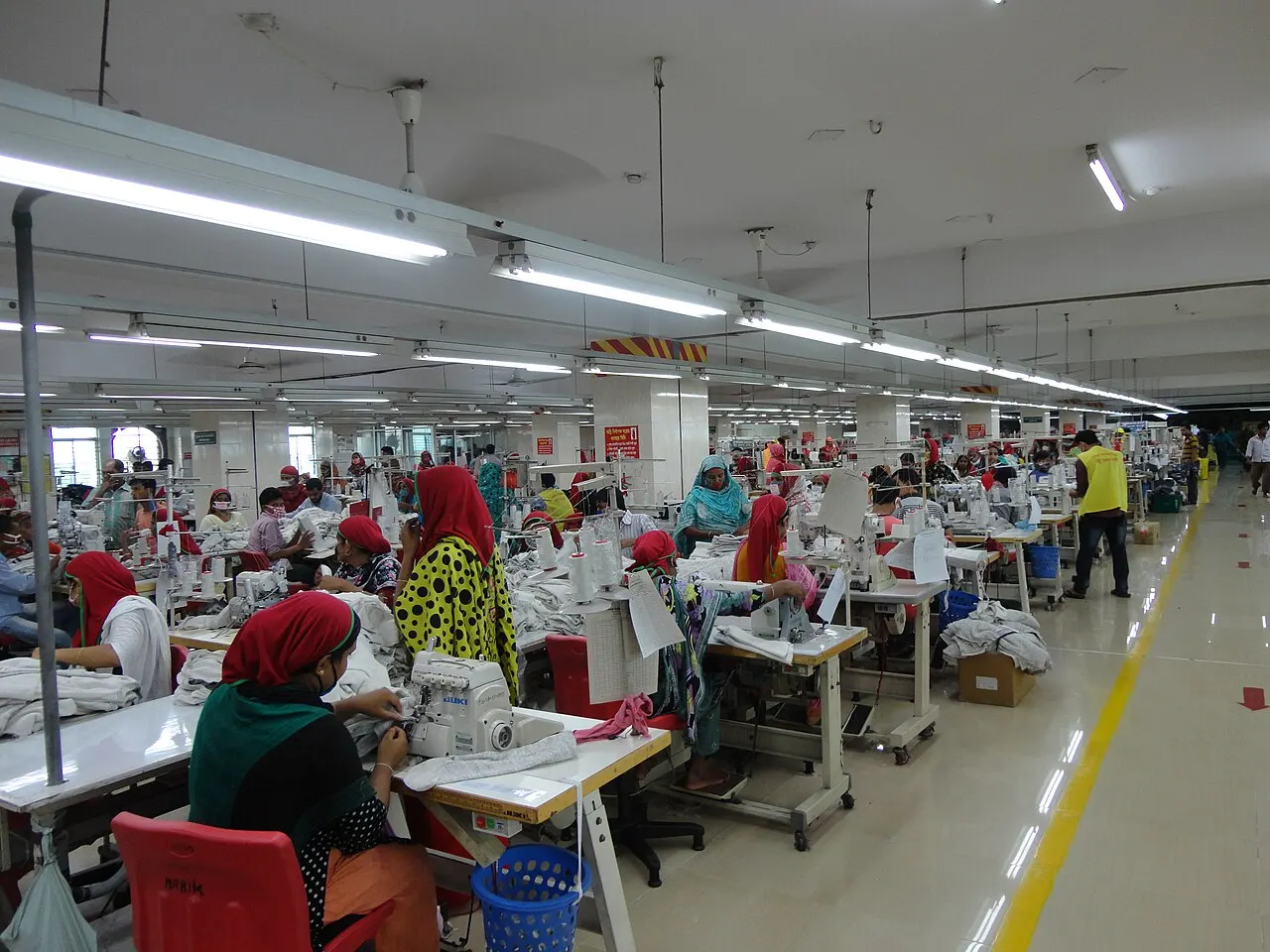
Garment workers in Bangladesh, 24 July 2013. Archive; these people are not identified as 2026 protesters. Fahad Faisal, CC BY-SA 4.0; resized.
Garment workers in Bangladesh, 24 July 2013. Archive; these people are not identified as 2026 protesters. Fahad Faisal, CC BY-SA 4.0; resized. — Fahad Faisal / Wikimedia Commons — CC BY-SA 4.0 https://creativecommons.org/licenses/by-sa/4.0/ — 24 juillet 2013, redimensionnement.

Reuters quotes industrial police reporting more than 100 factories halted in Ashulia. This is an attributed figure, not a national total. In Gazipur, the Daily Star’s correspondent instead observed workers entering factories in the morning.

Workers are demanding a monthly minimum of 30,000 taka, compared with the current 12,500. According to Reuters, the wage board plans a revised scale from December but has not yet determined the size of the increase.

The local accounts therefore do not establish a uniform return to normal or a nationwide shutdown. Disruption and resumptions concern different places and times.

Sources 3

Bangladesh factory closures persist around Dhaka

Garment factories remained closed around Dhaka, Bangladesh, on 4 November 2026 amid wage demands and fresh clashes. Workers seek a monthly minimum wage of 30,000 takas, up from the current 12,500, the Associated Press reports.

Garment work in Bangladesh, 24 July 2013. Archive; these people are not identified as 2026 protesters. Fahad Faisal, CC BY-SA 4.0; resized.
Garment work in Bangladesh, 24 July 2013. Archive; these people are not identified as 2026 protesters. Fahad Faisal, CC BY-SA 4.0; resized. — Fahad Faisal / Wikimedia Commons — CC BY-SA 4.0 https://creativecommons.org/licenses/by-sa/4.0/ — 24 juillet 2013, redimensionnement.

AP cites industrial police reporting about 100 factories closed in Ashulia. A local evening report on 4 November puts the number declaring holidays across Savar–Ashulia at more than 200; the figures cover different areas and reporting times.

Clashes and roadblocks were also reported in other industrial areas surrounding the capital. Police accounts concerning participants’ identities and responsibility remain attributed assertions.

The garment industry employs about four million people, mostly women. AP reports the formation of a new wage board, without establishing a new wage agreement concluded as of 4 November.

Sources 5

Bangladesh: Ashulia factories close after wage protests

Garment workers’ protests and clashes with police disrupted factories in Ashulia, near Dhaka, on 31 October 2026. Protesters are demanding a minimum monthly wage of 30,000 taka, among other measures.

Garment workers in Bangladesh in 2013.
Bangladesh, July 2013. Illustrative archive photograph; the people shown are not identified as participants in the 2026 protests. — Fahad Faisal / Wikimedia Commons — CC BY-SA 4.0 https://creativecommons.org/licenses/by-sa/4.0/ — 24 juillet 2013, redimensionnement.

Bdnews24 and Chokh report that 25 factories declared temporary closures. Workers are also demanding an end to blacklisting and arbitrary dismissals. Chokh interviewed a New Age worker about the work stoppage.

Police used tear gas. Reports differ on how many police officers were injured; no consolidated count of injured workers is available. The sources consulted do not establish any new wage agreement.

Sources 3