
Skip to content
Morocco
File

Morocco: water security strategy and flood prevention

Published Updated

This dossier follows Morocco’s public strategy for water storage, desalination and flood prevention, distinguishing targets, construction and operational capacity.

Latest event : 3 key moments

Where things stand

As of 13 November 2026, ministry data reported by the press show 11.27 billion cubic metres stored and a 66.19% filling rate. Recent gains differ across basins and do not guarantee local supply.

Dams: stored water increases by 65.52 million cubic metres in two days

Morocco’s dams held 11.27 billion cubic metres on 13 November 2026, or 66.19% of capacity, according to ministry data reported by the press. Storage increased by 65.52 million cubic metres from 11 November.
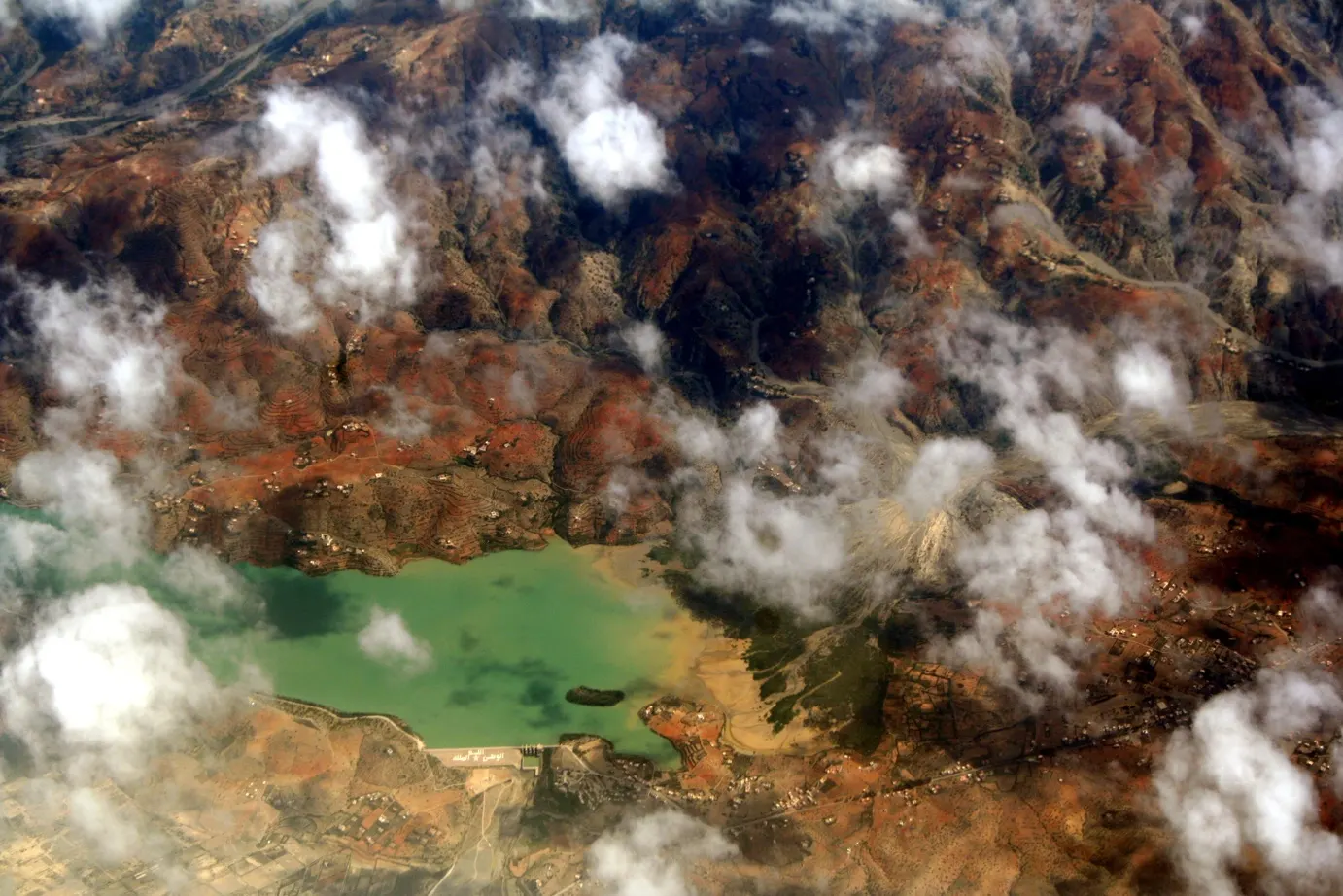
Mohamed Ben Abdelkrim El Khattabi dam.
September 2013. Archive illustration, not current levels. Khalid Souqbi / Wikimedia Commons, CC BY-SA 3.0 https://creativecommons.org/licenses/by-sa/3.0/ ; unchanged. — Khalid Souqbi / Wikimedia Commons — CC BY-SA 3.0 https://creativecommons.org/licenses/by-sa/3.0/ — 27 septembre 2013, sans modification.

Souss-Massa accounted for 42.36 million cubic metres of that increase, Maroc Diplomatique’s analysis shows. The national filling rate had been 65.80% two days earlier and 30.79% on the same date in 2025.

The recovery remains uneven: some basins and dams recorded declines over the two days despite the national increase. These figures describe monitored reservoirs; they do not measure groundwater and cannot alone establish an end to water stress.

Sources 3

Water: Baraka says dam reserves could cover two more years of drinking-water supply

Nizar Baraka told Parliament on 4 November 2026, during presentation of the sector’s 2027 budget, that dam reserves could provide two additional years of drinking-water supply. Hespress reported his assessment.

Mohamed Ben Abdelkrim El Khattabi dam.
Mohamed Ben Abdelkrim El Khattabi dam, 27 September 2013. Archive image; does not show the current level. Khalid Souqbi / Wikimedia Commons, CC BY-SA 3.0 https://creativecommons.org/licenses/by-sa/3.0/; unchanged. — Khalid Souqbi / Wikimedia Commons — CC BY-SA 3.0 https://creativecommons.org/licenses/by-sa/3.0/ — 27 septembre 2013, sans modification.

The minister cited stocks above 11 billion cubic metres and a filling rate close to 66%, compared with about 32% a year earlier. He also announced a 78% distribution-network efficiency target for 2027, including pipe renewal and leak detection.

Baraka said a new water programme was being prepared for the end of 2027. The national figures and duration estimate remain attributed to the minister; they do not guarantee continuous distribution in every locality or the absence of local supply pressures.

Sources 2

Water security: Baraka outlines dam and desalination targets for 2031

Nizar Baraka presented a new water security strategy to Parliament on November 2, 2026, targeting 27 billion m³ of dam storage and approximately 1.8 billion m³ of desalination capacity by 2031.

Archive view of Mohamed Ben Abdelkrim El Khattabi dam.
Mohamed Ben Abdelkrim El Khattabi dam, September 2013; archive illustration, not one of the new projects. Khalid Souqbi, CC BY-SA 3.0, unmodified. — Khalid Souqbi / Wikimedia Commons — CC BY-SA 3.0 https://creativecommons.org/licenses/by-sa/3.0/ — 27 septembre 2013, sans modification.

According to the minister, 17 large dams are under construction, representing 5.4 billion m³, while 12 new dams are intended to add another 4.9 billion m³. The 2031 volumes are targets, rather than capacity already available.

The strategy includes digitalisation and artificial intelligence for resource management. Flood prevention also envisages a new atlas of exposed areas and stronger monitoring and warning systems. The reports do not yet document these tools’ operational results.

Sources 4