The Nikkei 225 closed at 56,436.65 on November 20, down 3,007.56 points, or 5.06%, on the session.
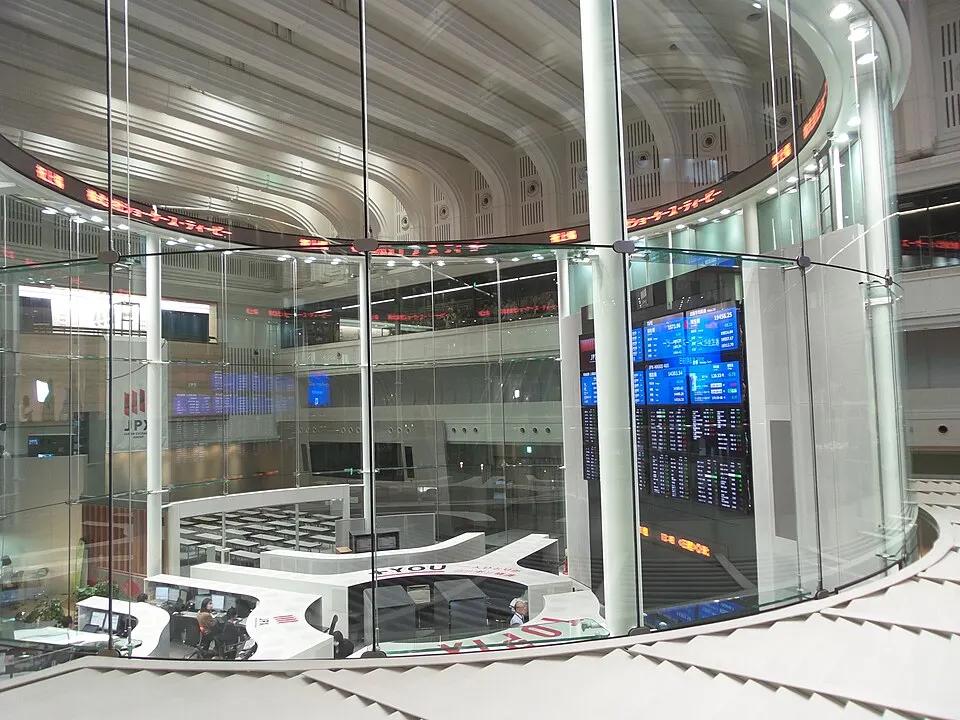
Tokyo Stock Exchange in 2015, archive photograph. franck injapan / Wikimedia Commons, CC0. — franck injapan / Wikimedia Commons — CC0 1.0 https://creativecommons.org/publicdomain/zero/1.0/ ; 19 March 2015; resized.
The index's daily summary recorded 214 constituents falling and 11 rising. The close provides a final result after the losses reported during morning trading. The broader Topix fell 3.88% to 3,674.22.
The French Treasury linked the correction to concerns about the artificial intelligence cycle and highlighted losses among AI and semiconductor companies. That market assessment does not determine future share prices.
Asian shares fall sharply as AI-linked stocks come under pressure
Asian stock markets fell sharply in early trading on 20 November amid selling in technology and semiconductor shares.
Tokyo Stock Exchange in 2015, file image unrelated to the trading session. franck injapan / Wikimedia Commons, CC0; resized. — franck injapan / Wikimedia Commons — CC0 1.0 https://creativecommons.org/publicdomain/zero/1.0/ ; 19 March 2015; resized.
In its report published at 03:17 UTC, Associated Press put Japan’s Nikkei and South Korea’s Kospi both down 4.5%. These are intraday snapshots, not closing figures. Reuters had earlier reported declines of 4.1% and 4.7% respectively.
The move followed losses on Wall Street the previous day. The agencies cited investor concerns over artificial-intelligence valuations and prospects, despite a rise in Anthropic shares on their market debut.
Asian markets are trading lower early on 17 November 2026, according to Reuters and Associated Press snapshots. Technology shares are under pressure ahead of Nvidia’s earnings.
Tokyo Stock Exchange, March 2015 archive; not the 17 November 2026 session. franck injapan / Commons, CC0. — franck injapan / Wikimedia Commons — CC0 1.0 https://creativecommons.org/publicdomain/zero/1.0/ ; 19 March 2015; resized.
Reuters records a 2% decline in South Korea’s KOSPI shortly after the open and a fall of around 1% in Japan’s Nikkei in its later report. These are intraday snapshots, rather than closing results.
The agencies place the decline against uncertainty surrounding AI. Reuters also cites tighter US restrictions on chips supplied to overseas data centres serving Chinese customers.
Tokyo's Nikkei rebounds 2.33% at the November 9 close
The Nikkei 225 closed on November 9, 2026 at 58,775.50, up 1,340.73 points or 2.33%. Nikkei's official daily summary and Xinhua's reporting confirm the rebound following the previous week's selling.
Archive, March 19, 2015; not the 2026 session. franck injapan, CC0; resized. — franck injapan / Wikimedia Commons — CC0 1.0 https://creativecommons.org/publicdomain/zero/1.0/ ; 19 March 2015; resized.
The final figures supersede provisional opening indications and describe Tokyo's completed session. Xinhua also reports a 2.97% gain in the Topix to 3,818.16.
Nikkei's summary records 208 constituents advancing and 17 declining. Xinhua attributes the rise to buying after earlier losses and support from US technology stocks; that market interpretation does not establish that concerns about AI investment have disappeared.
Asian shares rebound in early trading after AI stock rout
Asian markets began trading higher on 9 November 2026 after a week of heavy technology-related losses. In Reuters' market update published at 1:46 a.m. UTC, Japan's Nikkei was up 2.5% and MSCI's Asia-Pacific index excluding Japan gained 0.8%.
19 March 2015 archive; not the trading session. franck injapan, CC0 https://creativecommons.org/publicdomain/zero/1.0/ ; resized. — franck injapan / Wikimedia Commons — CC0 1.0 https://creativecommons.org/publicdomain/zero/1.0/ ; 19 March 2015; resized.
Fisco's Japanese report puts the Nikkei's opening at 57,960.70 points, 525.93 points above the previous session. Reuters' later snapshot reports Taiwan up about 2.5% and the regional MSCI ex-Japan index up 0.8%, after a 4.6% weekly decline.
These observations refer to different times. They describe an intraday rebound, not closing prices or proof that concerns about AI investment have ended.
The Nikkei 225 closed on 6 November 2026 at 57,434.77, down 3,643.13 points, or 5.96%. The closing figure establishes the day’s substantial decline after the intraday falls reported earlier.
19 March 2015. Archive image; not the 2026 session. franck injapan, CC0 https://creativecommons.org/publicdomain/zero/1.0/ ; resized. — franck injapan / Wikimedia Commons — CC0 1.0 https://creativecommons.org/publicdomain/zero/1.0/ ; 19 March 2015; resized.
Nikkei’s official daily summary records 222 declining constituents and only three gainers. The session low was 56,745.81, which should be distinguished from the closing level.
SBS links the move to global selling of semiconductor and artificial intelligence stocks amid concerns about investment after the US elections. That explanation describes reported market worries; it does not establish that new US regulations have already been adopted.