Morocco · Algeria · Germany · Spain · France · United Kingdom · Mauritania · United States of America · Ecuador · Russian Federation · Sierra Leone
File
Moroccan Sahara: from the roots of the conflict to the 2026 negotiations
Published Updated
This dossier traces the origins and transformation of the Moroccan Sahara conflict: historical ties and allegiances, Spanish colonial rule from 1884, decolonisation, war, the referendum process, the autonomy proposal and diplomacy through 17 October 2026. It also covers populations, Hassani culture, Tindouf refugees, prisoners and missing persons, human rights, resources and trade agreements.
Morocco claims the territory on grounds of territorial integrity and historical ties; the Polisario Front seeks independence through self-determination, with Algerian support. Mauritania withdrew from the territorial conflict in 1979 but remains involved through neighbourhood interests and negotiations. Morocco administers the principal cities and Atlantic coast; the military berm is not an agreed international border. The dossier distinguishes effective control, sovereignty claims, bilateral recognition and status in international institutions.
In 1975, the ICJ recognised allegiance ties with certain tribes without finding territorial sovereignty that would exclude self-determination. The settlement plan accepted in 1988 and MINURSO established in 1991 did not deliver the planned referendum. The Baker initiatives and Morocco’s 2007 autonomy plan shifted negotiations towards institutions, safeguards and consent. US, Spanish, French and British positions use different wording and should not be counted as identical acts.
Sources accompany each milestone. “Moroccan Sahara” is the editorial designation; UN and court documents generally use “Western Sahara.” Their substantive qualifications are preserved. No map is used. Day-level dates do not imply a known time of day.
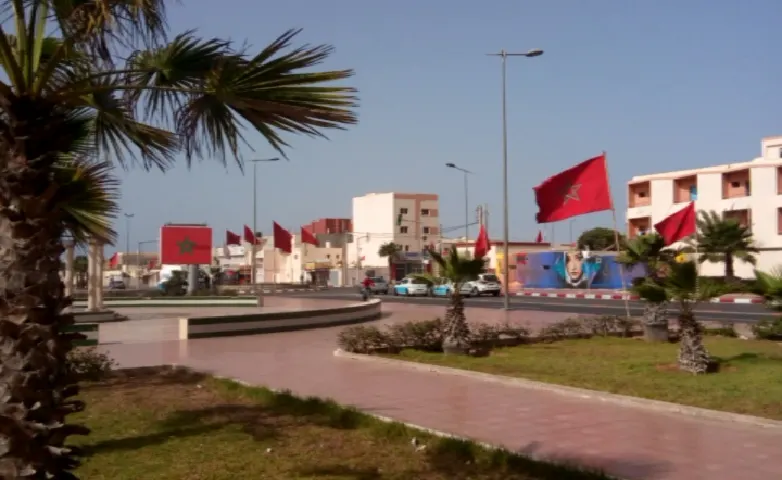
Dakhla, Moroccan Sahara, 5 September 2016. Illustrative view, no map. hamza / Hamiz11, CC BY-SA 4.0. — hamza / Hamiz11 — Wikimedia Commons — CC BY-SA 4.0, https://creativecommons.org/licenses/by-sa/4.0/ — photographie non modifiée
Where things stand
As of 17 November 2026, a first MINURSO group left Laayoune the previous day, according to Le360 and Hespress. Ivanko aims to finish closure in January 2027. Complete withdrawal is not established.
Viewpoints
Attributed and documented positions
Where do positions converge and diverge in seeking a settlement?
Common facts
UN texts seek a lasting, mutually acceptable political solution. Resolution 2797 gives Morocco’s autonomy proposal a central place. Sources establish no final agreement.
Main disagreement
Disagreement concerns sovereignty, the choices offered to the population and implementation guarantees. Algeria disputes being a party to the conflict; Morocco stresses its role. Protection of people remains a requirement distinct from status.
View detailed positionsHide detailed positions6
Kingdom of Morocco
summary
Morocco proposes negotiated autonomy under its sovereignty, with regional institutions and retention of sovereign state powers. The 2007 text provides consultation on the negotiated statute, not independence as an option. Rabat links this position to territorial integrity.
The Security Council supports negotiations based on Morocco’s autonomy proposal, without preconditions, towards a mutually acceptable solution providing for self-determination. It identifies genuine autonomy as a possible outcome and welcomes constructive suggestions. It does not find that a final agreement exists.
Mauritania describes its position in the UN report as positive neutrality and support for the political process. Its 1979 withdrawal distinguishes this from its former territorial claim. Border security and neighbourhood stability are direct interests.
HRW calls for safeguards for free and genuine choice, return and reparations. It says it takes no position on independence. Its criticism concerns rights and process safeguards; it is neither a court judgment nor the voice of every Sahrawi.
In positions recorded by the UN, Polisario demands that Sahrawis decide territorial status with independence among the options. It rejects fixing Moroccan sovereignty before that choice. Its willingness to talk does not establish acceptance of Rabat’s proposed outcome.
Algeria supports Polisario and self-determination while telling the UN envoy it does not consider itself a party to the conflict. It supports direct Morocco–Polisario talks with neighbouring states present. Participation does not resolve disagreement over its formal role.
Moroccan Sahara: Waltz reaffirms US support for autonomy in Rabat
Mike Waltz reaffirmed Washington’s support for Moroccan sovereignty and the autonomy plan at a joint press briefing with Nasser Bourita in Rabat on 17 November 2026.
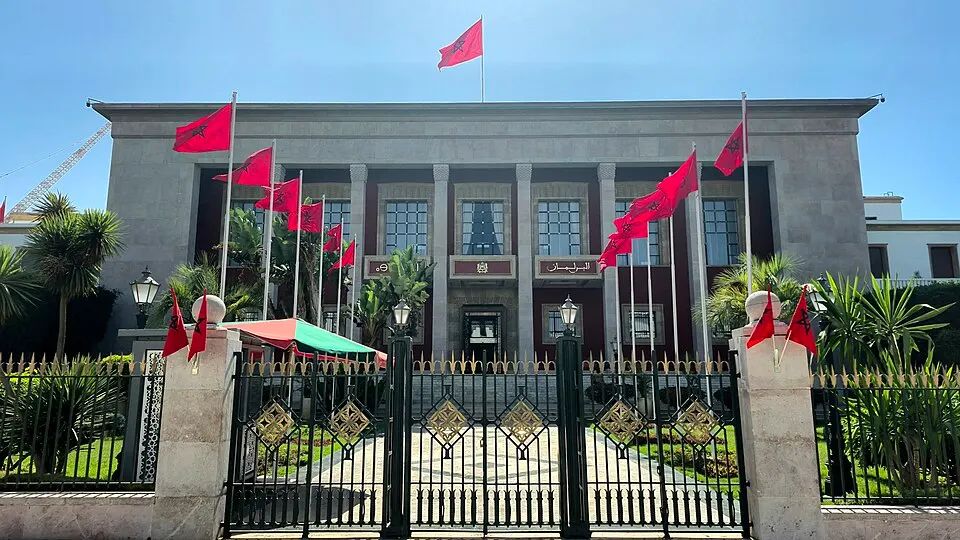
Rabat, August 2025 archive image. Illustration, not the meeting. Taha ahh / Wikimedia Commons, CC0. — Taha ahh / Wikimedia Commons — CC0 1.0 https://creativecommons.org/publicdomain/zero/1.0/ — photo du 8 août 2025, redimensionnement uniquement.
The US representative to the United Nations called for continued efforts towards a lasting settlement. Hespress and Morocco World News reported his remarks following talks with Morocco’s foreign minister.
Waltz also discussed Russia’s veto of the US draft in October and the MINURSO liquidation process. He urged Polisario to respect the ceasefire and called for renewed diplomatic engagement. These remarks set out the US position; they do not amount to a new agreement between the parties or a Security Council decision.
Moroccan Sahara: first MINURSO personnel leave Laayoune
A first group of MINURSO personnel left Laayoune on 16 November 2026, according to reporting by Le360 and Hespress. The withdrawal has thus reached the stage of actual departures.
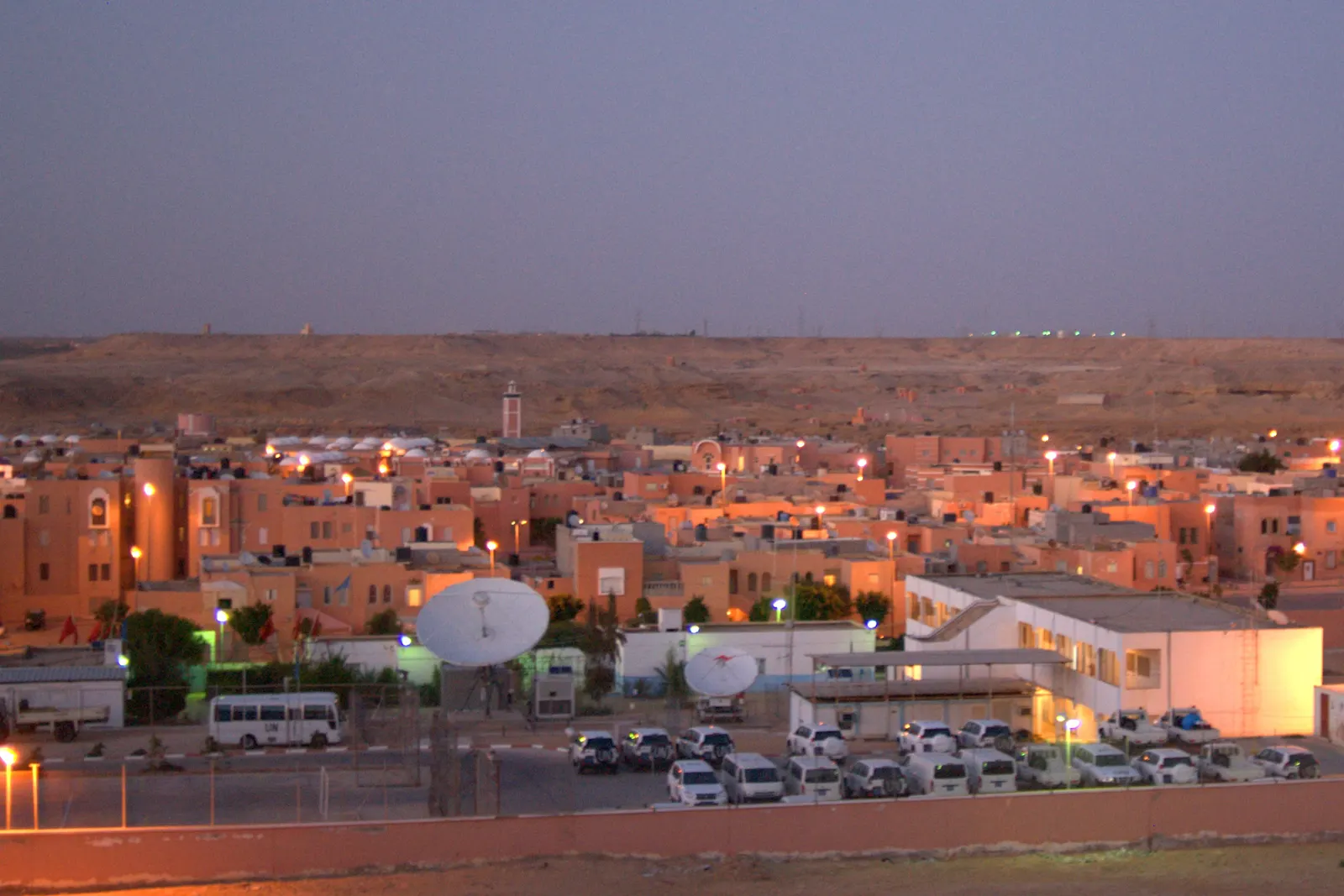
Laayoune, Moroccan Sahara, archive 2012; not the departure. Guillaume Galdrat / cingularite, CC BY-SA 2.0 https://creativecommons.org/licenses/by-sa/2.0/. — Guillaume Galdrat / cingularite / Wikimedia Commons — CC BY-SA 2.0 https://creativecommons.org/licenses/by-sa/2.0/ — archives 2012, sans modification.
Hespress reports that five military observers departed through Hassan I Airport. Speaking to the press, Alexander Ivanko says the UN aims to complete closure by late January 2027; that remains a target.
Le360 reports that the Interior Ministry’s coordination office is assisting with withdrawal logistics. The first group’s departure therefore does not mean that all personnel and equipment have already left the sites.
Tindouf: lawyers’ club announces opening of its “Return Line”
The Lawyers’ Club in Morocco announced on 16 November 2026 that its “Return Line”, a free legal assistance service for Tindouf camp residents wishing to return to Morocco, had opened.
Rabat, January 2026. Archive illustration; shows neither the camps nor the service. CAPTAIN RAJU / Wikimedia Commons — CC0 1.0. — CAPTAIN RAJU / Wikimedia Commons — CC0 https://creativecommons.org/publicdomain/zero/1.0/ ; 31 janvier 2026, redimensionnée.
According to its president, Mourad Elajouti, applications will be assessed individually, taking account of family ties and personal circumstances. The Club says an American organisation specialising in humanitarian cases will handle them, but does not disclose its name.
The announced opening follows the project's presentation on 6 November. The service offers advice on the legal conditions for returning; it does not by itself constitute a repatriation operation. The reports reviewed provide no figures for returns carried out.
Moroccan Sahara: reports of fire near berm lack official confirmation
Media reports describe exchanges of fire near the defensive berm in the Moroccan Sahara overnight on 14–15 November 2026, without official confirmation in the sources consulted. Assahifa relays prospectors’ accounts cited by Sahara Media.
Dakhla, Moroccan Sahara, September 2016. Archive illustration; not the locations of the reported fire. hamza / Hamiz11, CC BY-SA 4.0 https://creativecommons.org/licenses/by-sa/4.0/ ; unmodified. — hamza / Hamiz11 — Wikimedia Commons — CC BY-SA 4.0, https://creativecommons.org/licenses/by-sa/4.0/ — photographie non modifiée
According to that account, attacks attributed to Polisario near Tarf Abdo and Tarf Minayna were followed by Moroccan fire towards Aglibat al-Foula and Am Arouisin, east of the berm. Asharq Al-Awsat also reports accounts of shelling and stresses the lack of independent confirmation of versions circulating online.
The testimony relayed by Assahifa reports no casualties among prospectors. It does not establish military losses, the scale of operations or any change in territorial control. Repetition of Sahara Media’s account is not multiple independent confirmation.
Moroccan Sahara: Washington announces Mike Waltz’s planned Morocco visit
The US mission to the UN announced on 15 November 2026 that Mike Waltz would travel to Lebanon and Morocco from 15 to 17 November, according to Médias24 and LeBrief. The Moroccan leg is set to address the Moroccan Sahara and regional security.
Dakhla, Moroccan Sahara, September 2016. Archive illustration; does not show the announced visit. hamza / Hamiz11 — CC BY-SA 4.0 https://creativecommons.org/licenses/by-sa/4.0/. — hamza / Hamiz11 — Wikimedia Commons — CC BY-SA 4.0, https://creativecommons.org/licenses/by-sa/4.0/ — photographie non modifiée
Reports of the statement say the US representative intends to reiterate Washington’s support for a solution based on Morocco’s autonomy proposal. He is also expected to meet senior officials to discuss the Abraham Accords and security cooperation.
These details describe the announced agenda. The reviewed sources do not identify the Moroccan interlocutors or the timing of the Morocco leg. They do not yet document a meeting held in Rabat or a new agreement.
The US statement establishes a diplomatic intention. It does not settle the conflict or confirm that every planned stage has taken place.
Moroccan Sahara: EUCOCO adopts 2027 action programme in Madrid
The EUCOCO conference adopted actions for 2027 and renewed its monitoring committees in Madrid on 14 November 2026, according to its final declaration released by Polisario-linked agency SPS. The text reiterates support for independence in the Moroccan Sahara dispute.
Madrid, April 2015. Archive illustration, not the conference. Zarateman / Wikimedia Commons, CC0 1.0. — Zarateman / Wikimedia Commons — CC0 1.0 https://creativecommons.org/publicdomain/zero/1.0/ ; 3 avril 2015, sans modification.
Work is to address politics and information, natural resources, human rights and support for institutions claimed by the Polisario. The declaration announces the next conference in Algiers in November 2027.
Separately, Europa Press interviewed Polisario official Bouchraya Hamoudi Beyoun in Madrid, where he urged Spain’s next government to help pursue a solution. These demands are their authors’ positions; the sources announce no agreement with Morocco.
In Essaouira, Barrot reiterates French support for Morocco’s autonomy plan
Jean-Noël Barrot reiterated France’s support for Moroccan sovereignty over the Moroccan Sahara and for the autonomy plan during talks with Nasser Bourita in Essaouira on 13 November 2026, according to the French foreign ministry.
Dakhla, Moroccan Sahara, September 2016. Archive illustration, not the talks. hamza / Hamiz11, Wikimedia Commons, CC BY-SA 4.0 https://creativecommons.org/licenses/by-sa/4.0/ ; unchanged. — hamza / Hamiz11 — Wikimedia Commons — CC BY-SA 4.0, https://creativecommons.org/licenses/by-sa/4.0/ — photographie non modifiée
Paris describes Morocco’s 2007 initiative as the sole basis for a negotiated political solution and renews its support for the UN secretary-general’s personal envoy. This is France’s diplomatic position, rather than an agreement among the parties to the conflict.
The ministers also worked towards a future French-Moroccan treaty, envisaged during a state visit by Mohammed VI to France. The statement announces neither a signed text nor a firm timetable. Their talks also covered the Middle East and the Sahel.
Moroccan Sahara: Togo, Liberia and Senegal back autonomy at the UN
Togo, Liberia and Senegal defended Morocco’s autonomy initiative before the General Assembly on 11 November 2026, according to MAP and a Spanish account of the session.
Dakhla, 2016. Archive illustration, not the UN session. hamza / Hamiz11, CC BY-SA 4.0 https://creativecommons.org/licenses/by-sa/4.0/ ; unmodified. — hamza / Hamiz11 — Wikimedia Commons — CC BY-SA 4.0, https://creativecommons.org/licenses/by-sa/4.0/ — photographie non modifiée
Liberia explained its support for the US draft and said the end of the UN mission should not end international engagement. Senegal regretted the use of the veto and called for Security Council reform.
Differences remain: Angola warned about the security consequences of MINURSO’s departure and defended self-determination. These interventions express diplomatic positions; they do not establish a new agreement on the Moroccan Sahara.
Moroccan Sahara: SMACO warns of consequences of halted mine clearance
In a statement issued on the evening of 11 November and relayed by APS on 12 November 2026, SMACO warned of humanitarian consequences from the cessation of MINURSO-related mine-clearance operations in the Moroccan Sahara.
Laayoune, Moroccan Sahara, archive 2012. Not mine-clearance operations. Guillaume Galdrat / cingularite, CC BY-SA 2.0 https://creativecommons.org/licenses/by-sa/2.0/ ; unchanged. — Guillaume Galdrat / cingularite / Wikimedia Commons — CC BY-SA 2.0 https://creativecommons.org/licenses/by-sa/2.0/ — archives 2012, sans modification.
The coordination office called on the UN and international community to maintain civilian protection and humanitarian action.
This brief reports a warning attributed to SMACO. The reports consulted draw on the same statement and do not provide independent confirmation. They establish neither a new accident toll nor arrangements for any replacement mechanism.
Moroccan Sahara: UAE, Qatar and Djibouti back autonomy at UN
The United Arab Emirates, Qatar and Djibouti reiterated support for autonomy under Moroccan sovereignty at the UN General Assembly on 11 November 2026, according to MAP.
Dakhla, Moroccan Sahara, September 2016. Archive illustration, unrelated to the UN session. hamza / Wikimedia Commons, CC BY-SA 4.0; unchanged. — hamza / Hamiz11 — Wikimedia Commons — CC BY-SA 4.0, https://creativecommons.org/licenses/by-sa/4.0/ — photographie non modifiée
The statements came on the second day of debate on Russia's 30 October veto of the US draft concerning the Moroccan Sahara. The UAE advocated a solution based on autonomy, dialogue and consensus. Djibouti presented Morocco's initiative as a path to a lasting, mutually acceptable settlement.
Qatar supported the efforts of the secretary-general and his personal envoy Staffan de Mistura, as well as a solution guaranteeing Moroccan sovereignty. These statements express the three countries' diplomatic positions; they do not amount to the General Assembly adopting a new resolution.
Morocco and Sierra Leone sign a 2027–2029 roadmap in Rabat
Nasser Bourita and Mohamed Rahman Swaray signed a cooperation roadmap for 2027–2029 in Rabat on 10 November 2026, according to reports of their joint communiqué. Sierra Leone reaffirmed support for Moroccan sovereignty over the Moroccan Sahara and for the autonomy plan.
Rabat, January 2026. Archive illustration; does not show the meeting. CAPTAIN RAJU / Wikimedia Commons, CC0; resized. — CAPTAIN RAJU / Wikimedia Commons — CC0 https://creativecommons.org/publicdomain/zero/1.0/ ; 31 janvier 2026, redimensionnée.
The talks covered trade, agriculture, the blue economy, fertilisers and water management. The ministers also announced a fourth joint commission in 2027 and called for faster implementation of existing agreements.
These commitments establish a cooperation programme; the sources give no investment amount or results already achieved. Sierra Leone's stance on the Moroccan Sahara constitutes bilateral diplomatic support, without amounting to a settlement agreed by the parties to the dispute.