
Skip to content
Israel
File

Israel: 2026 election and formation of a majority

This dossier follows Israel’s 27 October 2026 parliamentary election, from voting to the formation of a majority. It distinguishes opinion polls, vote counting and official results from coalition agreements still to be negotiated.

Last updated : 5 key moments

Where things stand

As of October 31, 2026, protesters are calling for cooperation between Jewish and Arab parties to form a majority. The blocs remain at 53, 48 and 19 seats in the reports reviewed; no coalition agreement is established.

Tel Aviv protesters call for a majority involving Arab parties

Protesters gathered at Tel Aviv's Habima Square on October 31, 2026 to demand cooperation in government between Jewish and Arab parties after the parliamentary election. The Times of Israel describes a rally led by Standing Together; Arabic-language reporting relays the same demand.
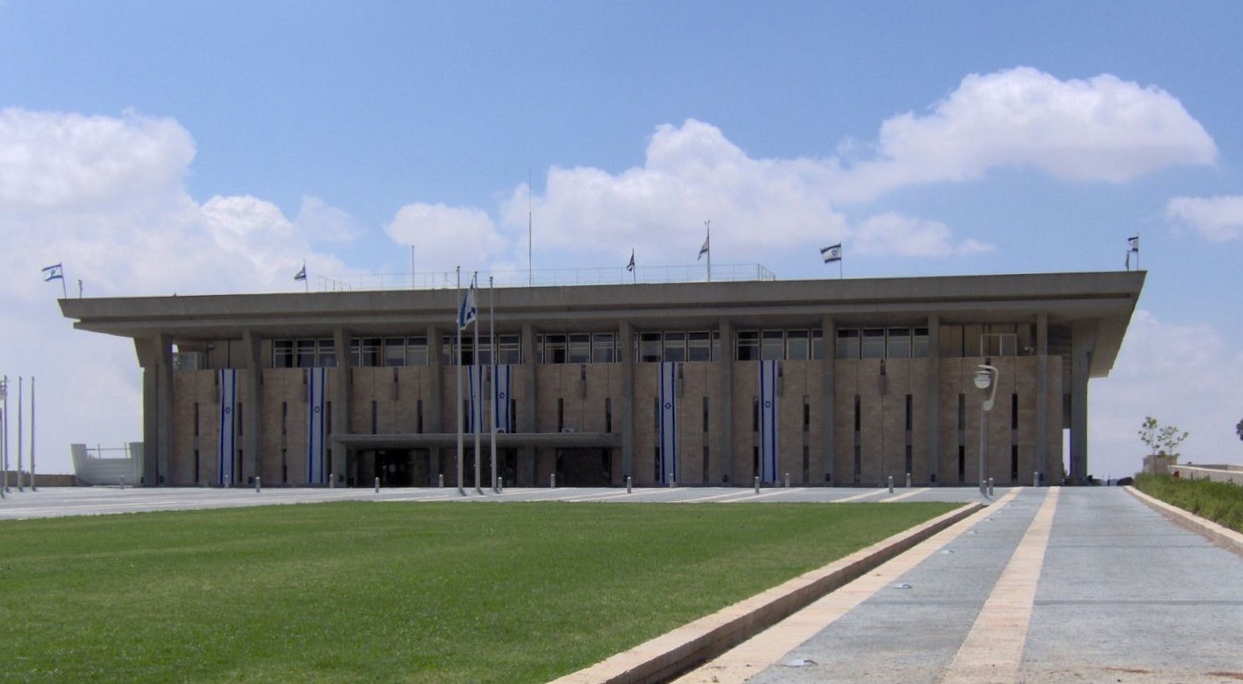
The Knesset in June 2005. Archive photograph; it does not show the protest.
The Knesset in June 2005. Archive photograph; it does not show the protest. — Joshua Paquin / Wikimedia Commons — CC BY 2.0 https://creativecommons.org/licenses/by/2.0/ — 5 juin 2005 ; correction de perspective préexistante, sans modification supplémentaire.

The newspaper's live report estimated about 500 participants at 8:24pm. Other accounts refer to thousands: these estimates do not necessarily cover the same time or geographic scope.

The issue is forming a majority: Netanyahu's bloc has 53 seats, Jewish opposition parties 48 and Arab parties 19, according to the reported count. Adding seats together does not constitute a coalition agreement.

Sources 3

Israel: full vote count confirms lack of a majority

Israel's election committee published the full count for the 27 October election overnight on 29–30 October 2026: 53 seats for Benjamin Netanyahu's bloc, 48 for Gadi Eisenkot's and 19 for Arab parties, according to matching reports.

The Knesset in 2005.
The Knesset in June 2005. Archive photograph; it does not depict the 2026 election. Perspective corrected previously. — Joshua Paquin / Wikimedia Commons — CC BY 2.0 https://creativecommons.org/licenses/by/2.0/ — 5 juin 2005 ; correction de perspective préexistante, sans modification supplémentaire.

Neither main bloc reaches the 61 seats needed for a majority in the 120-member Knesset. Likud remains the largest party with 27 seats.

The Times of Israel says the results are due to be presented to President Isaac Herzog on 4 November after remaining checks, with the Knesset's swearing-in scheduled for 10 November. Completion of the count does not mean a government has already been formed.

Sources 3

Israel: Netanyahu bloc projected at 53 seats, still short of majority

With 89.8% of votes counted on the evening of 28 October 2026, Benjamin Netanyahu’s bloc was projected at 53 seats, Gadi Eisenkot’s at 48 and Arab parties at 19. The provisional results leave neither main bloc with the 61 seats needed for a majority.

The Knesset in June 2005. Archive photograph, not the 2026 count. Perspective corrected previously.
The Knesset in June 2005. Archive photograph, not the 2026 count. Perspective corrected previously. — Joshua Paquin / Wikimedia Commons — CC BY 2.0 https://creativecommons.org/licenses/by/2.0/ — 5 juin 2005 ; correction de perspective préexistante, sans modification supplémentaire.

The count marks a further stage beyond estimates released in the morning. Likud remains the largest party, while the bloc distribution leaves government formation dependent on negotiations.

Double-envelope ballots, including votes cast away from voters’ usual polling stations, still require processing. They can change the allocation of seats before official certification.

The provisional distribution is therefore neither a final result nor a coalition agreement. An established majority must be distinguished from party statements about their intentions.

Sources 3

Israel: no majority established as post-election counting continues

No clear winner had been established in Israel's election on the morning of 28 October 2026. Updated projections from major broadcasters put Benjamin Netanyahu's and Gadi Eisenkot's blocs below the 61 seats needed for a Knesset majority.

Archive view of the Knesset building.
The Knesset in Jerusalem in June 2005. Archive photograph, not the 2026 count. Joshua Paquin, CC BY 2.0; pre-existing perspective correction. — Joshua Paquin / Wikimedia Commons — CC BY 2.0 https://creativecommons.org/licenses/by/2.0/ — 5 juin 2005 ; correction de perspective préexistante, sans modification supplémentaire.

The Jerusalem Post reported gains for Netanyahu's bloc in revised morning estimates, still short of a majority. The first projections released after voting had shown a different balance.

These seat estimates are not final official results. Partial counting continues and should be distinguished from exit polling.

The Knesset has 120 seats. Arab parties could influence coalition possibilities, but the sources consulted establish neither a governing agreement nor a definitive choice of the next prime minister.

Sources 4

Israelis vote to elect a new Knesset

Voting began in Israel’s parliamentary election on 27 October 2026. More than 7.3 million eligible voters are choosing the members of the Knesset in a contest testing Benjamin Netanyahu’s government.

The Knesset in Jerusalem in June 2005. Archive photograph, not the 2026 vote.
The Knesset in Jerusalem in June 2005. Archive photograph, not the 2026 vote. — Joshua Paquin / Wikimedia Commons — CC BY 2.0 https://creativecommons.org/licenses/by/2.0/ — 5 juin 2005 ; correction de perspective préexistante, sans modification supplémentaire.

Around 12,000 polling stations are serving voters; most are due to close at 10pm local time. Israelis vote for party lists, which subsequently negotiate the formation of a parliamentary majority.

The Knesset has 120 seats and a government needs support from at least 61 members. The opening of polling stations starts national voting, rather than establishing a winner: at the 7am UTC reporting cutoff, the outcome and the composition of the next coalition remain unknown.

Sources 3