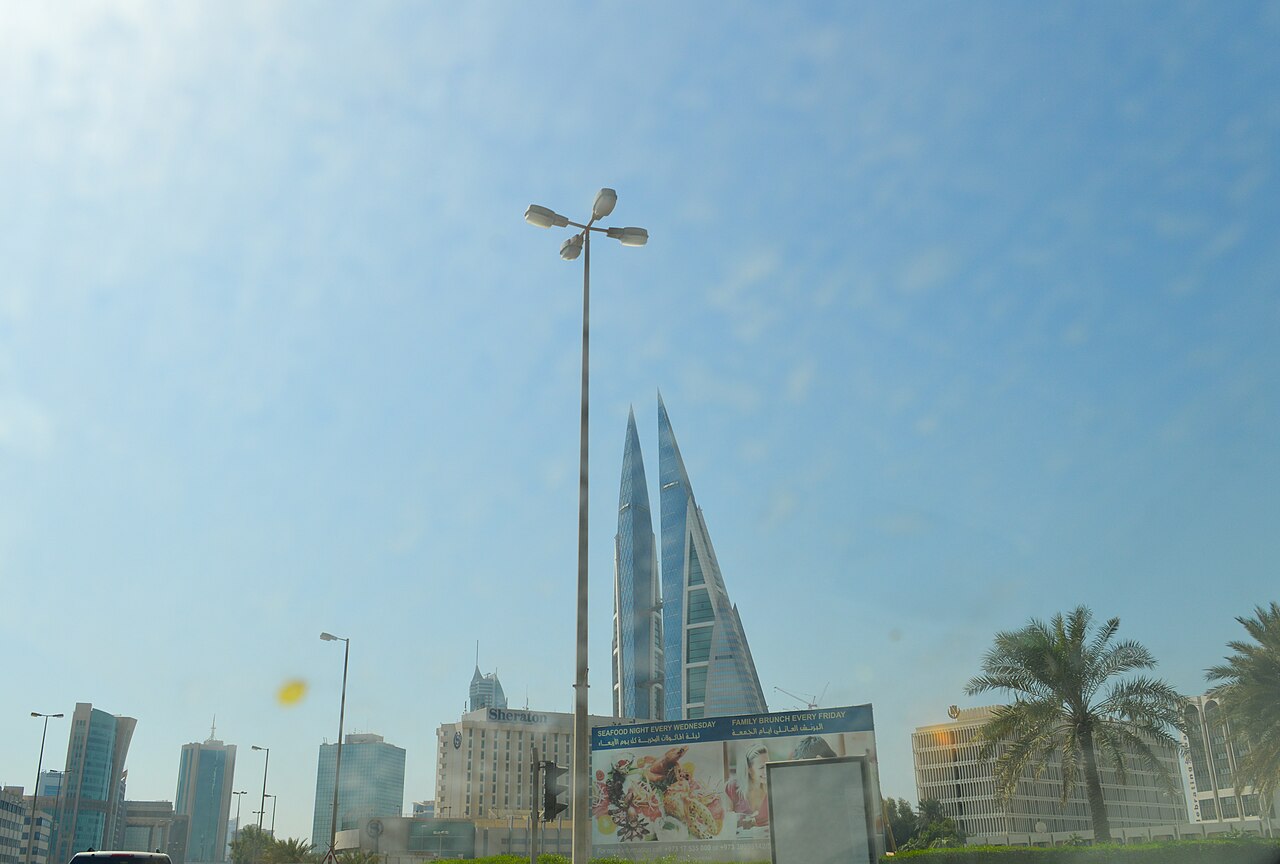
UAE presidential diplomatic adviser Anwar Gargash said at the Manama Dialogue in Bahrain on 1 November 2026 that he hoped for a diplomatic breakthrough between Tehran and Washington. He also said his country was preparing for a deterioration in the situation.
The UN announces the start of MINURSO's liquidation on 1 November 2026 after its mandate was not renewed. It maintains its commitment to a political solution, according to official UN information and press reports.
Iranian negotiators continued consultations with Qatari mediators in Doha on 1 November 2026. Abbas Araghchi described a proposal to reopen the Strait of Hormuz within two days of a possible agreement, while stressing that no final conclusion had been reached.
Morocco’s two parliamentary chambers announced on October 31, 2026 a joint session on the latest developments concerning the Moroccan Sahara. It is scheduled for Monday, November 2 at 1 p.m.
Mojtaba Khamenei ordered Iran's armed forces on 31 October 2026 to prepare an immediate response without geographic limits to new attacks, according to a statement reported by several outlets. This is a directive and warning, rather than evidence of an operation carried out.
Speaking on 2M on 31 October 2026, Nasser Bourita said Morocco would allow the time and logistical resources needed for MINURSO’s departure. He reaffirmed the Kingdom’s commitment to the ceasefire.
In his 2M interview on 31 October 2026, Nasser Bourita set out Morocco’s parameters for a possible resumption of talks on the Moroccan Sahara, Médias24 and Walaw report.
Mohsen Rezaei, secretary of Iran's Supreme National Security Council, says he has read a letter from US Vice President JD Vance but has not replied. Accounts published on November 1, 2026 attribute to him a positive assessment of a change in US tone, without any agreement announced.
The Centre for Shared Memory and the Moroccan Centre for Strategic Studies and Research expressed support on October 31, 2026 for the Royal Cabinet statement on the Moroccan Sahara, according to LeBrief and Barlamane.
Egyptian Foreign Minister Badr Abdelatty told the Manama Dialogue in Bahrain on 31 October 2026 that Gulf security is part of Egypt’s national security. He urged diplomatic responses to regional crises.
The United States, Japan, India and Australia announced in Atlanta on 31 October 2026 their intention to provide over $85 million in technical and financial assistance to expand access to what they describe as trusted AI in the Indo-Pacific.
Iranian negotiators held talks in Doha with Qatari mediators on 31 October 2026, Reuters reports, citing a source briefed on the discussions. The exchanges follow the previous day's Tehran talks and do not amount to an announced agreement.
This dossier follows regional security proposals presented at the 2026 Manama Dialogue, diplomatic commitments and documented follow-up. Government positions are distinguished from agreements actually concluded.
This dossier traces the Russia–Ukraine war from the seizure of Crimea and the start of fighting in the Donbas in 2014, through the full-scale invasion of 24 February 2022 and its military, diplomatic, economic and humanitarian consequences. It distinguishes recognised sovereignty, claimed annexations and actual military control.
Earlier milestones explain relations between the two states since Ukrainian independence in 1991: the 1994 Budapest security assurances, the 1997 friendship treaty, the 2003 Tuzla crisis, gas disputes and the 2010 Kharkiv agreements. The suspension of preparations for the European Union agreement in November 2013 opens the Euromaidan crisis. These antecedents are distinguished from the war that began in 2014; each entry links to its sources.
The timeline follows Ilovaisk, Donetsk airport, Debaltseve, the Minsk agreements, disengagement attempts, fighting and the humanitarian crisis in Avdiivka in 2017, the trade blockade, detainee exchanges and the Kerch maritime crisis. It then documents the war’s expansion, Ukrainian territorial recaptures, Bakhmut, international justice, grain, energy, external assistance and negotiations. Retrospective investigations are identified and claims remain attributed.
This selection of turning points includes canonical occurrences from the archived energy dossier. It expands previously sparse years without providing an exhaustive daily record: local fighting, successive sanctions, all weapons deliveries and population displacement are not detailed. Cumulative military losses and complete territorial control remain coverage limitations.
This dossier traces the Islamic Republic of Iran from Ruhollah Khomeini’s return in February 1979: the monarchy’s overthrow, the hostage crisis, the Iran-Iraq War, Ali Khamenei’s succession, sanctions, domestic protests and nuclear negotiations. It also follows regional confrontation through Tehran’s allies, rapprochement with Saudi Arabia and the transition to direct Iran-Israel attacks in 2024.
The twelve-day war of June 2025 is distinguished from the conflict opened on 28 February 2026 by US and Israeli strikes. The chronology examines Ali Khamenei’s killing and Mojtaba Khamenei’s succession, civilian victims, regional fronts, energy infrastructure, Hormuz, blockades and attempts at agreement. The Qatari consultations that originally defined this dossier remain integrated into the expanded history.
Sourced entries distinguish established facts, announcements, attributed responsibility and unverified outcomes. The reconstruction selects principal milestones rather than recording every military operation. No final, consistent human toll across all theatres is established here. Dates without a known time are ordered by calendar day.
This dossier traces the origins and transformation of the Moroccan Sahara conflict: historical ties and allegiances, Spanish colonial rule from 1884, decolonisation, war, the referendum process, the autonomy proposal and diplomacy through 17 October 2026. It also covers populations, Hassani culture, Tindouf refugees, prisoners and missing persons, human rights, resources and trade agreements.
Morocco claims the territory on grounds of territorial integrity and historical ties; the Polisario Front seeks independence through self-determination, with Algerian support. Mauritania withdrew from the territorial conflict in 1979 but remains involved through neighbourhood interests and negotiations. Morocco administers the principal cities and Atlantic coast; the military berm is not an agreed international border. The dossier distinguishes effective control, sovereignty claims, bilateral recognition and status in international institutions.
In 1975, the ICJ recognised allegiance ties with certain tribes without finding territorial sovereignty that would exclude self-determination. The settlement plan accepted in 1988 and MINURSO established in 1991 did not deliver the planned referendum. The Baker initiatives and Morocco’s 2007 autonomy plan shifted negotiations towards institutions, safeguards and consent. US, Spanish, French and British positions use different wording and should not be counted as identical acts.
Sources accompany each milestone. “Moroccan Sahara” is the editorial designation; UN and court documents generally use “Western Sahara.” Their substantive qualifications are preserved. No map is used. Day-level dates do not imply a known time of day.
This dossier traces Mohammed VI’s public activities since his accession on 23 July 1999: speeches, decisions and audiences, visits within Morocco and abroad, institutional and social reforms, major projects and Royal Office statements. It distinguishes announced directions, decisions and documented delivery.
Full speeches and messages: the Communication Ministry’s six official collections provide access to archives from July 1999 to June 2024: 1999–2001 · 2002–2005 · 2006–2009 · 2010–2014 · 2015–2019 · 2019–June 2024. Maroc.ma’s archive extends access to recent speeches, including 2026. Each selected speech entry links to an official document or identified transcript. Full texts are available at the linked sources; they are not reproduced in full on Moojaz. The 2026 edition of the official collection adds further documents. Landmark readings include the 31 January 2017 Addis Ababa address and the 31 October 2025 address, both linked in French.